Deska pro rozlišování hladkosti
Deska pro rozlišování hladkosti seznamuje dítě ve věku 3 až 6 let s jemnými stupni hladkosti a cibří hmatové vnímání výhradně dotykem, bez pomoci zraku. Dřevěná deska nese pásky brusného papíru seřazené od nejhrubšího po nejhladší, takže dítě přejíždí prsty po každém pásu a učí se je řadit podle citu. Jako AMI souladná smyslová pomůcka značky Nienhuis zjemňuje hmatové rozlišování a připravuje ruku na pozdější práci s písmem i dalšími materiály v nabídce Faborina.
“Osvoboďte potenciál dítěte a proměníte ho ve svět.”
The Smooth Gradation Board serves as a fundamental bridge between sensorial exploration and writing readiness in the Montessori classroom.
- Develops tactile discrimination through five distinct texture gradations
- Refines fingertip sensitivity essential for writing preparation
- Builds vocabulary for describing textures (smooth, rough, smoother, rougher)
- Strengthens finger muscles used in pencil grip through tracing movements
Číst více
Through five carefully graded sandpaper strips, children develop the refined finger sensitivity essential for proper pencil grip and pressure control. Each texture on the board, from smoothest to roughest, isolates a specific tactile quality, allowing the child to build discriminatory powers through repeated touch. The wooden board's smooth surface provides crucial contrast, helping children internalize the concept of gradation through their fingertips. This systematic progression from smooth to rough mirrors the sequential nature of all Montessori materials, where each sensory impression builds upon the previous one. The Smooth Gradation Board specifically addresses the developmental need for tactile refinement that emerges around age three, when children's hands become ready for more precise movements. By tracing each sandpaper strip with their dominant fingers, children simultaneously prepare the muscles and sensitivity required for forming letters, making this board an essential precursor to the Sandpaper Letters.

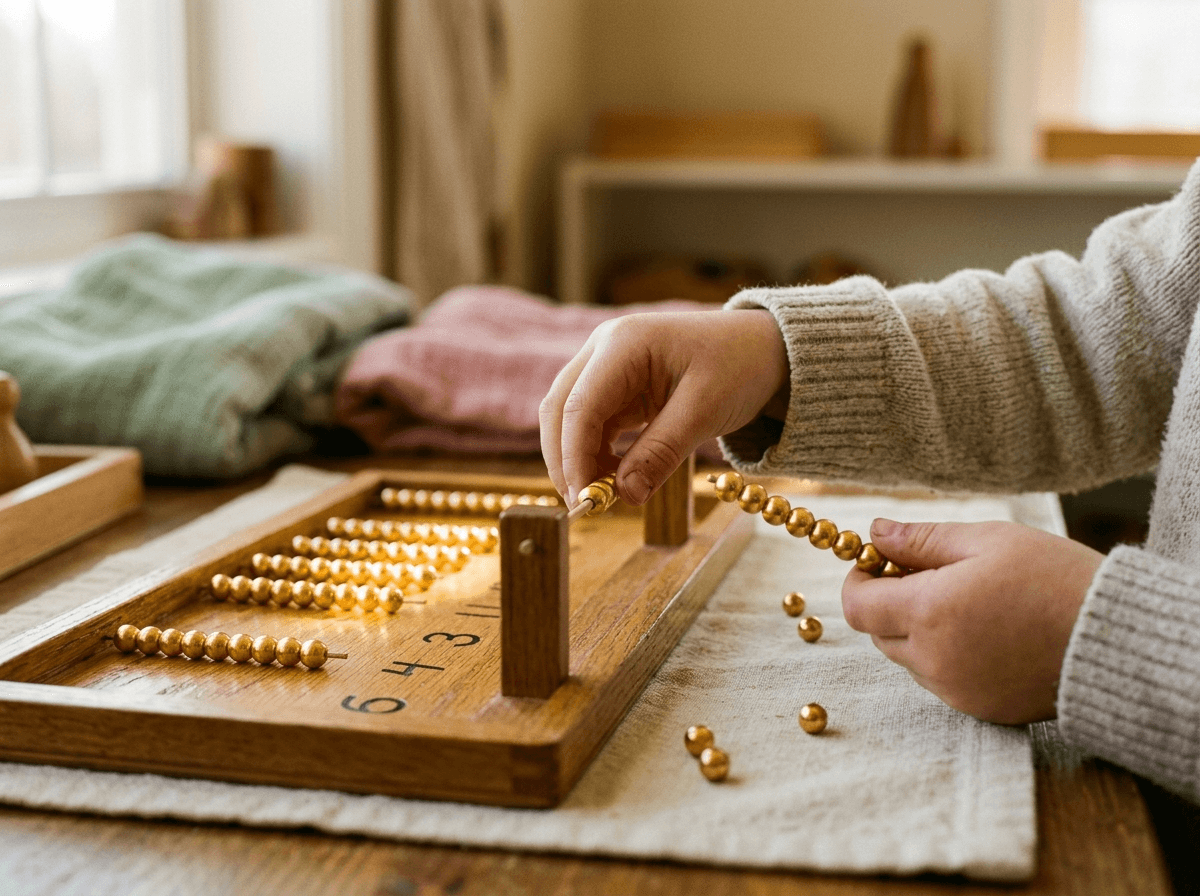
Jak materiál představit
Postupujte podle Montessori metody pro optimální rozvoj dítěte.
Place the Smooth Gradation Board on a table mat at the child's dominant side. Ensure hands are clean and dry for optimal tactile sensitivity.
- 1
Demonstrate tracing the smoothest strip with your index and middle fingers, moving left to right
Use slow, deliberate movements to model careful exploration - 2
Invite the child to trace the same smooth strip, observing their finger pressure
Watch for consistent two-finger contact throughout the tracing - 3
Introduce the roughest strip for maximum contrast, having the child trace both alternately
Use minimal language: 'smooth' and 'rough' only at this stage - 4
Present the remaining three strips in order, exploring each texture thoroughly
Allow ample time for repetition before moving to the next strip - 5
Invite the child to close their eyes and identify strips by touch alone
Start with just smooth and rough before adding intermediate textures
Každé dítě je malý tvůrce

Tradice
Od roku 1929

Značky používané
ve školách po světě

Evropské značky

AMI
schváleno
Související materiály
