
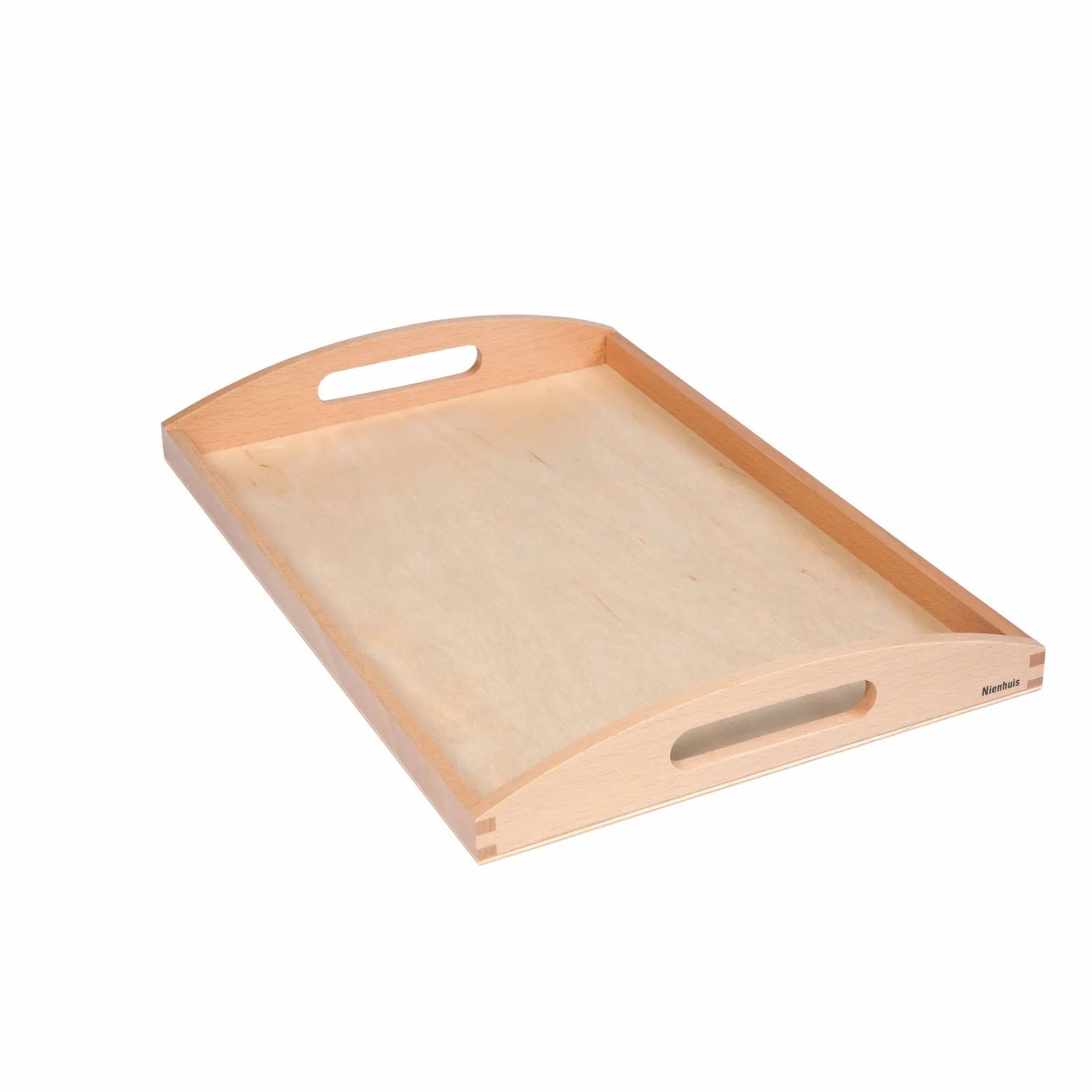
Dřevěný tácek velký
Výrobce Nienhuis Montessori · odesílá Heutink International (Nizozemsko) O výrobci
Dřevěný táček velký z masivního dřeva a překližky je základní pomůckou praktického života pro přenášení a uskladnění cvičení z police na stůl. Jeho velikost se hodí zejména na leštění, kde dítě poskládá hadřík, leštidlo a předmět vedle sebe, i na cvičení se skládáním a nalíváním, která potřebují stabilní, ohraničenou plochu. Přenášení oběma rukama rozvíjí kontrolu pohybu, dokončení cvičení v hranicích táčku učí jasný začátek a konec práce. Teplé, přírodní dřevo je vhodné pro batolata od 0 do 3 let, která si upevňují úchop, rovnováhu a samostatnost.
“Osvoboďte potenciál dítěte a proměníte ho ve svět.”
Tento tácek ztělesňuje princip připraveného prostředí Marie Montessori, v němž každá pomůcka slouží konkrétnímu vývojovému účelu a učí už svým tvarem.
Číst více
Zvýšené okraje poskytují to, co Montessori nazývala „kontrolou chyby“: pomůcka sama vede dítě k úspěchu, protože udrží rozsypané fazole, zabrání rozlité vodě, aby se rozšířila dál, a vytváří jasné hranice pro práci. Díky této samoopravné vlastnosti se dítě učí od pomůcky, a ne z neustálého opravování dospělým, což je podstata sebevýchovy. Tácek podporuje senzitivní období pro řád (přibližně od 6 měsíců do 4 let), protože naplňuje hlubokou psychickou potřebu dítěte po uspořádání a sledu. Když dítě vidí, že všechny pomůcky na leštění stříbra nebo na přípravu svačiny se přesně vejdou do hranic tácku, zažívá pocit úplnosti, který Montessori označila za klíčový pro soustředění a sebedůvěru. Princip izolace obtížnosti se projevuje v tom, že tento jediný nástroj odstraňuje složitost sbírání rozházených věcí, takže se dítě může soustředit na zvládnutí konkrétní dovednosti, ať už je to přelévání, nabírání lžící nebo skládání, aniž by muselo honit kutálející se předměty nebo hlídat neohraničený pracovní prostor.
Každé dítě je malý tvůrce

Tradice
Od roku 1929

Ve třídách
Po celém světě

Evropské značky
Nienhuis, GAM, Educo

AMI schválené
Podle standardu asociace
Dřevěný tácek velký
