
1st Cylinder Of Block No. 3
Made by Nienhuis Montessori · shipped by Heutink International (Netherlands) About the maker
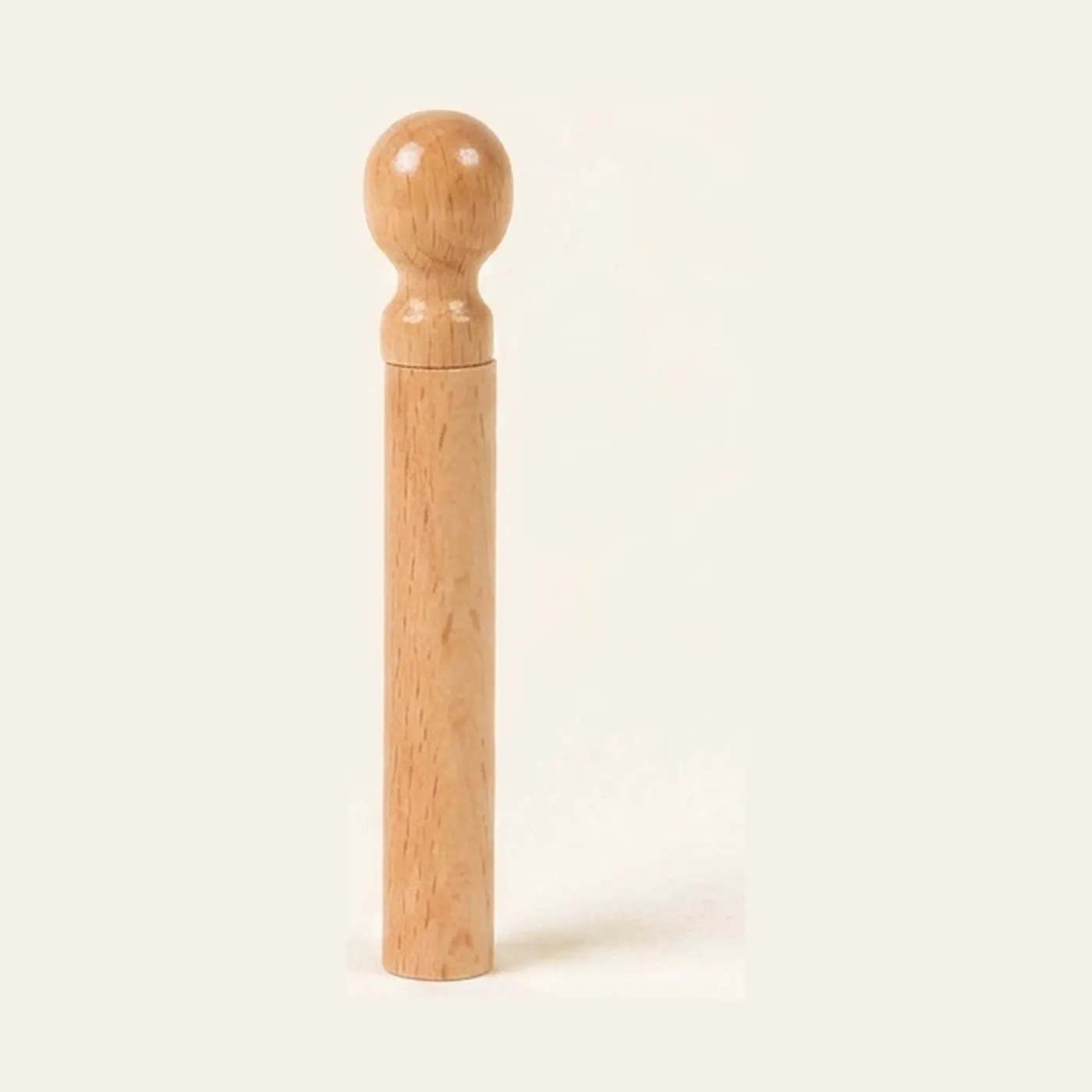
The first cylinder of block number three, a single replacement piece. Block three is the odd one: height falls as diameter grows, so its two ends are a tall narrow cylinder and a short wide one, and nothing in between is simply bigger or smaller than its neighbour. This end of the row is the tall thin extreme, the one that looks least like the rest of the block. Check the block number before ordering. The complete block is a separate item.
“The child is both a hope and a promise for mankind.”
The 1st Cylinder of Block No.
- Visual discrimination of diameter and height variations
- Three-finger pincer grip refinement for writing readiness
- Spatial reasoning through dimensional comparison
- Concentration development through precise placement
Read More
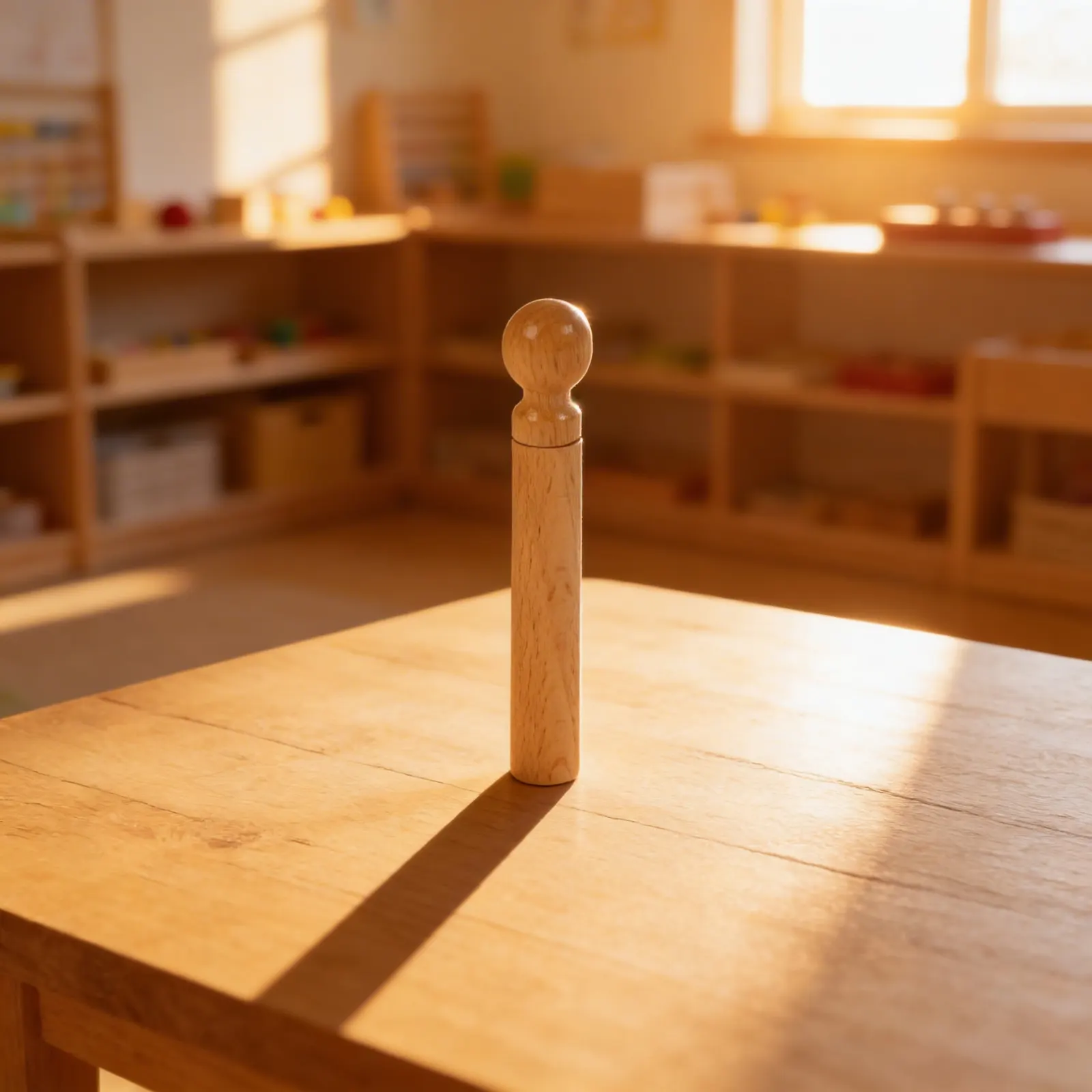
3 represents Montessori's principle of isolating a single quality for the child's exploration. Each cylinder in Block No. 3 varies in both diameter and height, presenting a complex visual discrimination challenge that requires careful observation. The smooth wooden surface and knobbed handle of this cylinder enable the three-finger grip essential for writing preparation. When a child lifts this specific cylinder by its knob, they engage the same muscles needed for pencil control while simultaneously training their eye to perceive dimensional differences. The weight and size of this particular cylinder provide immediate tactile feedback about spatial relationships. Block No. 3's cylinders specifically address the developmental need for refined visual perception during the sensitive period for order and small objects. The act of fitting this cylinder into its corresponding socket transforms abstract concepts of dimension into concrete, manipulable experience.
How to present it
Follow the Montessori method of presentation for optimal child development.
Place the single cylinder on a tray with its corresponding cylinder block socket visible. Ensure the work surface is at child's elbow height when seated.
- 1
Demonstrate grasping the cylinder's knob with thumb, index, and middle finger
Move slowly to emphasize the precise grip formation - 2
Lift the cylinder vertically and observe its dimensions
Pause briefly to allow visual inspection of height and width - 3
Lower the cylinder toward its socket, testing the fit
Let the cylinder's weight guide the downward movement naturally - 4
If incorrect, lift and try another socket
Avoid correcting verbally - let the material provide feedback - 5
When correctly placed, run fingers around the flush top edge
This tactile confirmation reinforces the visual match
Every Child Is a Little Creator

Heritage
Since 1929

In classrooms
Around the world

European brands
Nienhuis, GAM, Educo
1st Cylinder Of Block No. 3
