
Associations - Around The House
The first photo is the maker's own. The other shots are illustrative.
Inv. no. NIE-EC0608
- Maker
- Nienhuis Montessori, since 1929
- Material
- Durable plastic
- Finish
- Pre-cut with rounded corners
- EAN
- 8719924043100
Final price incl. VAT. Delivery €5.90, €117.10 to go for free delivery.
Advice, warranty and returns are handled by us.
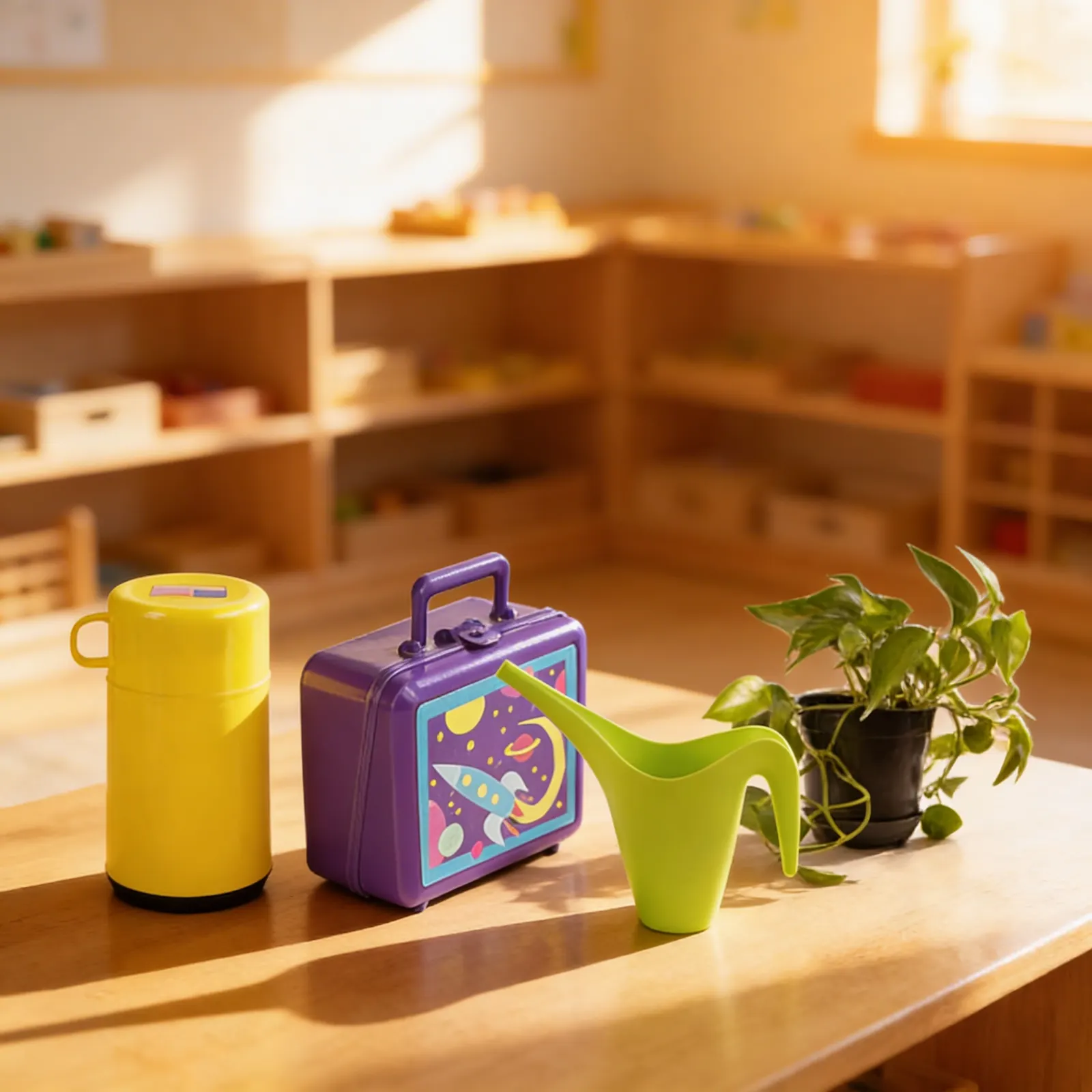
Associations - Around The House in a child's hands
Within the Land & Water Forms area, these association cards present familiar household items in clear photographic images, helping children develop classification and categorization skills essential for logical thinking. The durable plastic cards feature thick borders for easy handling and support the Montessori approach to language development through real-world connections. Children match related items from different rooms, building vocabulary while understanding functional relationships in their daily environment.
Language Enrichment
Expands vocabulary through real-world household items while building connections between objects and their functions.
Classification Skills
Develops logical thinking as children sort items by room, function, or material properties.
Visual Discrimination
Photographic images help children identify subtle differences and similarities between everyday objects.
Practical Life Connections
Links language work to daily living activities, supporting the child's understanding of their environment.
How to present it
Lay out 6-8 cards face up on a mat, ensuring clear photographic images are visible and cards are spaced for easy manipulation.
- 1Invite the child to identify one familiar object, naming it clearly
- 2Ask 'What goes with this?' and allow the child to find the matching household item
- 3Place matched pairs together, discussing why these items belong together
- 4Continue matching remaining cards, allowing child-led discoveries
- 5Review all pairs together, reinforcing vocabulary and relationships
3 tips for parents
- Point out these same objects during daily routines to reinforce connections
- Let your child help sort real household items as a practical life extension
- Create a home scavenger hunt finding the actual objects from the cards

If you are not sure it suits your child, we answer in person.
Norbert Kovalčín, founder of Faborino · write to him
There is no review here yet. We will ask you for one after you buy. Write the first review
What's in the Box
- Association Cards: Approx. 24 cards with household items
- Storage Solution: Cards organized by room or category
Size and material
| Packaging | 15 × 15 × 1 cm |
| Material | Durable plastic |
| Finish | Pre-cut with rounded corners |
| Recommended Age | 3-6 years |
Care
| Cleaning | Wipe with damp cloth, dry immediately |
| Storage | Keep flat in dry environment |
Frequently Asked Questions
What specific skills do these association cards develop?
These cards develop classification, categorization, and logical thinking skills through matching related household items. Children enhance vocabulary, functional reasoning, and understanding of object relationships while strengthening visual discrimination and memory.
How many cards are included and what household areas do they cover?
The set includes multiple pairs of photographic cards featuring items from various rooms including kitchen, bathroom, bedroom, and living areas. Each card shows clear, real-life images of familiar household objects that children encounter daily.
What makes these cards suitable for Montessori environments?
The cards feature real photographic images (not illustrations), promoting concrete learning experiences. The laminated material with thick borders supports independent use, while the self-correcting nature of matching activities aligns with Montessori principles of autonomous learning.
Can these cards be used for language development activities?
Yes, these cards excellently support language development through vocabulary building, descriptive language practice, and conversation starters about object functions and room locations. They're ideal for three-period lessons and can be used in multiple languages.
What age-appropriate activities can be done with these cards?
Activities include simple matching pairs, sorting by room or function, creating stories about daily routines, playing memory games, and discussing 'what goes together' relationships. Advanced activities involve explaining why items belong together and categorizing by multiple attributes.
Product safety
Manufacturer: Nienhuis Montessori, Anders Celsiusstraat 15, 7442 PB Nijverdal, Netherlands
Associations - Around The House