
Number Cards Box: Small Numerals with Geometric Shapes
Made by Nienhuis Montessori · shipped by Heutink International (Netherlands) About the maker
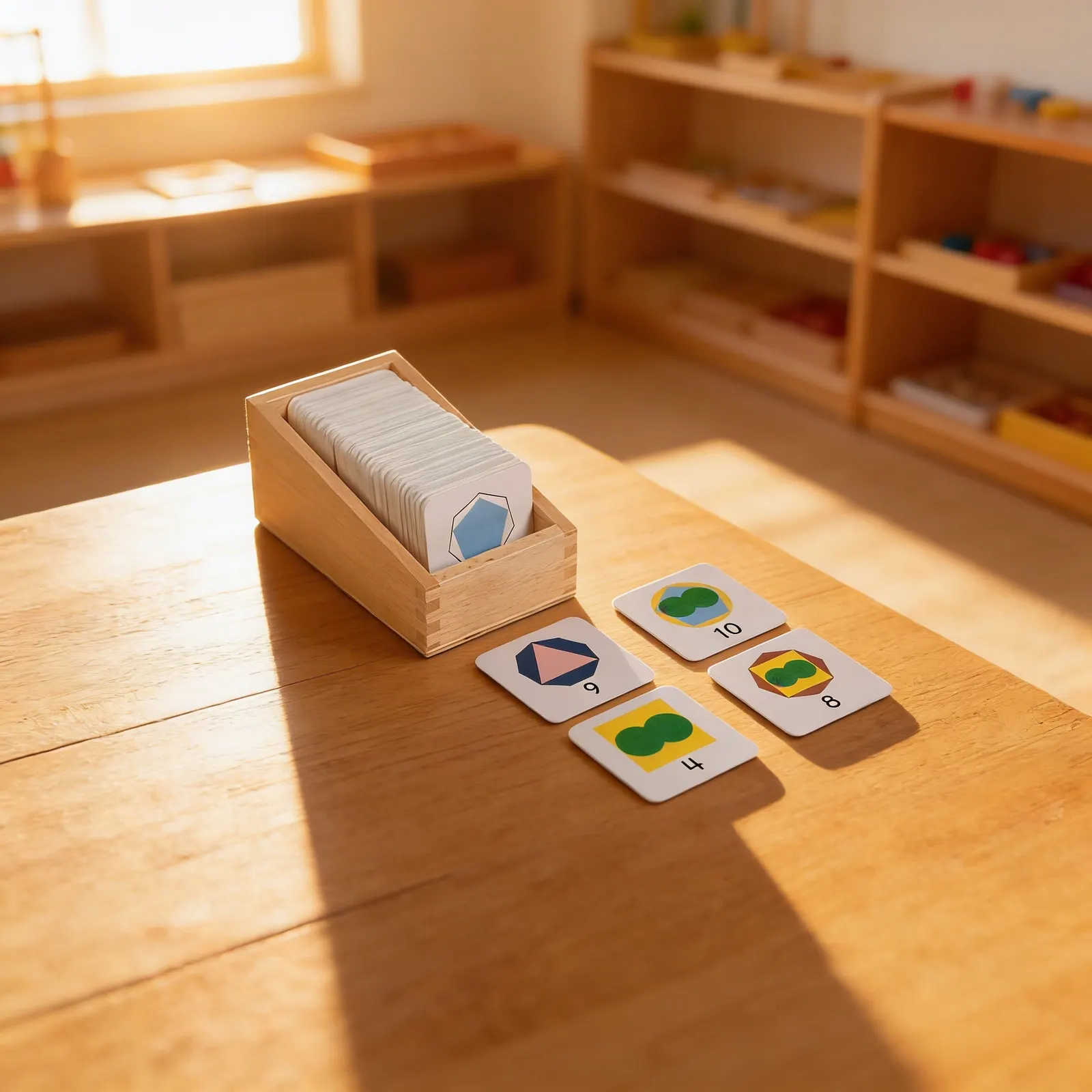
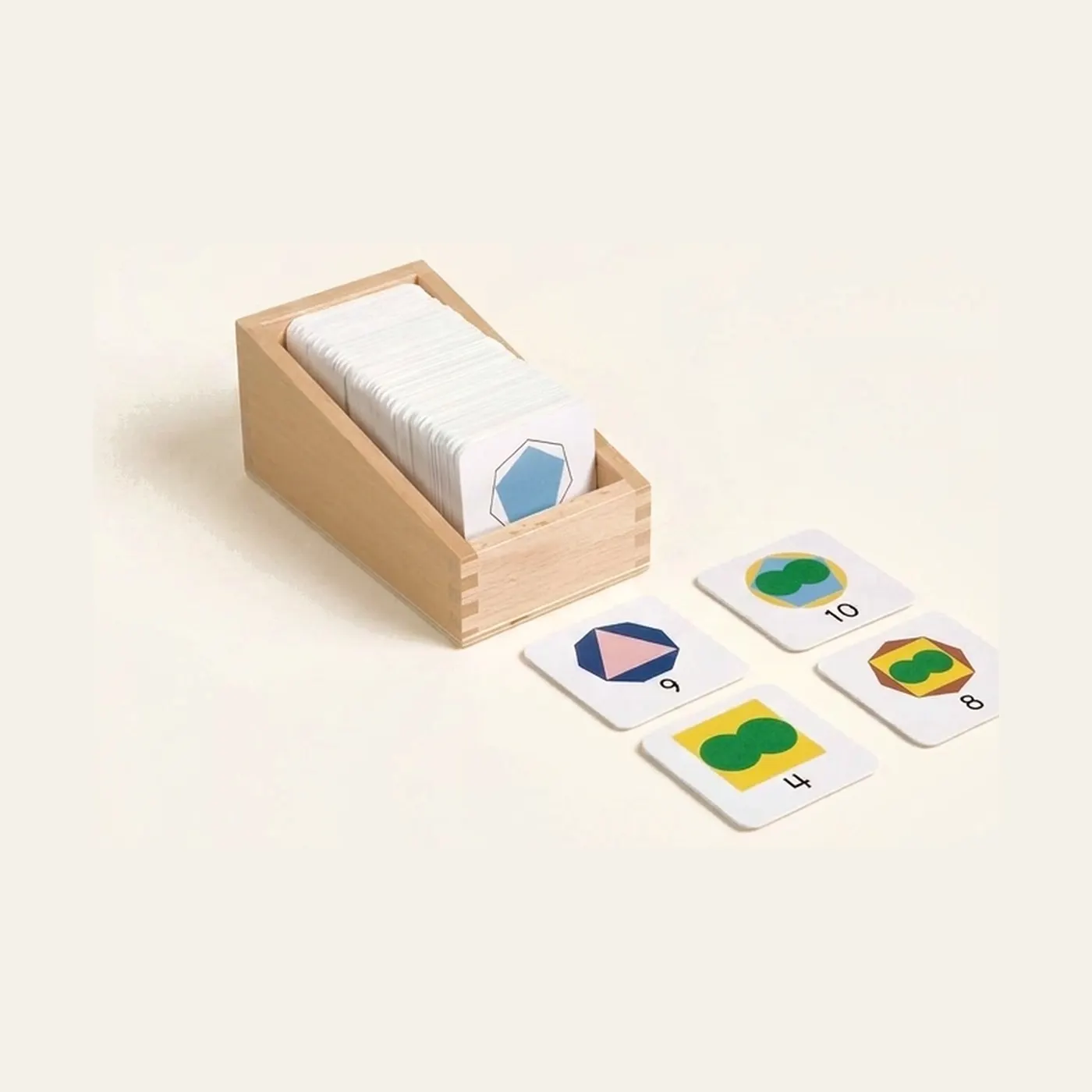
The Box With Small Numeral Cards combines numerical recognition with sensorial exploration through cards featuring numbers paired with geometric shapes. This material bridges the gap between concrete sensorial experiences and abstract mathematical concepts, supporting the child's transition from manipulating physical quantities to understanding symbolic representation. The angled wooden storage box promotes organization and careful handling of materials.
“The child is both a hope and a promise for mankind.”
The Box With Small Numeral Cards embodies Maria Montessori's principle of bridging concrete sensorial experiences with abstract mathematical concepts. This material respects the child's natural progression from sensorial exploration to mathematical understanding, allowing them to discover the relationship between quantity and symbol through their own manipulation and observation.
- Visual discrimination of numerals 0-9 and their corresponding quantities
- Association between abstract symbols and concrete geometric representations
- Development of mathematical language and vocabulary
- Refinement of fine motor control through precise card handling
Read More
The pairing of numerals with geometric shapes creates a multi-sensory experience that engages visual discrimination while introducing mathematical language. The prepared environment, represented by the angled storage box, supports the child's developing sense of order and precision. This material honors the mathematical mind of the child, recognizing that abstract concepts become meaningful when grounded in sensorial reality. By providing isolated concepts in an organized format, children can focus on the essential relationship between symbol and meaning without distraction.
How to present it
Follow the Montessori method of presentation for optimal child development.
Place the box on a mat with the angled opening facing the child. Ensure all cards are arranged in sequential order within the box. Work at a table or on a floor mat in a quiet area of the environment.
- 1
Invite the child, saying 'I would like to show you the numeral cards.' Carefully remove cards 1, 2, and 3 from the box using a three-finger grip.
Model slow, deliberate movements to emphasize care and precision - 2
Place the three cards in a horizontal row, left to right. Point to numeral 1 and say 'This is one.' Trace the numeral with your index finger, then count the geometric shape.
Always trace numerals in the correct formation direction to prepare for writing - 3
Continue with 2 and 3 using the three-period lesson. First period: 'This is...' Second period: 'Show me...' Third period: 'What is this?'
Ensure mastery of each period before progressing to the next - 4
Once the child knows 1-3, introduce 4-6, then 7-9, and finally 0, following the same process over multiple presentations.
Introduce zero last as it represents the abstract concept of 'nothing' - 5
Invite the child to arrange all learned numerals in sequence, reinforcing ordinal relationships.
Allow self-correction by having the child count the shapes if unsure of sequence
Every Child Is a Little Creator

Heritage
Since 1929

In classrooms
Around the world

European brands
Nienhuis, GAM, Educo

AMI approved
To the association standard
Number Cards Box: Small Numerals with Geometric Shapes
