
Clay Sculpting Tools: 5-Piece Brush & Spatula Art Set
Made by Arts & Crafts · shipped by Heutink International (Netherlands)
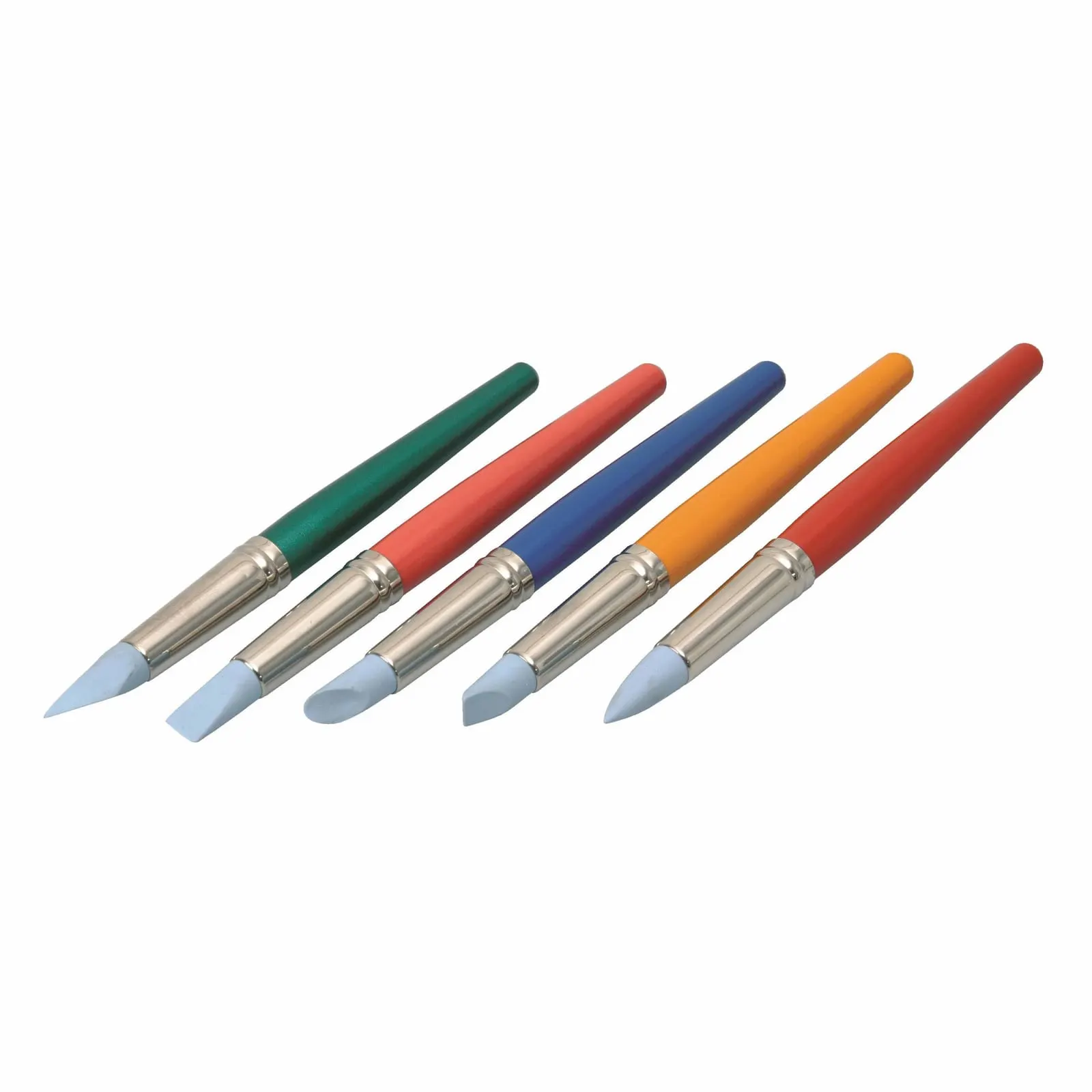
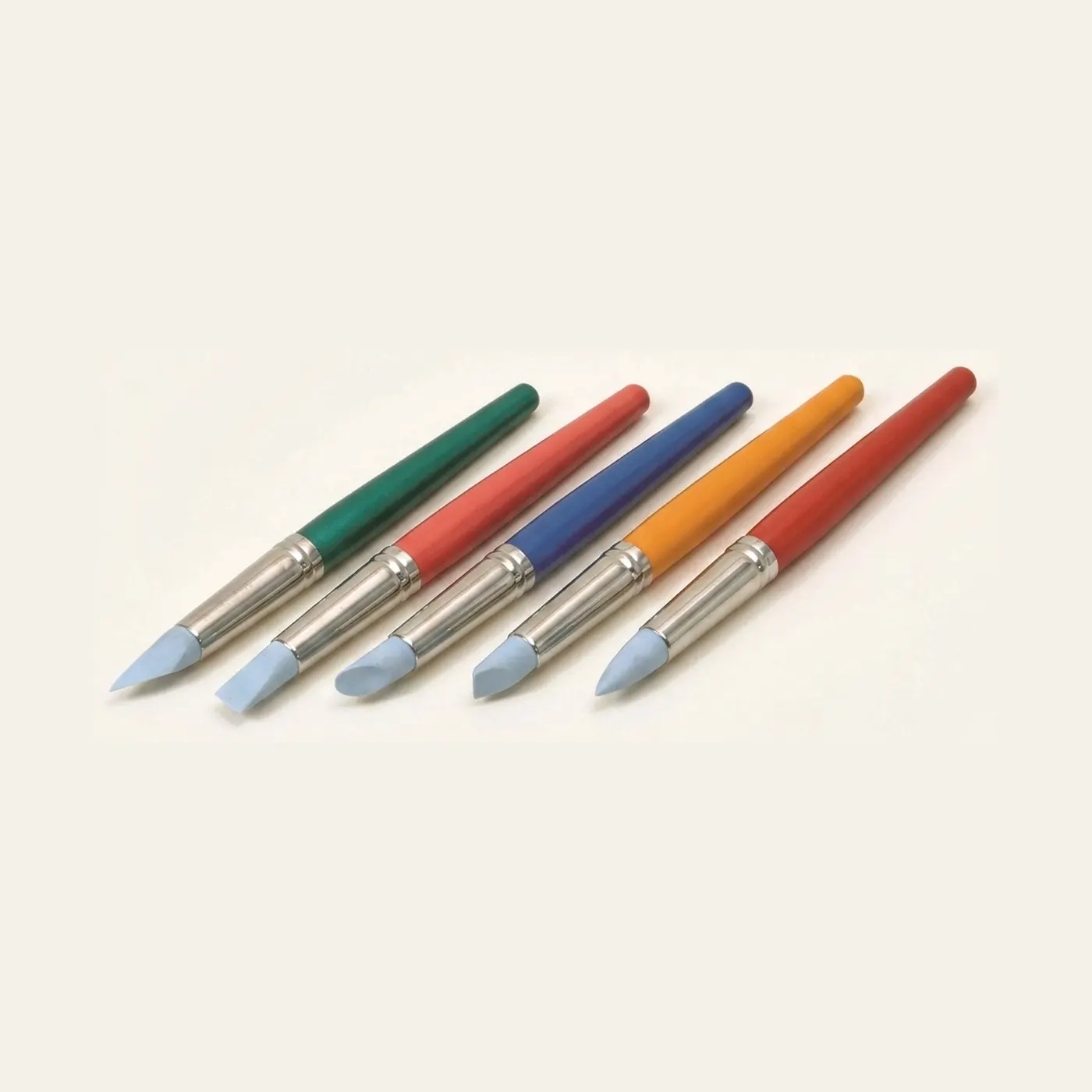
A set of five clay tools in the brush model, for shaping and finishing work in clay. Brush model means the working end is soft rather than a hard blade, so it smooths, blends and presses rather than cutting, which is the half of clay work that decides how a finished piece looks. Five tools means a small group can each hold one, and it means a child can choose a tool rather than accepting the only one there is. Clay is a separate item.
“The senses, being explorers of the world, open the way to knowledge.”
In the Montessori art area, children are offered real tools, not simplified toy versions, because authentic materials communicate respect for the child's capabilities. These sculpting tools embody that principle.
- Fine motor control with various grip techniques
- Tool selection and purposeful use
- Three-dimensional creative expression
- Clay modeling techniques (smoothing, carving, texturing)
Read More
Each different tip profile invites exploration: 'What happens when I press this edge into the clay? How does the brush tip create a different texture than the flat spatula?' Through this hands-on experimentation, children develop both artistic skill and scientific thinking. The process of sculpting also connects to practical life, learning to care for tools, clean up work spaces, and respect materials are all integral to the Montessori art experience.
How to present it
Follow the Montessori method of presentation for optimal child development.
Prepare the art table with a clay mat, a ball of modeling clay, a small bowl of water, and the tool set laid out from left to right.
- 1
Show each tool briefly, demonstrating one technique per tool on a sample piece of clay.
Use slow, deliberate movements. Let the child see the cause and effect. - 2
Invite the child to select a tool and explore what marks and shapes it creates.
Avoid directing the outcome, the goal is experimentation, not a specific product. - 3
Encourage switching between tools to compare effects.
Ask 'What happened when you used this one?' to develop reflective thinking. - 4
When finished, guide the child through cleanup: wiping each tool, returning them to their place.
Tool care is part of the activity, not an afterthought.
Every Child Is a Little Creator

Heritage
Since 1929

In classrooms
Around the world

European brands
Nienhuis, GAM, Educo
Clay Sculpting Tools: 5-Piece Brush & Spatula Art Set
