

Constructive Triangles (Nienhuis)
The first photos are the maker's own. The other shots are illustrative.
Inv. no. NIE-004900
- Maker
- Nienhuis Montessori, since 1929
- Approval
- AMI
- Triangle Pieces
- Painted plywood
- Storage Boxes
- Natural wood
- EAN
- 8719924002763
€339.90
Final price incl. VAT. Free delivery.
✓ In Stock. Delivery in 5 to 9 working days.
1
30 daysto return
Advicebefore and after
Invoicefor companies
Advice, warranty and returns are handled by us.
The original
Why it costs €339.90
Behind the price of the original are things you can check yourself.
AMI approval
The material is approved by the Association Montessori Internationale (AMI). Nienhuis has made Montessori materials since 1929.
A verifiable original
The EAN 8719924002763 is on the box. It is the maker's number, not ours.
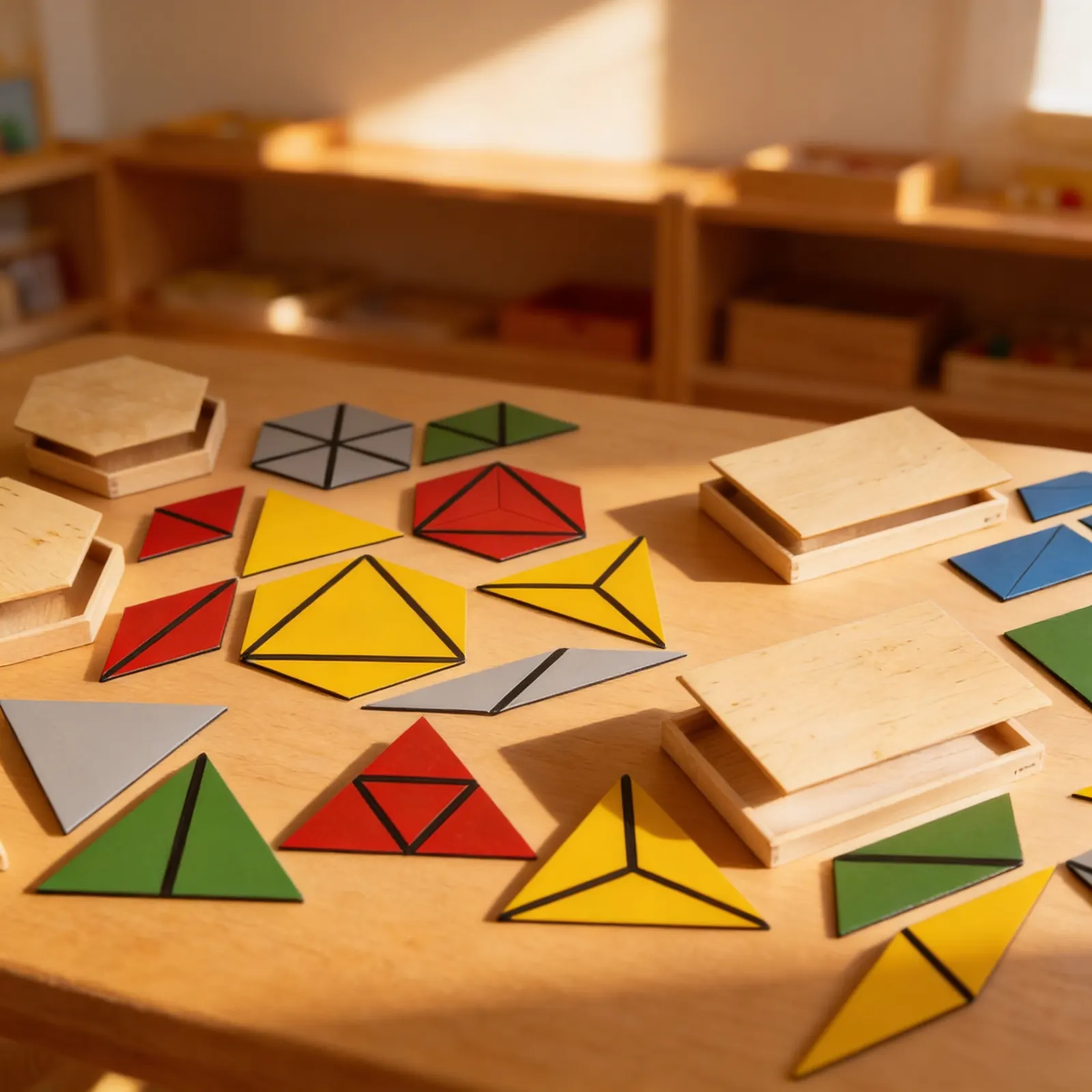
What the child does
Constructive Triangles (Nienhuis) in a child's hands
The Constructive Triangles are a fundamental Montessori sensorial material that makes tangible the concepts behind geometric concepts through concrete manipulation. This comprehensive set includes five wooden boxes containing precisely cut triangular pieces that combine to form squares, rectangles, hexagons, and other geometric shapes, helping children discover mathematical relationships through visual and tactile experiences.
Geometric Understanding
Children discover how triangles combine to create other shapes, building foundational geometry concepts through concrete manipulation.
Visual Discrimination
Matching angles and sides develops keen observation skills and attention to geometric relationships.
Preparation for Mathematics
Hands-on exploration of shapes prepares the mind for abstract mathematical concepts like fractions and angles.
Problem-Solving Skills
Finding the correct triangle combinations develops logical thinking and spatial reasoning abilities.
Activity Guide
How to present it
Place the first rectangular box on a work mat. Remove the lid carefully and set it aside. Arrange yourself to the child's right if they are right-handed.
- 1Remove two yellow triangles from the first compartment. Show how the black lines guide placement by aligning them to form a square.
- 2Continue with the remaining pairs, creating rectangles and parallelograms by matching the black guide lines.
- 3After constructing all shapes, trace around each completed figure with your index finger.
- 4Invite the child to deconstruct and reconstruct each shape independently.
3 tips for parents
- Notice triangular shapes in your environment - roof lines, sandwich cuts, road signs
- Allow your child to work with one box repeatedly before asking for the next
- Appreciate the concentration required for precise alignment without rushing
From the same maker
Spare parts

Why it is in our selection
If you are not sure it suits your child, we answer in person.
Norbert Kovalčín, founder of Faborino · write to him
There is no review here yet. We will ask you for one after you buy. Write the first review
Details
What's in the Box
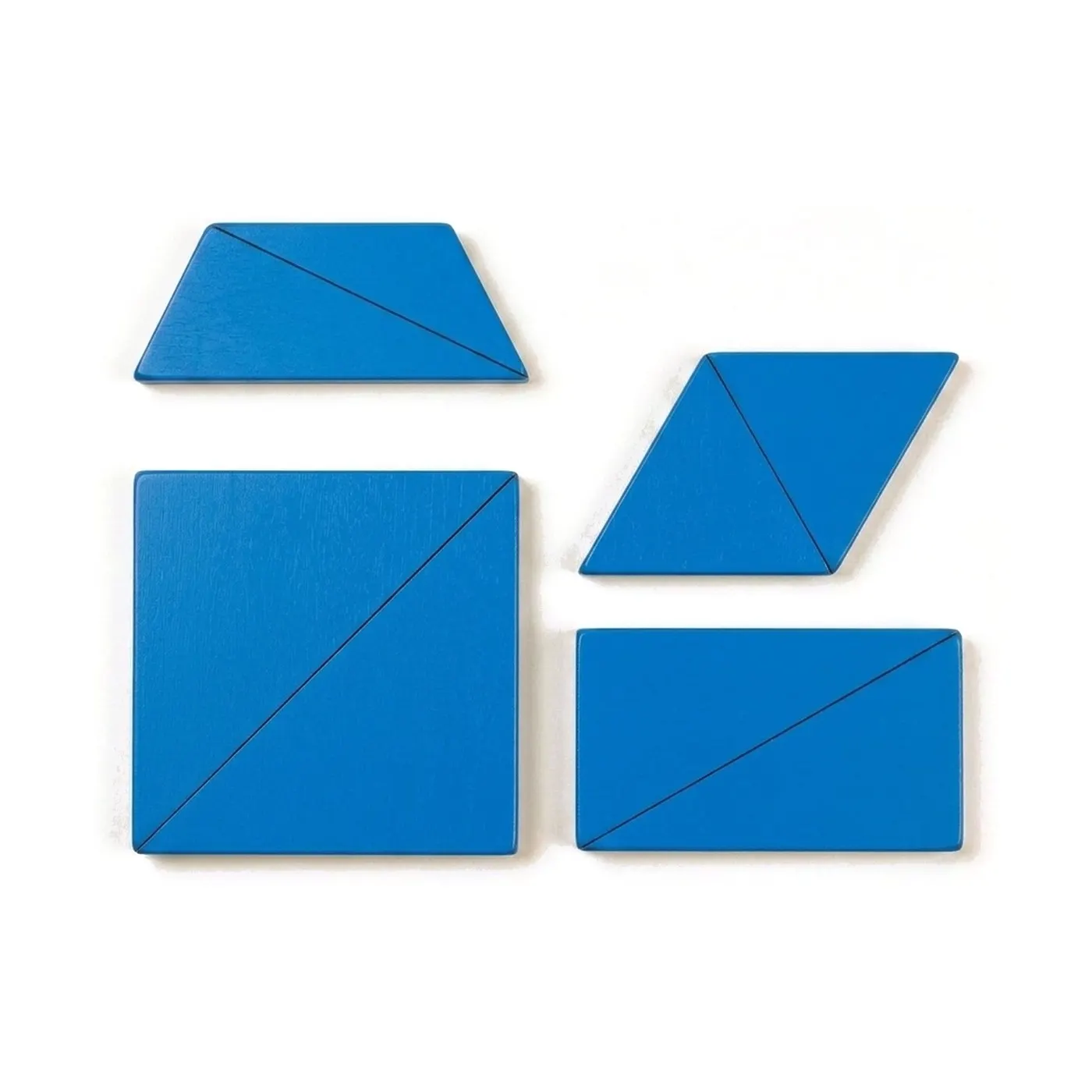
- Rectangular Box A: Yellow triangles forming rectangles
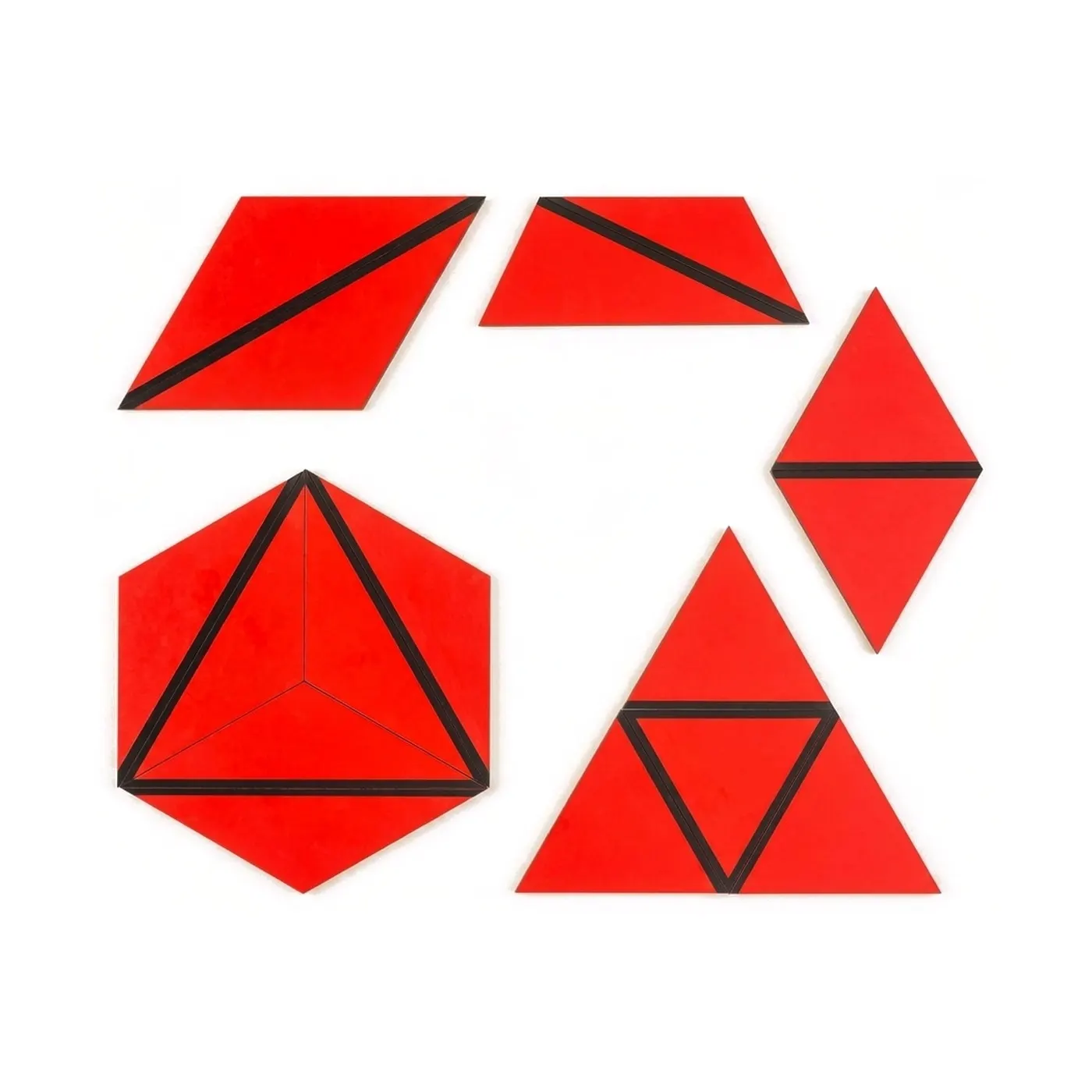
- Rectangular Box B: Colored triangles with black lines
- Triangular Box: Gray triangles forming larger triangles
- Small Hexagonal Box: Triangles forming hexagons
- Large Hexagonal Box: Triangles for complex polygons
Size and material
| Packaging | 28 × 22 × 17 cm |
| Triangle Pieces | Painted plywood |
| Storage Boxes | Natural wood |
| Recommended Age | 3-6 years |
Care
Wipe with slightly damp cloth, dry immediately
Frequently Asked Questions
What are the five boxes included in the Constructive Triangles set?
The complete set includes the Rectangular Box A (yellow triangles), Rectangular Box B (green triangles), Triangular Box (gray triangles), Large Hexagonal Box (yellow triangles forming hexagons), and Small Hexagonal Box (red triangles). Each box contains specific triangle configurations that build different geometric shapes.
How do Constructive Triangles support mathematical development?
These triangles introduce children to geometry concepts including shape recognition, spatial relationships, symmetry, and angles. Through manipulation, children discover how triangles combine to form other polygons, preparing them for later work with fractions, area calculations, and advanced geometry studies.
What is the recommended presentation sequence for this material?
Begin with Rectangular Box A, showing how triangles form rectangles and squares. Progress to Box B for parallelograms, then the Triangular Box for various triangular formations. Finally, introduce the hexagonal boxes to demonstrate how triangles create hexagons and other complex shapes.
Why are the triangles different colors and what do the black lines represent?
The color coding helps children identify matching pieces and understand shape relationships. The black lines on certain edges indicate where triangles should be joined together, serving as a control of error and guiding proper shape construction without adult intervention.
What skills should children have before working with Constructive Triangles?
Children should have experience with basic sensorial materials like the Pink Tower and Brown Stair, demonstrating good hand control and concentration. They should understand concepts of matching and be able to handle materials carefully. Typically introduced around age 4, after establishing foundational sensorial discrimination skills.
Product safety
Manufacturer: Nienhuis Montessori, Anders Celsiusstraat 15, 7442 PB Nijverdal, Netherlands
Constructive Triangles (Nienhuis)
€339.90