
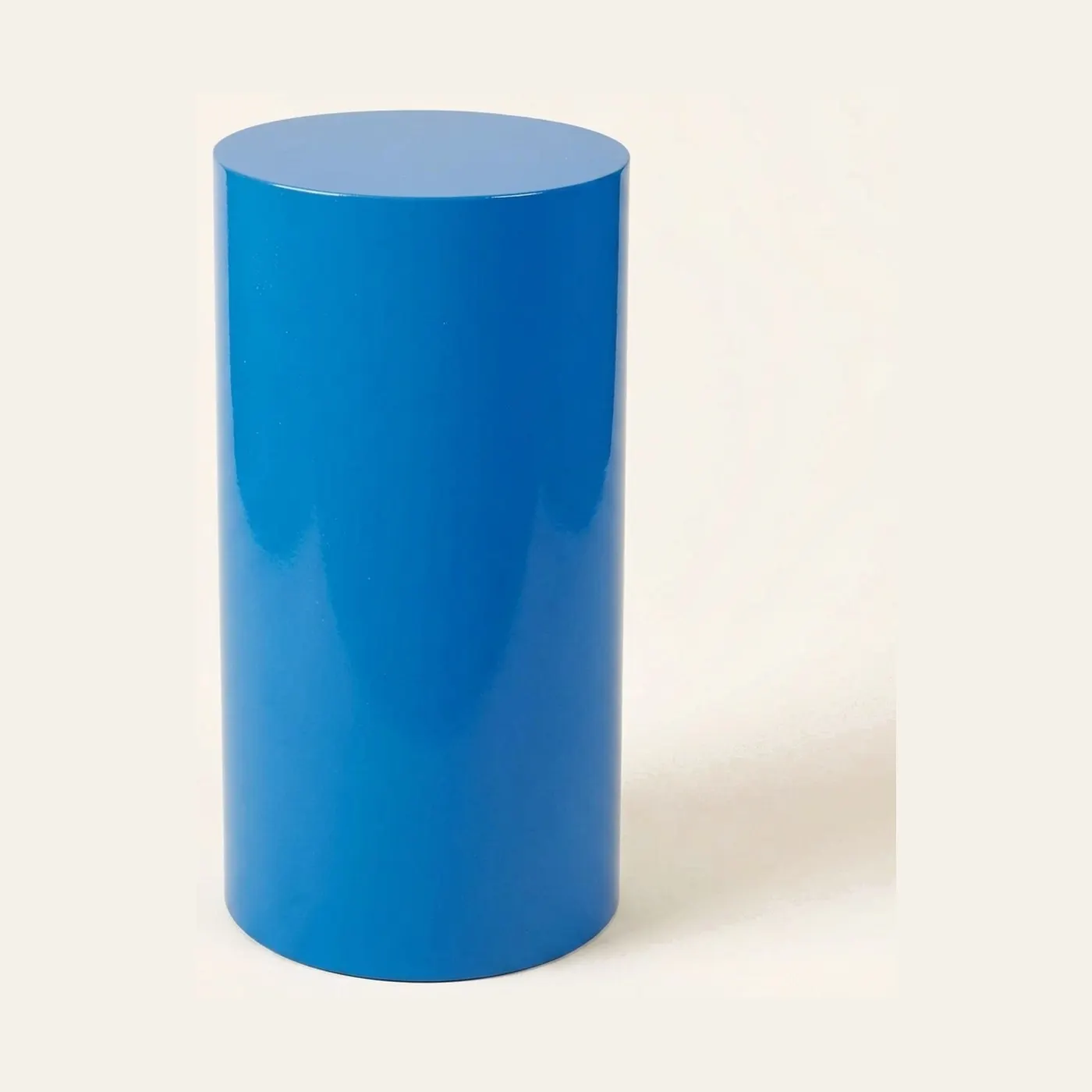
Blue Cylinder: Large Geometric Solid for Tactile Learning
Made by Nienhuis Montessori · shipped by Heutink International (Netherlands) About the maker
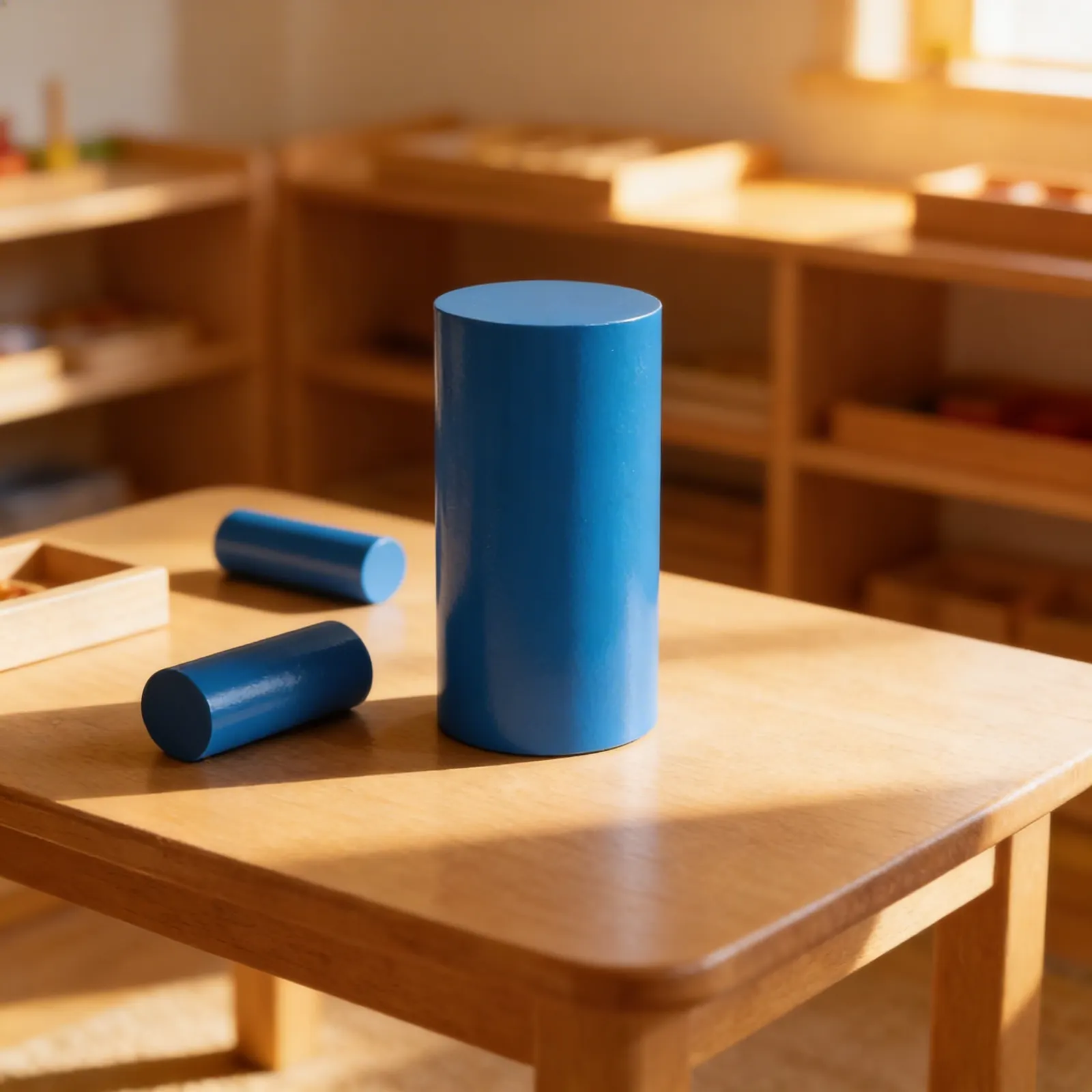
The cylinder from the volume set, derived from a base of 10 by 10 cm and a height of 20 cm. Its base is the one that cannot be squared off: a child who has been finding areas by counting or cutting into triangles reaches a circle and finds neither works. Pouring water from the cylinder into the square prism shows the ratio long before anyone writes down a formula, and having seen the number arrive by measurement makes the formula an answer rather than an instruction. Sold individually, for ages 6 to 12.
“The hands are the instruments of man's intelligence.”
The Montessori cylinder embodies the principle of isolation of difficulty, presenting the pure essence of cylindrical form without distraction.
- Development of stereognostic sense through handling three-dimensional forms
- Understanding of curved surfaces versus plane faces in geometric solids
- Preparation for calculating volume and surface area of cylinders
- Recognition of cylinders in architecture, nature, and everyday objects
Read More
As Maria Montessori emphasized, the hand is the instrument of intelligence, and this material allows the child to build abstract geometric concepts through concrete sensorial exploration. The cylinder's substantial size and smooth surface invite repeated handling, enabling the absorbent mind to internalize three-dimensional properties through tactile and visual channels. This material bridges the sensorial work of early childhood with the mathematical abstractions of the elementary years, supporting the child's natural progression from concrete to abstract thinking. The cylinder serves as a key that unlocks understanding of volume, surface area, and spatial relationships, preparing the mathematical mind for advanced geometric concepts while respecting the child's need for hands-on discovery.
How to present it
Follow the Montessori method of presentation for optimal child development.
Place the cylinder on a neutral-colored mat with other geometric solids nearby but initially covered. Ensure adequate space for rolling and examining the cylinder from multiple angles.
- 1
Invite the child to carry the cylinder with both hands, feeling its weight and smooth surface
Model slow, deliberate movements to encourage mindful exploration - 2
Demonstrate rolling the cylinder, observing how it moves differently from other solids
Use minimal language initially - let the child discover through movement - 3
Explore the two circular bases by tracing with fingers, comparing to the curved surface
Introduce vocabulary only after sensorial exploration: 'base,' 'curved surface,' 'axis' - 4
Stand the cylinder on each base, discussing stability and balance
Connect to real-world examples like columns or tree trunks - 5
Compare with rectangular prism and sphere, noting unique properties
Use the three-period lesson for nomenclature when child shows readiness
Every Child Is a Little Creator

Heritage
Since 1929

In classrooms
Around the world

European brands
Nienhuis, GAM, Educo

AMI approved
To the association standard
Blue Cylinder: Large Geometric Solid for Tactile Learning
