
Double Sandpaper LettersFrench Cursive
The first photo is the maker's own. The other shots are illustrative.
Inv. no. NIE-005603
- Maker
- Nienhuis Montessori, since 1929
- Approval
- AMI
- Base
- Wood
- Letters
- Fine-grain sandpaper
- EAN
- 8719924044848
Final price incl. VAT. Delivery €5.90, €79.10 to go for free delivery.
Advice, warranty and returns are handled by us.
Why it costs €69.90
Behind the price of the original are things you can check yourself.
AMI approval
The material is approved by the Association Montessori Internationale (AMI). Nienhuis has made Montessori materials since 1929.
A verifiable original
The EAN 8719924044848 is on the box. It is the maker's number, not ours.
Double Sandpaper Letters in a child's hands
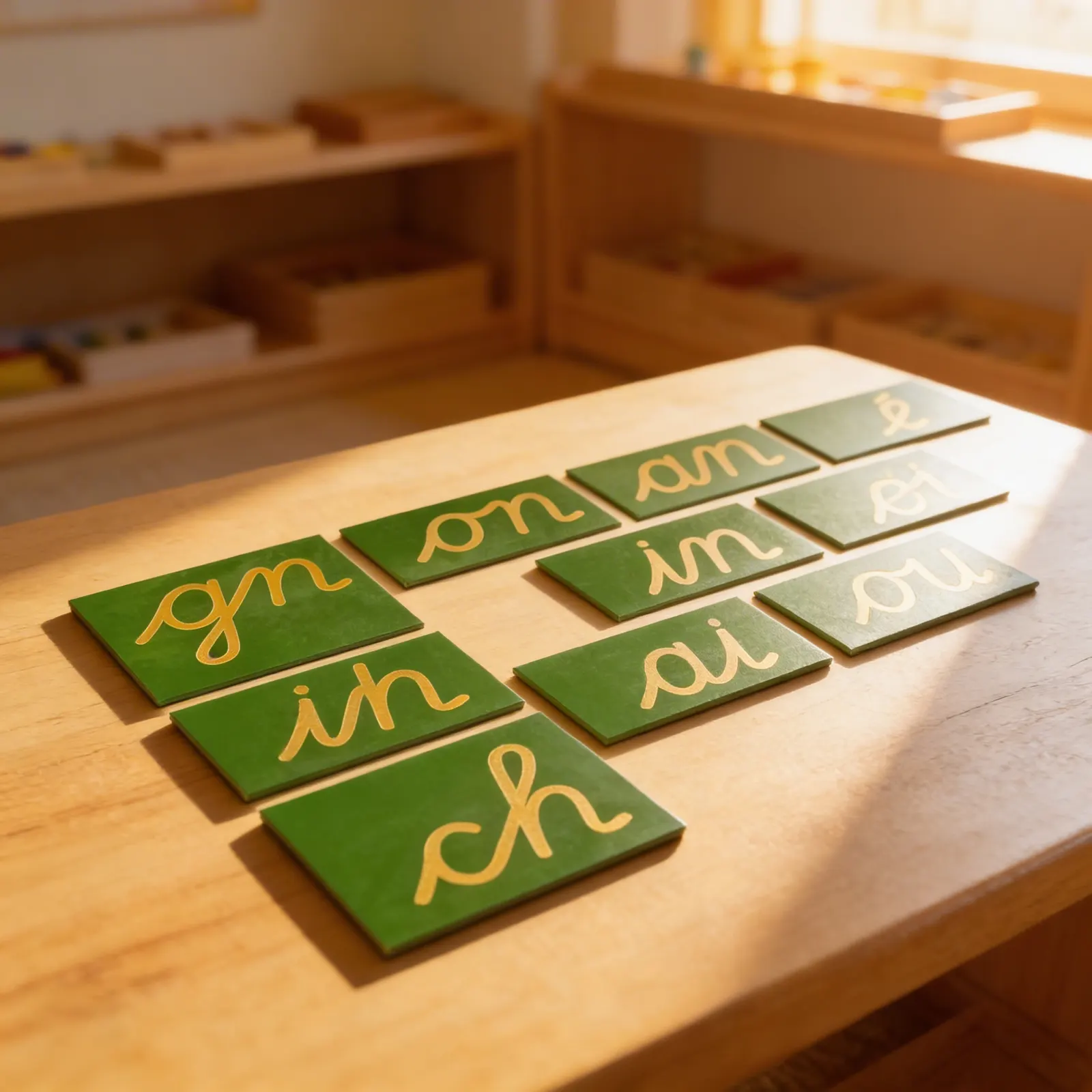
Supporting literacy development, these French cursive double sandpaper letters introduce children to digraphs and letter combinations essential to French literacy. Each card features tactile sandpaper letters on a contrasting green background, so children can trace the cursive formations while developing muscle memory for writing. The sandpaper texture provides sensory feedback that reinforces proper letter formation and prepares the hand for fluid cursive writing.
Cursive Writing Preparation
Tracing sandpaper letters develops the hand movements needed for fluid cursive writing while building recognition of French digraphs.
Multi-Sensory Learning
Combines visual, tactile, and kinesthetic learning as children see, touch, and trace letter formations simultaneously.
French Language Development
Introduces essential French letter combinations that appear frequently in written French, supporting early literacy.
How to present it
Place 3-4 double sandpaper letter cards on a mat, selecting combinations the child has heard in spoken French. Ensure adequate space for tracing movements.
- 1Demonstrate tracing the first digraph with your index and middle fingers, pronouncing its sound clearly
- 2Invite the child to trace while you make the sound together
- 3Present each digraph individually, allowing multiple traces before moving to the next
- 4Play sound games identifying words containing the traced digraphs
- 5Create a three-period lesson with the presented digraphs
3 tips for parents
- Practice identifying these letter combinations in French books or signs during daily activities
- Create simple word lists featuring the digraphs your child is learning
- Support muscle development through activities like kneading dough or finger painting

If you are not sure it suits your child, we answer in person.
Norbert Kovalčín, founder of Faborino · write to him
There is no review here yet. We will ask you for one after you buy. Write the first review
What's in the Box
- Double sandpaper letter cards: Approx. 8 French digraph cards
Size and material
| Packaging | 26 × 20 × 11 cm |
| Base | Wood |
| Letters | Fine-grain sandpaper |
| Recommended Age | 3-6 years |
Care
Wipe with slightly damp cloth; avoid water on sandpaper
Frequently Asked Questions
What French digraphs and combinations are included in this set?
This set includes essential French digraphs and letter combinations such as 'ou', 'oi', 'au', 'eu', 'ai', 'ei', 'ch', 'ph', 'gn', and other phonetic combinations specific to French language learning. Each combination is presented on its own card with raised sandpaper texture.
How do these double letters differ from single sandpaper letters?
Double sandpaper letters focus on letter combinations that create specific sounds in French, while single letters teach individual letter formation. These cards help children understand that certain letters work together to produce unique sounds, essential for French reading and spelling proficiency.
What is the recommended age for introducing cursive double letters?
Children can begin using these materials around age 4-5, after they have mastered single sandpaper letters and have developed sufficient hand control. The child should show readiness for more complex letter formations and an interest in reading French words.
How does the green background support learning?
The green background follows Montessori color-coding conventions for consonant combinations and digraphs. This visual cue helps children distinguish between single letters (typically on pink or blue backgrounds) and letter combinations, supporting their understanding of French phonetic patterns.
Can these be used alongside print letter materials?
While these are specifically designed for cursive writing, they can complement print letter learning. However, in traditional Montessori French programs, cursive is typically introduced first as it flows more naturally with hand movements and helps prevent letter reversals.
Product safety
Manufacturer: Nienhuis Montessori, Anders Celsiusstraat 15, 7442 PB Nijverdal, Netherlands
Double Sandpaper Letters