
Africa Flag Stand: Country Recognition & Placement Activity
Made by Nienhuis Montessori · shipped by Heutink International (Netherlands) About the maker
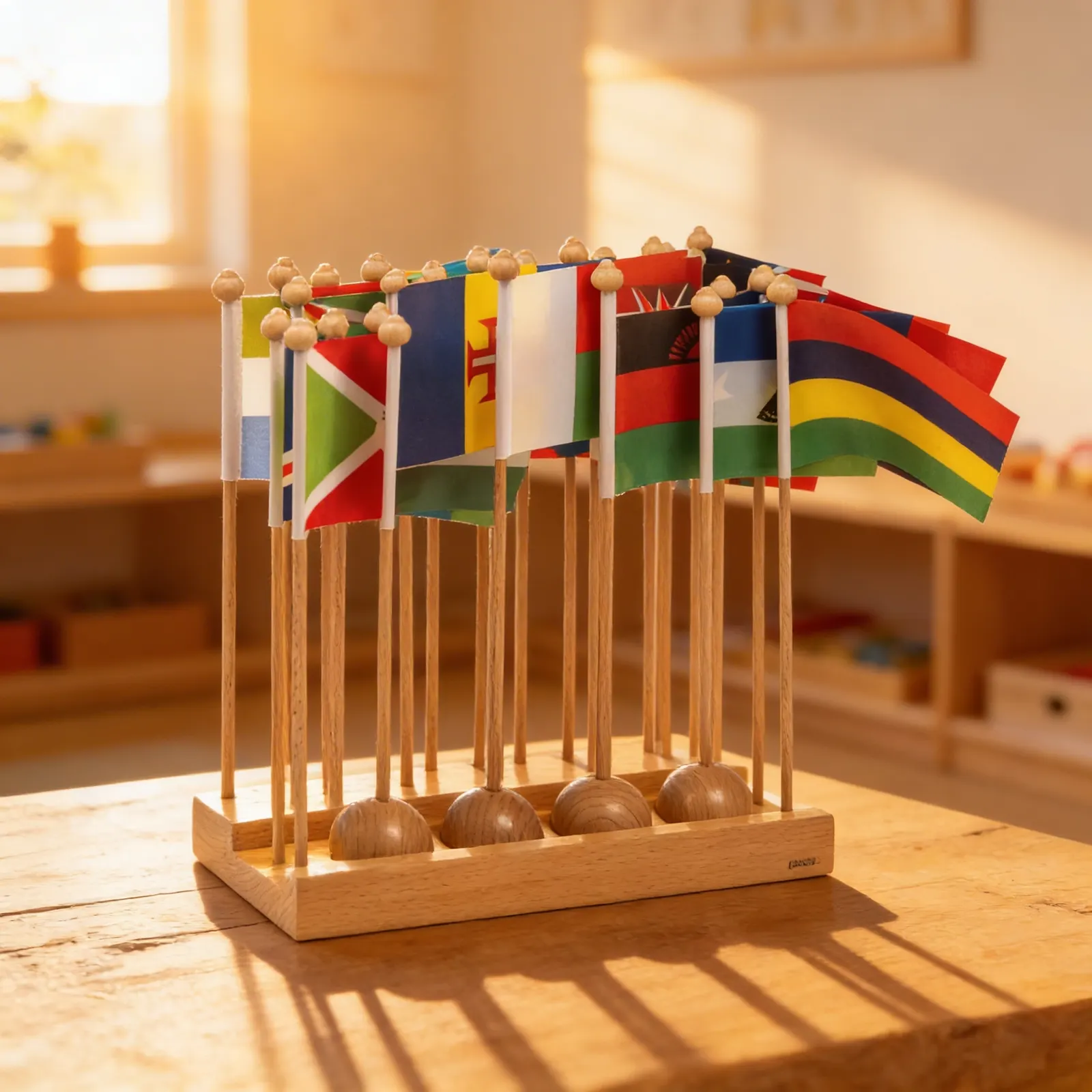
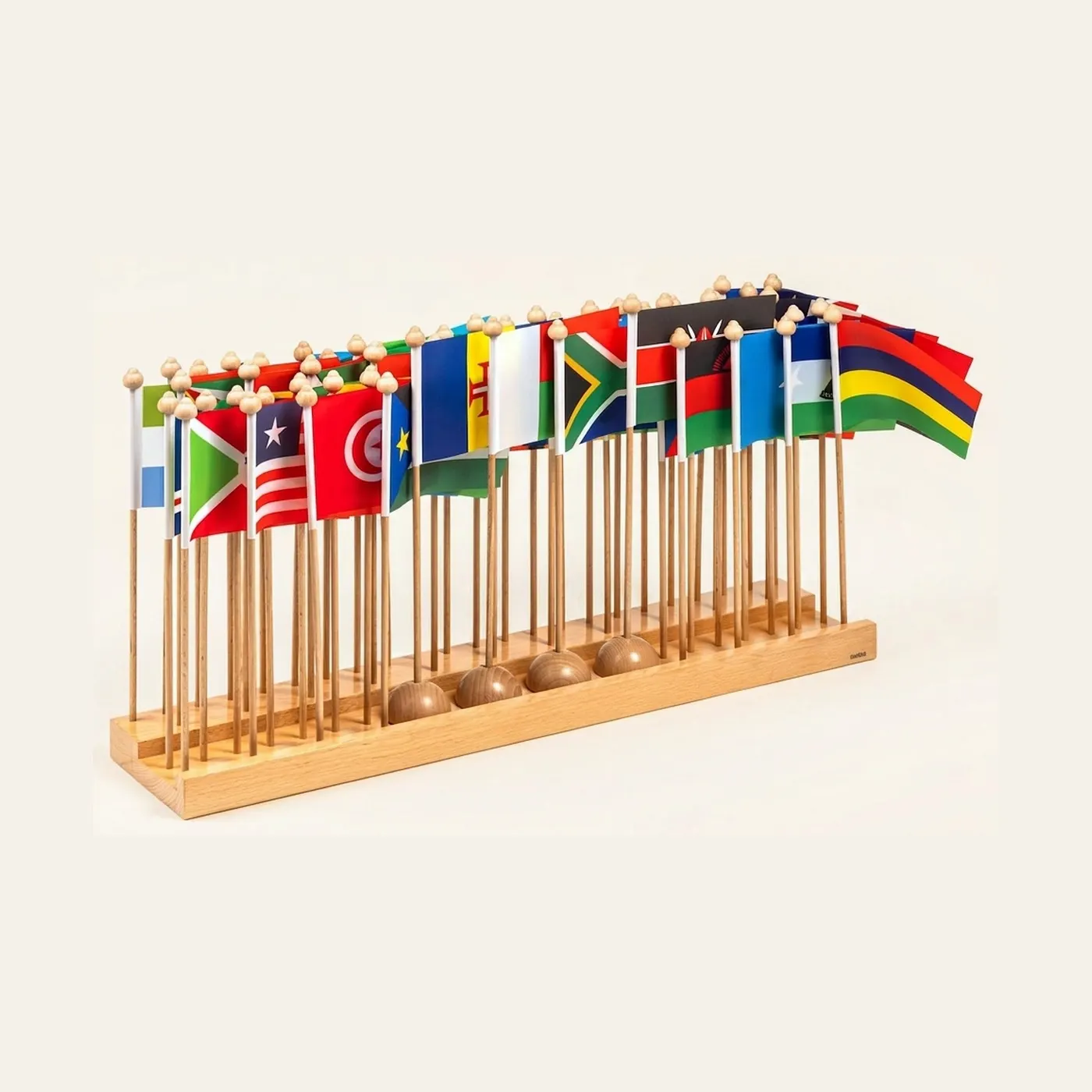
A curved wooden stand holding the national flag of every African country, each on its own pole. Africa is the continent most often reduced to a single idea in a child's mind, and a rack of distinct flags is a quiet argument against that: dozens of countries, each with its own emblem, sitting side by side at eye level. A child places them, names them, and later matches them to the Africa puzzle map, tying the outline of a country to the flag that stands for it. Hardwood stand with printed fabric flags, for ages 3 to 6.
“The senses, being explorers of the world, open the way to knowledge.”
The Africa Flag Stand transforms abstract continental geography into tangible discovery for young children.
- Identifies individual African countries by their distinctive flag designs and color patterns
- Develops fine motor precision through careful placement and manipulation of fabric flags on the wooden stand
- Builds visual discrimination skills by distinguishing between similar flag colors and geometric patterns
- Expands geographical vocabulary through repeated exposure to African country names during flag placement
Read More
Dr. Montessori understood that children learn through concrete manipulation before grasping abstract concepts, which is why this geography material presents African nations as distinct, colorful flags rather than lines on a map. The Africa Flag Stand satisfies the child's natural curiosity about the world beyond their immediate environment during the sensitive period for language and cultural awareness. Each printed fabric flag represents a real nation with its own identity, allowing children to build concrete knowledge of Africa's 54 countries through repeated handling and placement activities. The natural hardwood stand provides stability and organization, essential elements that enable independent exploration without adult intervention. This country recognition activity addresses the young child's need to classify and categorize their expanding world knowledge. The Africa Flag Stand bridges the gap between the child's concrete thinking and the abstract concept of national identity, preparing them for more complex geographical studies. Through this purposeful work, children develop respect for cultural diversity while building the foundation for global citizenship.
How to present it
Follow the Montessori method of presentation for optimal child development.
Place the flag stand in a quiet area with good lighting. Ensure all flags are properly positioned in their holders. Have a world map or globe nearby for reference.
- 1
Invite the child to observe the flag stand and notice the beautiful colors and patterns
Allow time for natural curiosity to emerge before introducing any formal lessons - 2
Remove one flag carefully and examine its colors, shapes, and symbols together
Use descriptive language: 'I see red, yellow, and green stripes' rather than immediately naming the country - 3
Show how to replace the flag in its correct position on the stand
Demonstrate the precise, careful movements that respect the material - 4
Encourage the child to select and explore other flags independently
Step back and observe, intervening only if the child requests help or mishandles the material
Every Child Is a Little Creator

Heritage
Since 1929

In classrooms
Around the world

European brands
Nienhuis, GAM, Educo

AMI approved
To the association standard
Africa Flag Stand: Country Recognition & Placement Activity
