Grammar Symbol - PaperNoun (100)
The first photos are the maker's own. The other shots are illustrative.
Inv. no. NIE-0111A0
- Maker
- Nienhuis Montessori, since 1929
- Approval
- AMI
- Primary Material
- Paper cardstock
- Color
- Solid black
- EAN
- 8719924006365
Final price incl. VAT. Delivery €5.90, €145.60 to go for free delivery.
Advice, warranty and returns are handled by us.
Why it costs €3.40
Behind the price of the original are things you can check yourself.
AMI approval
The material is approved by the Association Montessori Internationale (AMI). Nienhuis has made Montessori materials since 1929.
A verifiable original
The EAN 8719924006365 is on the box. It is the maker's number, not ours.
Grammar Symbol - Paper in a child's hands
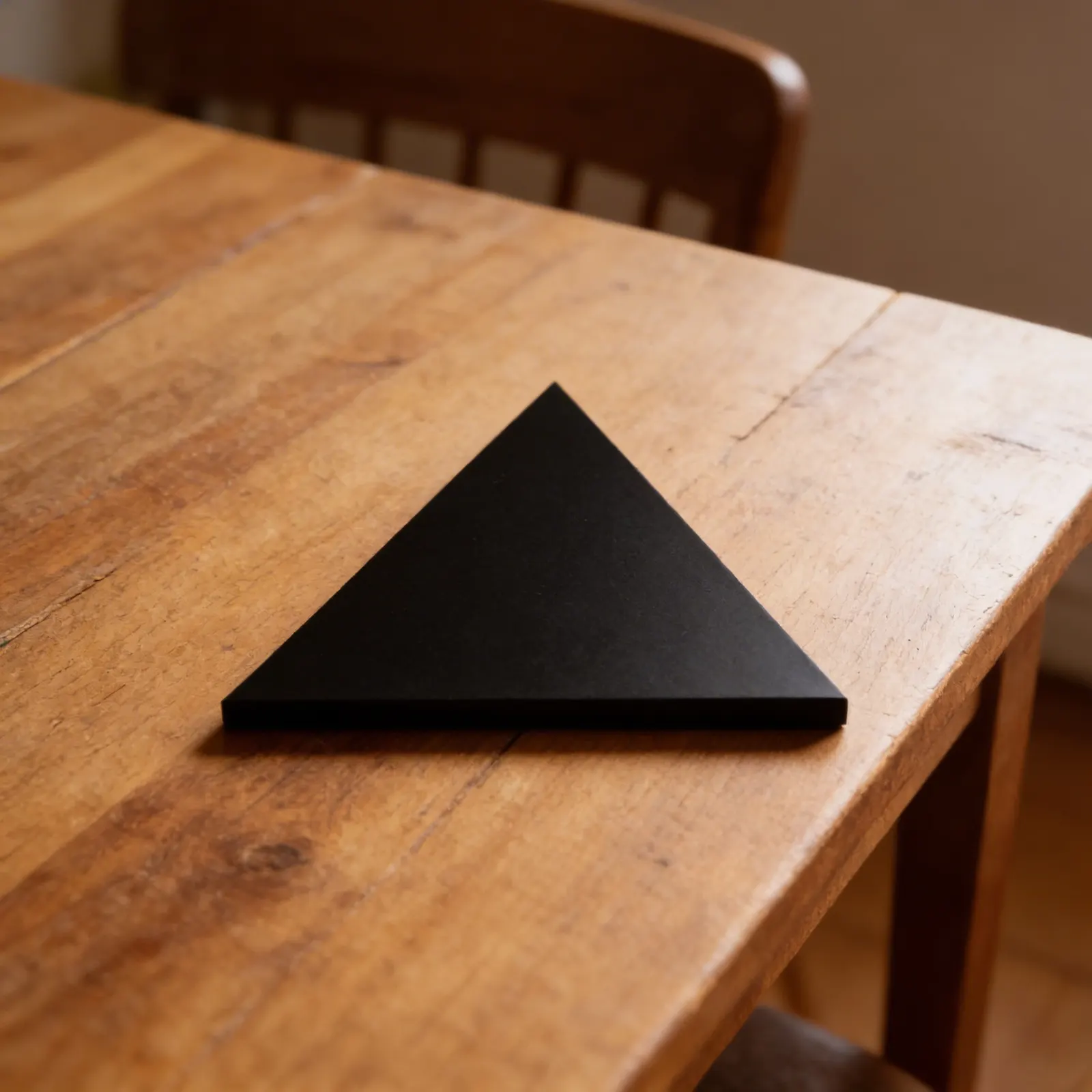
Grammar Symbol - Paper: Noun (100), these paper grammar symbols introduce the noun concept through the iconic black equilateral triangle, a fundamental element in Montessori language work. The set of 100 triangular cards enables children to identify and mark nouns in sentences, supporting the transition from tangible to conceptual language understanding. Each precisely cut triangle provides tactile reinforcement of grammatical concepts while building visual recognition patterns.
Grammar Recognition
Visual symbol association helps children identify nouns as naming words for people, places, and things.
Abstract Thinking
Transitions from concrete objects to symbolic representation of grammatical concepts.
Reading Comprehension
Enables children to analyze sentence structure and understand the role of different word types.
Classification Skills
Develops ability to categorize words based on their grammatical function in sentences.
How to present it
Prepare a simple sentence strip with 5-7 words written clearly. Place the stack of black triangle cards in a small basket beside the work area.
- 1Read the sentence aloud with the child, running your finger under each word
- 2Ask 'Which word tells us the name of something?' and wait for the child's response
- 3When the child identifies a noun, demonstrate placing a black triangle above it
- 4Continue through the sentence, letting the child place triangles above remaining nouns
- 5Read the sentence again, pausing at each triangle to name the noun
3 tips for parents
- Practice finding nouns in everyday contexts: 'What nouns do you see in our kitchen?'
- Make triangle cards from black paper at home to extend practice with favorite books
- Play 'noun detective' games during car rides or walks, without needing physical triangles

If you are not sure it suits your child, we answer in person.
Norbert Kovalčín, founder of Faborino · write to him
There is no review here yet. We will ask you for one after you buy. Write the first review
What's in the Box
- Black Triangle Cards: 100 equilateral triangles representing nouns
Size and material
| Packaging | 12 × 8 × 1 cm |
| Primary Material | Paper cardstock |
| Color | Solid black |
| Recommended Age | 3-6 years |
Care
Keep dry, store flat to prevent bending
Frequently Asked Questions
What size are these noun triangle symbols?
These grammar symbols are designed in the standard Montessori size for noun triangles, typically measuring approximately 1-2cm per side, making them easy for small hands to manipulate while being large enough for clear visibility during language work.
How do children use these paper noun symbols in Montessori language activities?
Children place the black triangles above or below nouns in sentences to identify them visually. This helps them recognize that nouns are naming words for people, places, and things, supporting their understanding of parts of speech through hands-on manipulation.
Why is the noun symbol a black triangle in Montessori?
Dr. Montessori chose the black equilateral triangle to represent nouns because it's the first and most fundamental shape children learn, symbolizing that nouns are the foundation of language - the first words children typically speak are nouns.
Can these paper symbols be used with other grammar symbol materials?
Yes, these noun triangles are designed to work alongside other Montessori grammar symbols like the red circle for verbs and blue triangles for articles, allowing children to analyze complete sentences and understand how different parts of speech work together.
What's the advantage of having 100 symbols in this set?
Having 100 symbols ensures you have enough for multiple children to work simultaneously, for analyzing longer passages, and for various language activities throughout the year without running out, making this an economical choice for classrooms.
Product safety
Manufacturer: Nienhuis Montessori, Anders Celsiusstraat 15, 7442 PB Nijverdal, Netherlands
Grammar Symbol - Paper