
History Of Language Nomenclature
The first photo is the maker's own. The other shots are illustrative.
Inv. no. NIE-ELC5086
- Maker
- Nienhuis Montessori, since 1929
- Product size
- 9.5 × 12.7 cm
- Card Material
- Durable plastic
- Finishing
- Pre-cut with rounded corners
- EAN
- 8719924044312
Final price incl. VAT. Delivery €5.90, €107.10 to go for free delivery.
Advice, warranty and returns are handled by us.
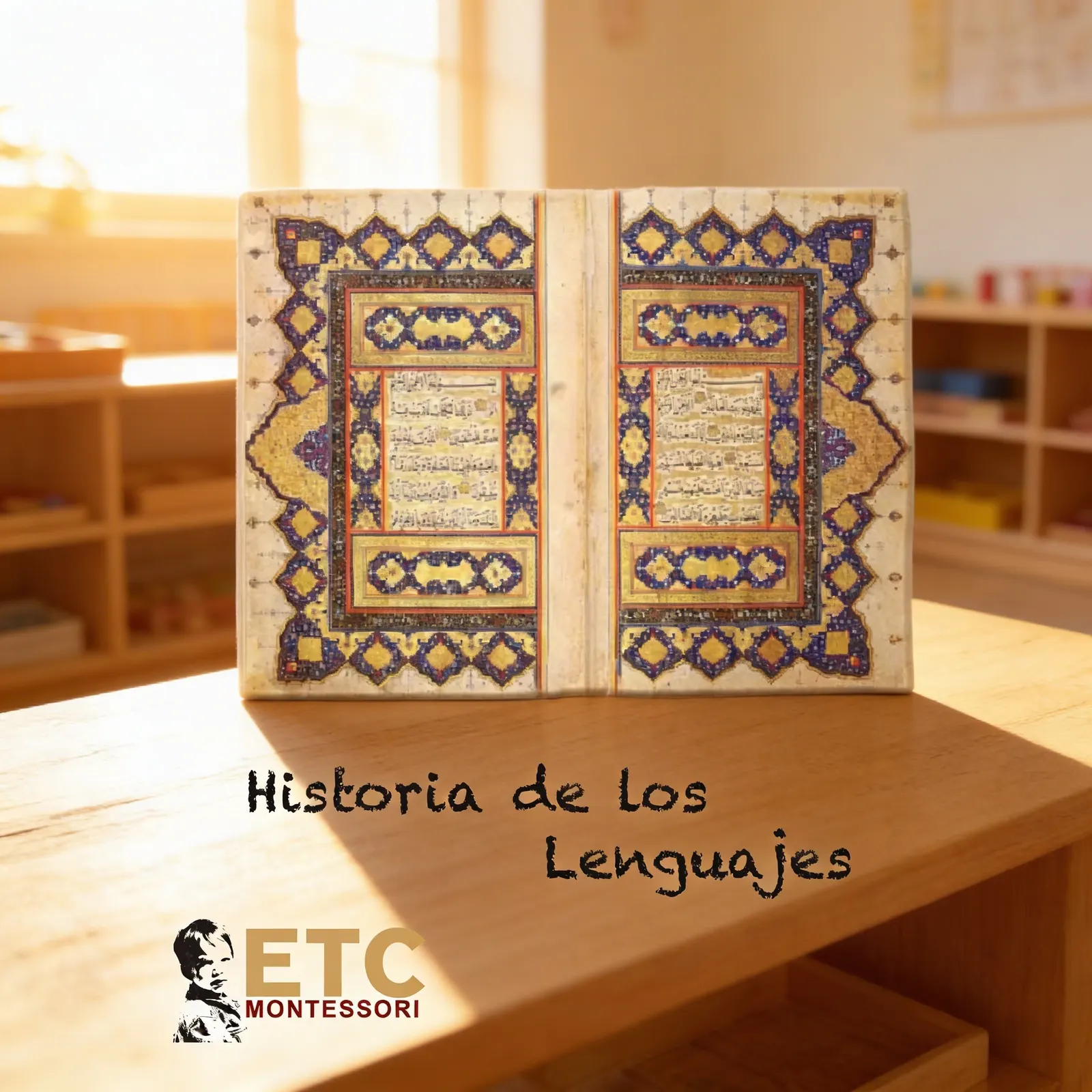
History Of Language Nomenclature in a child's hands
Opening windows to the wider world, these beautiful History of Language Nomenclature cards introduce children to the rich heritage of Arabic script through authentic Islamic manuscript illumination. Each card features exquisite calligraphy with traditional geometric patterns and ornate borders, providing a visual and cultural exploration of written language development. This material connects children to the historical evolution of human communication while developing appreciation for artistic expression in different cultures.
Cultural Awareness
Introduces children to Arabic script and Islamic artistic traditions, fostering appreciation for diverse forms of written communication.
Visual Discrimination
The intricate patterns and calligraphy develop careful observation skills and attention to detail.
Language History
Provides concrete examples of how written language has evolved across different civilizations and time periods.
Artistic Appreciation
Exposes children to the beauty of manuscript illumination and decorative writing as forms of cultural expression.
How to present it
Place the History of Language Nomenclature cards in a basket on the language shelf. Ensure hands are clean before handling to preserve the card quality.
- 1Invite the child to explore the cards, examining one at a time
- 2Point out the flowing lines of Arabic script, tracing in the air
- 3Draw attention to the geometric patterns surrounding the calligraphy
- 4Discuss how these beautiful marks represent words and ideas
- 5Create a display by laying out several cards for comparison
3 tips for parents
- Visit libraries to find books with different alphabets and writing systems
- Point out Arabic numerals on clocks, explaining their historical origin
- Look for Arabic script in your community on signs or product packaging

If you are not sure it suits your child, we answer in person.
Norbert Kovalčín, founder of Faborino · write to him
There is no review here yet. We will ask you for one after you buy. Write the first review
What's in the Box
- Nomenclature Cards: Stack featuring Arabic script and illuminated designs
Size and material
| Product size | 9.5 × 12.7 cm |
| Packaging | 28 × 22 × 1 cm |
| Card Material | Durable plastic |
| Finishing | Pre-cut with rounded corners |
| Recommended Age | 6-12 years |
Care
| Cleaning | Wipe with dry cloth only |
| Storage | Keep flat in dry location |
Frequently Asked Questions
What exactly is included in the History of Language Nomenclature cards?
This set includes nomenclature cards featuring authentic Islamic manuscript illumination with Arabic calligraphy, traditional geometric patterns, and ornate borders. Each card is designed to introduce children to the historical development of written language through beautiful visual examples of Arabic script and artistic expression.
How do these cards support Montessori language development for ages 6-12?
These cards align with Montessori principles by providing concrete visual representations of language history, supporting language development. They help children understand that writing is a form of human expression, develop cultural awareness, and build appreciation for different writing systems while enhancing vocabulary and classification skills.
Do children need to know Arabic to use these cards effectively?
No, children do not need to know Arabic. These cards are designed to introduce the concept of written language development and cultural artistic expression. The focus is on appreciating the visual beauty of the script, understanding that different cultures have different writing systems, and developing awareness of language history rather than reading Arabic text.
What activities can children do with these nomenclature cards?
Children can engage in three-part card activities, matching exercises, sorting by visual patterns, creating art inspired by the geometric designs, discussing the beauty of different scripts, comparing to their own writing system, and using them as inspiration for cultural studies. Teachers can also incorporate storytelling about language history and human communication development.
How do these cards differ from regular language materials?
Unlike typical alphabet or vocabulary cards, these focus on the historical and artistic aspects of written language. They introduce children to the concept that writing has evolved over time and varies across cultures, featuring authentic manuscript art that combines language with visual beauty, making them unique cultural and linguistic learning tools.
Product safety
Manufacturer: Nienhuis Montessori, Anders Celsiusstraat 15, 7442 PB Nijverdal, Netherlands
History Of Language Nomenclature