
Dressing Frame: Snapping: Press-Snap Closure Fine Motor Skill
Made by Nienhuis Montessori · shipped by Heutink International (Netherlands) About the maker
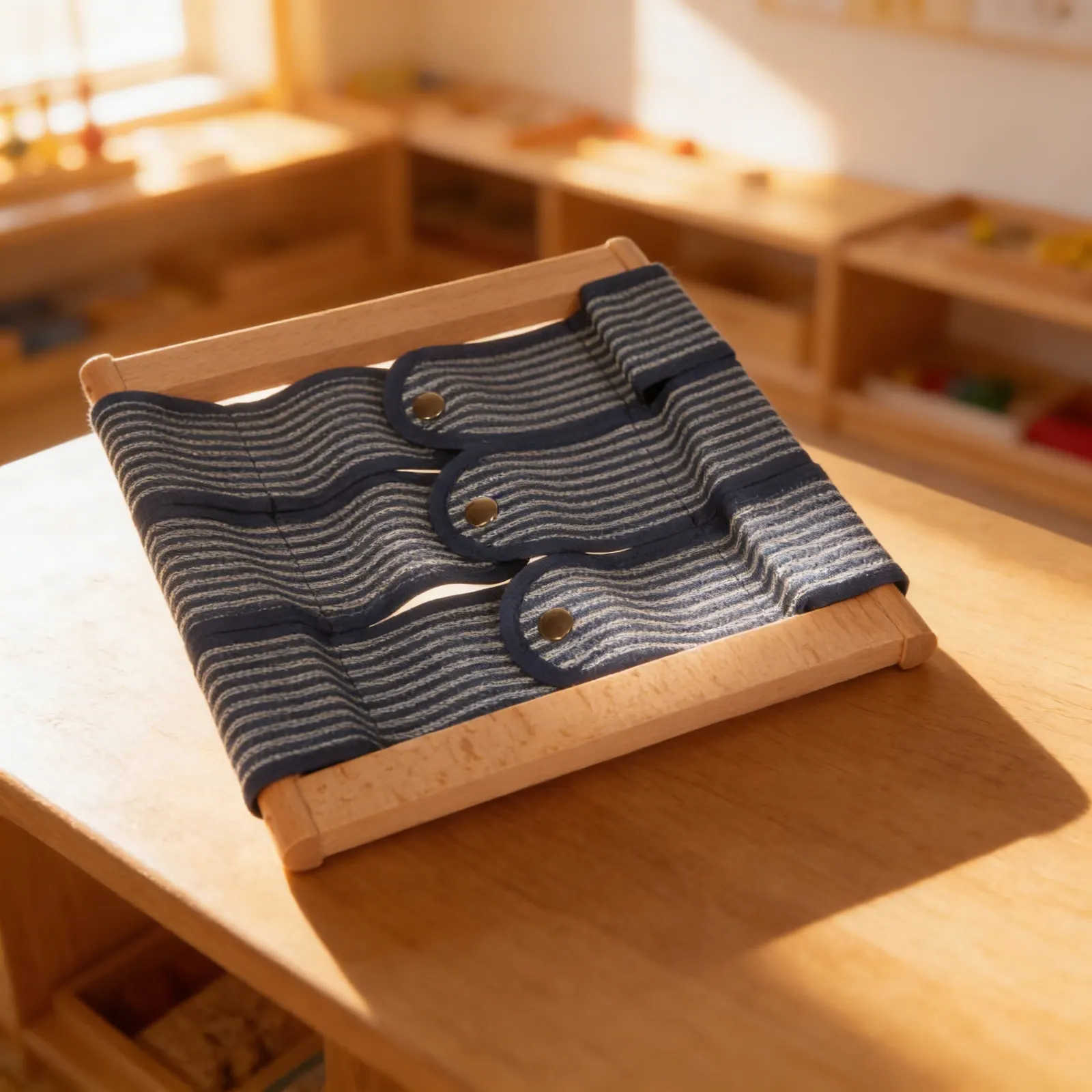
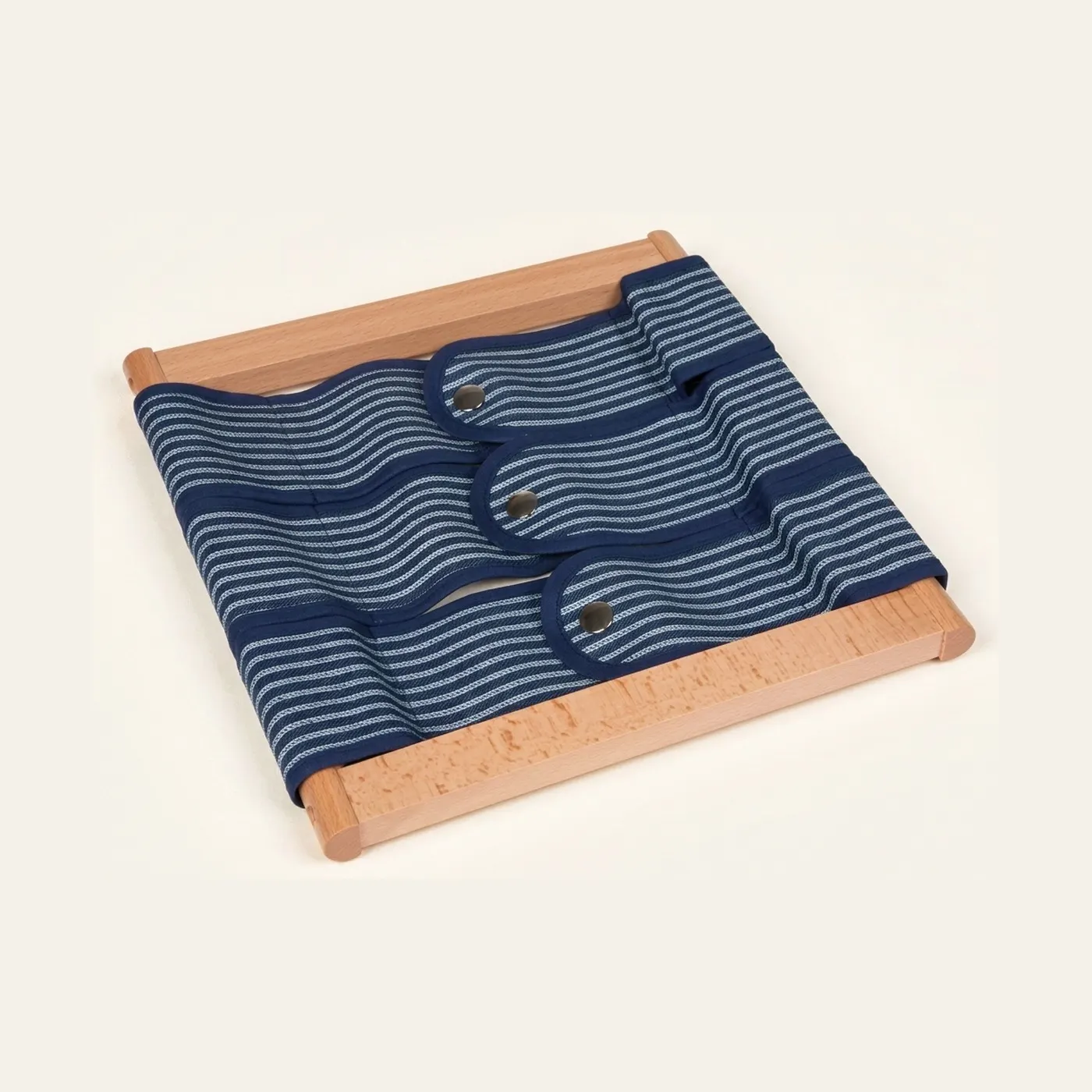
A dressing frame with press snaps, built to the infant and toddler scale with rounded edges, removable washable fabric and fastenings a small hand can grasp. It measures 29.5 by 28 by 2 cm. Snaps ask for something none of the other frames do: force applied straight down while two halves are held in line, so a child cannot succeed by pulling harder, only by lining up first. The click at the end is unambiguous, which is why children who are still guessing at fastenings tend to like these. Wood, cotton blend and metal snaps, for ages 0 to 3.
“Children display a universal love of mathematics, which is par excellence the science of precision, order, and intelligence.”
The dressing frame with snaps embodies Dr. Montessori's principle of isolation of difficulty, presenting the snapping mechanism separately from the complexity of managing clothing on one's body.
- Develops pincer grasp and finger strength necessary for writing preparation
- Builds bilateral hand coordination through opposing movements
- Enhances concentration through repetitive, purposeful activity
- Fosters independence in self-care and dressing skills
Read More
This material respects the child's natural drive toward independence during the sensitive period for order and movement. Through repeated practice with this frame, the child internalizes the precise hand movements needed for self-dressing, building confidence and self-esteem. The material's design follows the Montessori principle of control of error - the child can immediately see and feel whether the snap is properly fastened. This practical life exercise strengthens the pincer grasp essential for later writing, while simultaneously developing concentration, coordination, and the sequential thinking required for complex tasks.
How to present it
Follow the Montessori method of presentation for optimal child development.
Place the frame on a low table or work mat at the child's height. Ensure the snaps are unfastened and the fabric lies flat. Sit to the child's right if you are right-handed (or left if left-handed).
- 1
Hold the top corners of the frame and carry it carefully to the work area
Model slow, deliberate movements to emphasize care of materials - 2
Place your dominant hand's thumb and index finger on the top part of the snap, and the other hand's fingers on the bottom part
Exaggerate the pincer grasp to make the movement visible - 3
Press down firmly until you hear and feel the snap close
Pause after each snap to allow the child to process the action - 4
Continue snapping from top to bottom in sequence
Work systematically to model order and sequence - 5
To unsnap, place fingers on either side of the fastened snap and gently pull apart
Show how to pull from the edges, not the center, to prevent fabric damage - 6
Invite the child to try, offering minimal assistance
Resist the urge to correct immediately - allow self-discovery
Every Child Is a Little Creator

Heritage
Since 1929

In classrooms
Around the world

European brands
Nienhuis, GAM, Educo

AMI approved
To the association standard
Dressing Frame: Snapping: Press-Snap Closure Fine Motor Skill
