
Large Movable Alphabet: International Print
Made by Nienhuis Montessori · shipped by Heutink International (Netherlands) About the maker
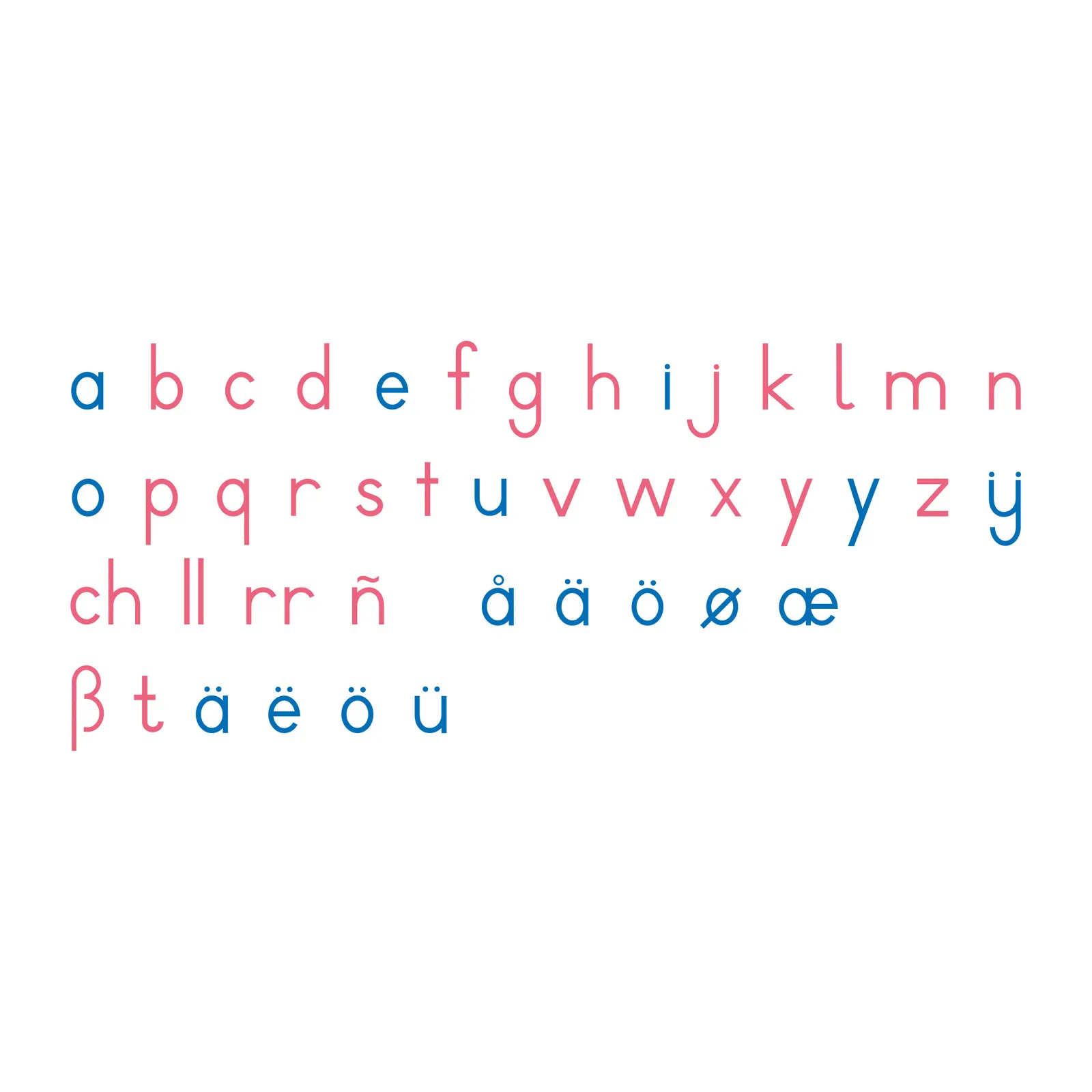
Large Movable Alphabet, International Print is a complete word building set of laminated cardstock and plastic letters, color coded to grammar: ten of each consonant in pink and fifteen of each vowel in blue. Once children ages 3 to 6 have learned the letter sounds with the Sandpaper Letters, they use this larger international print alphabet to compose words with confidence before formal handwriting begins. Additional Spanish, Nordic and German letters extend the set for multilingual classrooms.
“Education is a natural process spontaneously carried out by the human individual, and is acquired not by listening to words but by experiences upon the environment.”
The Large Movable Alphabet with International Print exists as a bridge between the child's spoken language and written expression, particularly vital in multilingual environments. Each blue vowel and pink consonant piece allows children to construct words before their hand coordination permits fluid writing.
- Word construction using color-coded vowels and consonants
- Recognition of international characters including accents and digraphs
- Phonetic spelling development through letter manipulation
- Visual discrimination between similar international characters
Read More
The inclusion of diacritical marks and digraphs recognizes that language extends beyond basic English characters, children encounter accents, umlauts, and combined letters in their daily environment. This color-coded system makes visible the structure of language: vowels as the voice of words, consonants as their framework. The movable letters permit endless experimentation without the permanence of writing, freeing children to explore spelling patterns across multiple languages. Dr. Montessori observed that children possess an absorbent mind for language acquisition, and this international alphabet honors that capacity by providing tools for authentic multilingual expression.
How to present it
Follow the Montessori method of presentation for optimal child development.
Place the alphabet box on a mat with blue vowels on the left compartments and pink consonants arranged alphabetically. Include a basket of familiar objects or picture cards representing words from the child's languages.
- 1
Invite the child to choose an object and say its name clearly
Start with phonetically simple words before introducing those with diacritical marks - 2
Sound out the word together, identifying each phoneme
Emphasize the difference between letter names and sounds - 3
Select each letter needed, placing them left to right to build the word
Use gentle touches to align letters, demonstrating care for materials - 4
Read the completed word by running a finger beneath the letters
This prepares for left-to-right reading directionality - 5
For international words, demonstrate placing accents or combining digraphs
Show how é differs from e in sound and meaning
Every Child Is a Little Creator

Heritage
Since 1929

In classrooms
Around the world

European brands
Nienhuis, GAM, Educo

AMI approved
To the association standard
Large Movable Alphabet: International Print
