
Maria Montessori Writes To Her Grandchildren, Letters From India 1939-1946
Made by Nienhuis Montessori · shipped by Heutink International (Netherlands) About the maker
Maria Montessori Writes to Her Grandchildren collects the private letters she sent from India between 1939 and 1946 to her four teenage grandchildren waiting in Holland, offering a personal window into a period known mainly through her published pedagogy. Presented as a 184 page hardcover, 2020 edition, it belongs on the shelf of any parent or guide in the 3 to 6 Montessori environment who wants to know the woman behind the method, not another activity manual. Made of paper pages with a cardboard hard cover, it is a standalone reading title, not a classroom apparatus.
“Education is a natural process spontaneously carried out by the human individual, and is acquired not by listening to words but by experiences upon the environment.”
Maria Montessori Writes To Her Grandchildren introduces children to history through authentic personal letters, bridging the abstract concept of time with tangible human connection.
- Historical awareness through authentic primary source documents
- Cultural appreciation of India during the 1940s period
- Reading comprehension with meaningful, real-world texts
- Understanding of letter-writing as historical communication
Read More
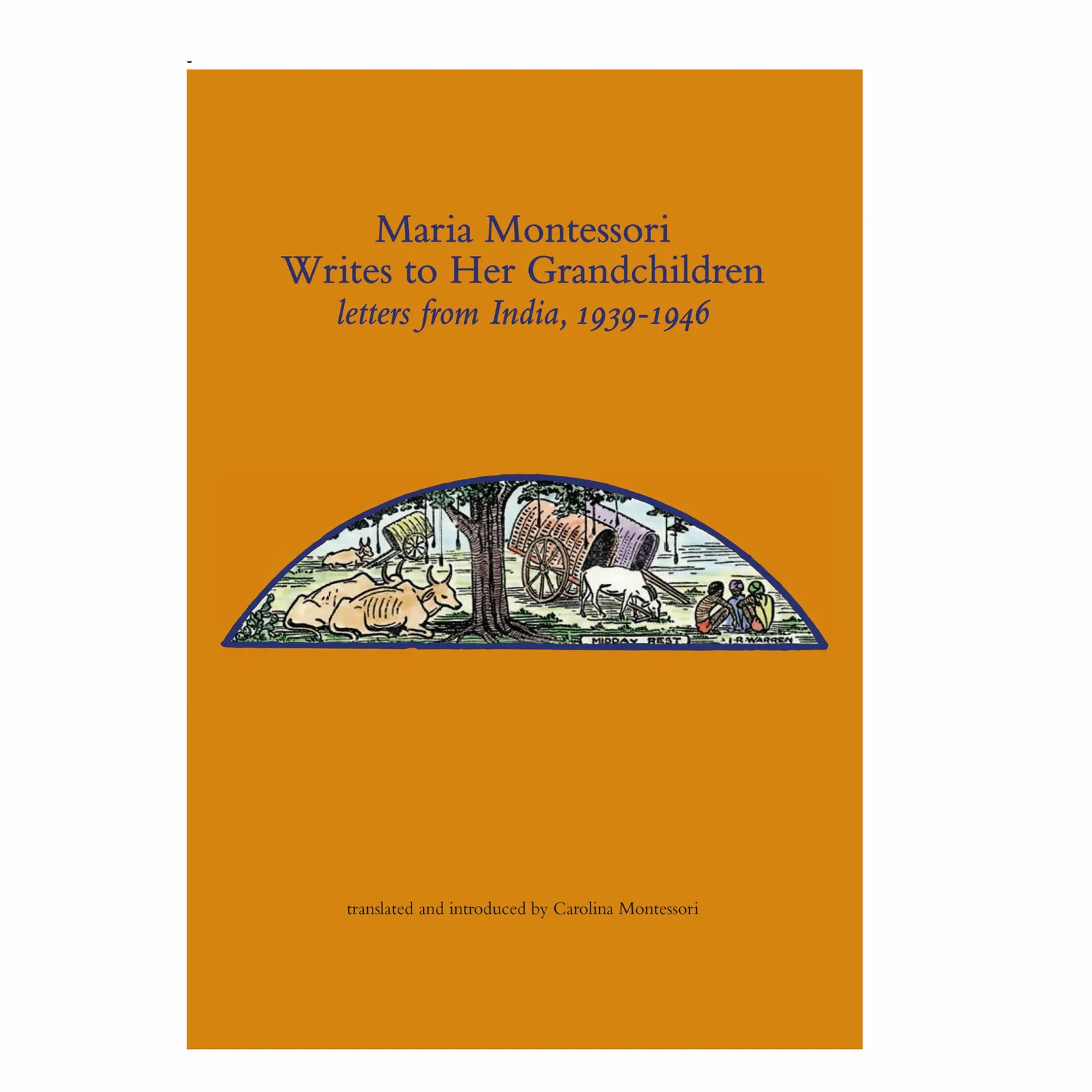
These letters from India 1939-1946 serve as primary source documents that children can explore, discovering how real people communicated across continents before modern technology. The collection transforms Maria Montessori from a distant historical figure into a grandmother writing to her family, making history personal and relatable for young readers. Through examining these wartime correspondences, children develop understanding of historical periods while practicing reading comprehension with meaningful, real-world texts. The book's evocative cover illustration of traditional Indian life provides visual context that enriches the written content, allowing children to construct mental images of the environment Montessori inhabited while writing. This epistolary format demonstrates how written communication preserves human experiences across time, inspiring children to value both reading and writing as tools for connection and historical record.
How to present it
Follow the Montessori method of presentation for optimal child development.
Place the book on a reading mat with a globe or map showing Italy and India. Have paper and writing materials nearby for extension activities.
- 1
Begin by examining the cover illustration together, discussing what you notice about the Indian setting
Allow the child to make observations before providing historical context - 2
Read one letter aloud, pausing to discuss unfamiliar words or cultural references
Keep a small notebook to record new vocabulary or questions to research later - 3
Locate India and Italy on the globe, tracing the distance between grandmother and grandchildren
Use string or ribbon to show the physical distance the letters traveled - 4
Discuss how long letters took to travel in 1940s compared to today's instant communication
Calculate approximate travel time using historical shipping routes - 5
Invite the child to draw or write about something from the letter that interested them
Accept all forms of expression - pictures, symbols, or emerging writing
Every Child Is a Little Creator

Heritage
Since 1929

In classrooms
Around the world

European brands
Nienhuis, GAM, Educo

AMI approved
To the association standard
Maria Montessori Writes To Her Grandchildren, Letters From India 1939-1946
