
Mystery BagFamiliar Items
The first photo is the maker's own. The other shots are illustrative.
Inv. no. NIE-001770
- Maker
- Nienhuis Montessori, since 1929
- Approval
- AMI
- Bag Material
- Cotton fabric with drawstring
- Object Materials
- Mixed (fabric, plastic, metal, wood, rubber)
- EAN
- 8719924000318
Final price incl. VAT. Delivery €5.90, €105.10 to go for free delivery.
Advice, warranty and returns are handled by us.
Why it costs €43.90
Behind the price of the original are things you can check yourself.
AMI approval
The material is approved by the Association Montessori Internationale (AMI). Nienhuis has made Montessori materials since 1929.
A verifiable original
The EAN 8719924000318 is on the box. It is the maker's number, not ours.
Mystery Bag in a child's hands
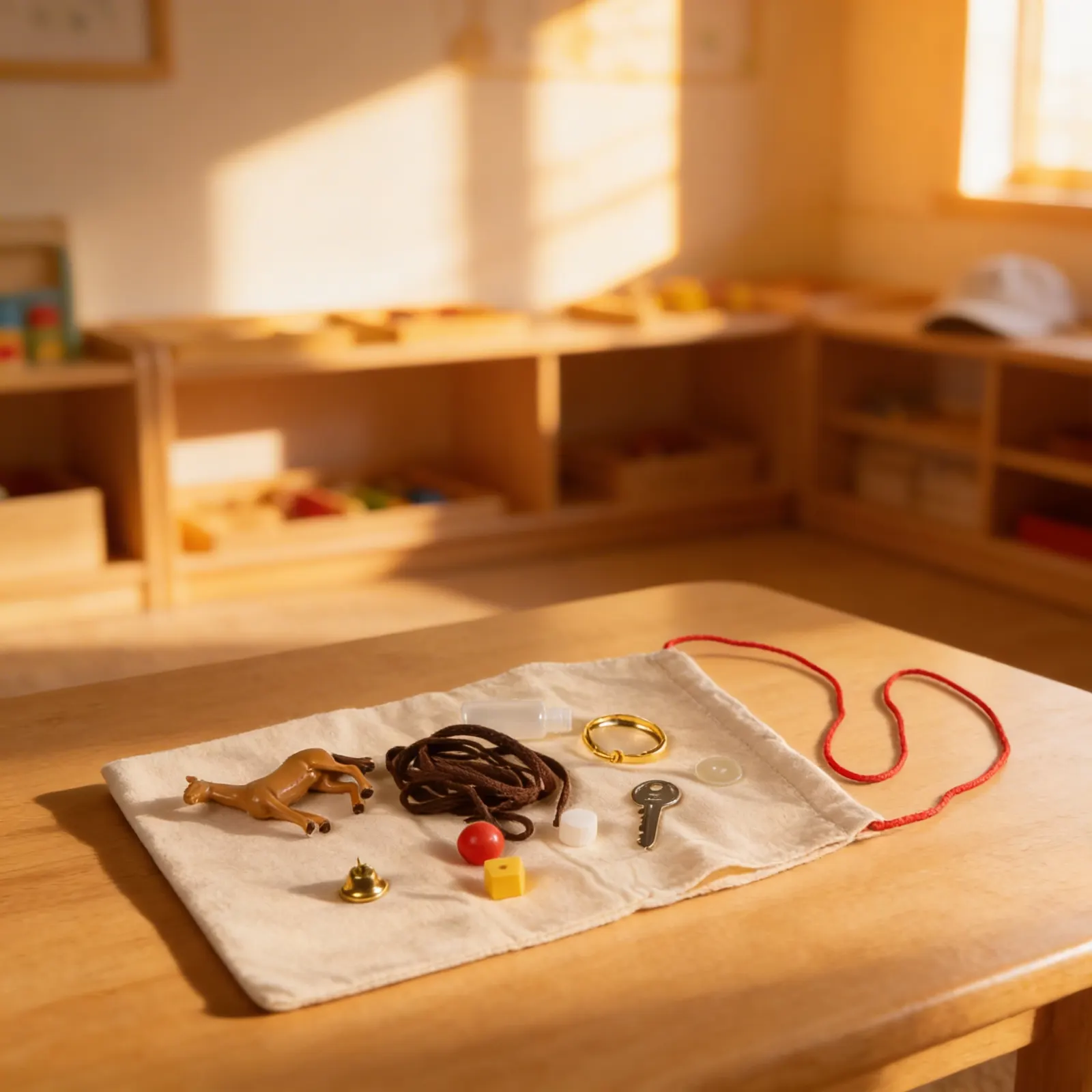
A cloth bag holding familiar objects, identified by hand alone with the bag closed. Familiar is the whole point of this version: a child naming a key or a spoon by touch is not learning what a key is, they are discovering that they already knew it well enough to recognise it without looking. That is the stereognostic sense, and this is the material that proves to a child they have one. Cotton with assorted objects, for ages 3 to 6.
Stereognostic Sense
Develops the ability to recognize objects through touch alone, refining tactile perception and mental imagery.
Vocabulary Enhancement
Expands descriptive language as children articulate textures, shapes, and materials they discover.
Concentration Skills
Requires focused attention to isolate tactile information without visual input.
Memory Development
Strengthens recall as children match tactile impressions with known objects from daily life.
How to present it
Place the Mystery Bag on a mat or table. Have a small basket ready for removed items. Ensure hands are clean and dry for optimal tactile sensitivity.
- 1Demonstrate reaching into the bag and feeling one object without looking, describing what you feel aloud
- 2Invite the child to place one hand in the bag and explore a single object through touch
- 3Ask the child to describe what they feel using descriptive words before naming the object
- 4Have the child remove the object to verify their guess, then place it in the basket
- 5Continue until all objects are explored, then return items to bag for future use
3 tips for parents
- Create simple mystery bags at home using a pillowcase and safe household items
- Play 'texture hunt' games where children find items matching descriptions from the bag
- Use bath time to explore how water changes the feel of different materials

If you are not sure it suits your child, we answer in person.
Norbert Kovalčín, founder of Faborino · write to him
There is no review here yet. We will ask you for one after you buy. Write the first review
What's in the Box
- Drawstring bag: Red cotton fabric
- Mystery objects: Approx. 8 familiar household items
Size and material
| Packaging | 14 × 14 × 8 cm |
| Bag Material | Cotton fabric with drawstring |
| Object Materials | Mixed (fabric, plastic, metal, wood, rubber) |
| Recommended Age | 3-6 years |
Care
Spot clean bag with damp cloth; sanitize objects as needed
Frequently Asked Questions
What items are typically included in the Mystery Bag?
The bag contains approximately 8 familiar household objects with varied textures and materials, such as a small brush, cork, shell, stone, fabric piece, wooden cube, metal spoon, and rubber ball. Items may vary but are always safe, child-appropriate everyday objects.
How do children use the Mystery Bag for learning?
Children reach into the bag without looking and use only their sense of touch to identify objects. They describe what they feel, guess the item, then remove it to check. This develops tactile discrimination, vocabulary, and concentration as they focus solely on touch sensations.
What skills does this activity develop?
The Mystery Bag develops tactile discrimination, sensorial awareness, descriptive vocabulary, concentration, memory, and critical thinking. Children learn texture words (smooth, rough, soft, hard), practice patience, and build confidence in their sensory perceptions.
Can I add my own items to the Mystery Bag?
Yes, you can customize the bag with additional safe household items. Choose objects with distinct textures and shapes that children encounter daily. Ensure items are large enough to prevent choking hazards and avoid sharp edges or breakable materials.
How can I extend this activity for different age groups?
For younger children (3-4), start with 4-5 very distinct items. For older children (5-6), add more challenging objects, play matching games with duplicate items, or have children describe objects for others to guess. You can also sort items by texture or material properties.
Product safety
Manufacturer: Nienhuis Montessori, Anders Celsiusstraat 15, 7442 PB Nijverdal, Netherlands
Mystery Bag