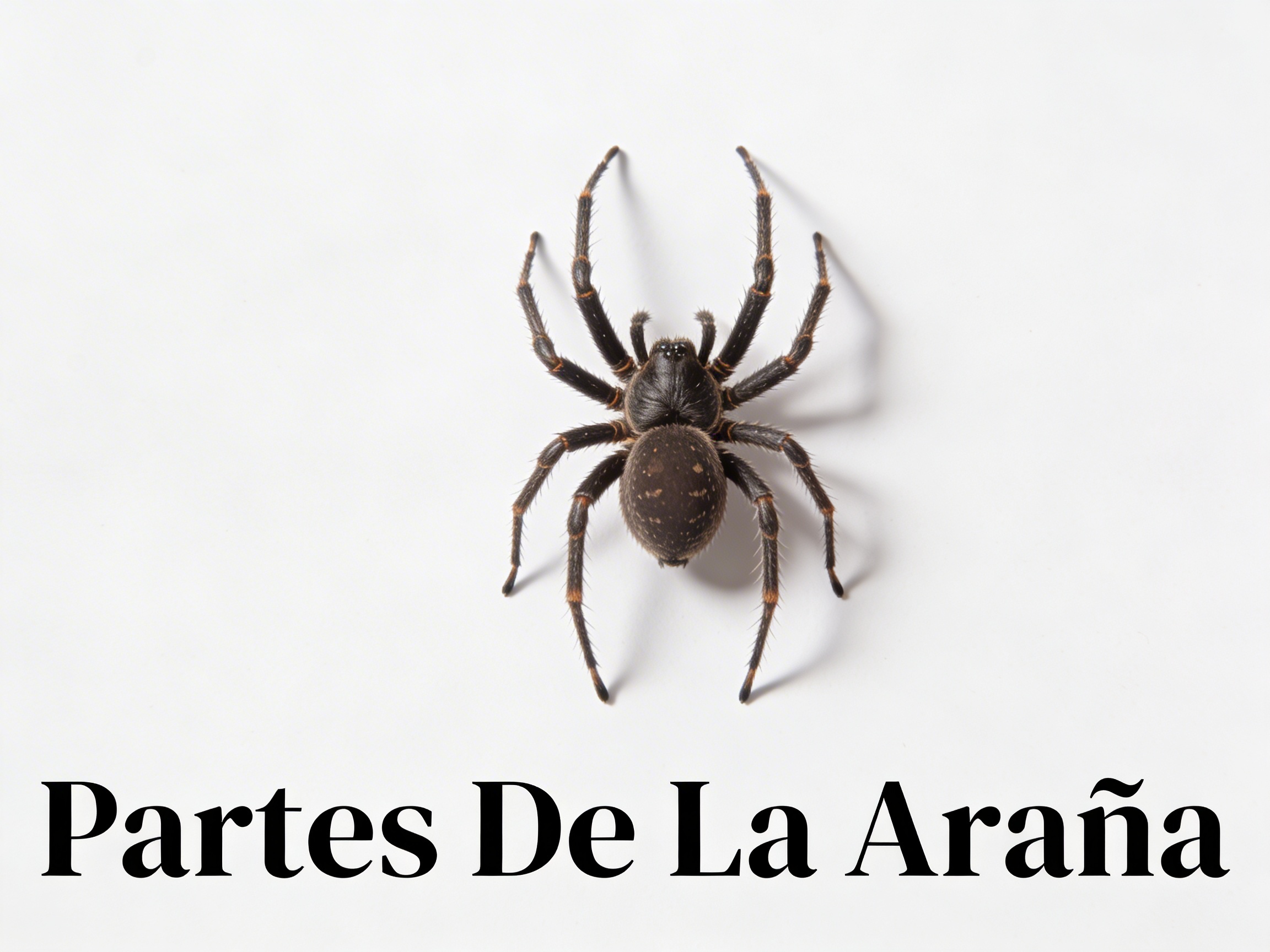
The Partes De La Araña is a Educational Materials Montessori material designed for children aged 3-6, crafted by Nienhuis Montessori to AMI standards.
These Spanish-language three-part nomenclature cards introduce children to spider anatomy through beautifully illustrated cards featuring labeled body parts. Each set includes control cards showing the complete spider with labels, picture cards without text, and separate label cards, allowing children to match and learn anatomical vocabulary like 'cefalotórax' and other spider parts in Spanish.
“The child is both a hope and a promise for mankind.”— Maria MontessoriEducation and Peace
“The hands are the instruments of man's intelligence.”
— Maria Montessori, The Absorbent Mind
Partes De La Araña nomenclature cards fulfill the young child's need for precise vocabulary and classification during their sensitive period for language. These Spanish-language cards present spider anatomy through a three-part format that isolates each anatomical term, allowing children to build vocabulary systematically. The separation of image, label, and control cards in Partes De La Araña creates multiple pathways for learning - visual recognition, reading practice, and matching work. By focusing on spider anatomy in Spanish, these cards meet the dual needs of language enrichment and scientific classification. The nomenclature format of Partes De La Araña respects the child's ability to absorb complex vocabulary when presented clearly and systematically. Through repeated work with these spider anatomy cards, children satisfy their drive to name and categorize the natural world while building Spanish vocabulary.
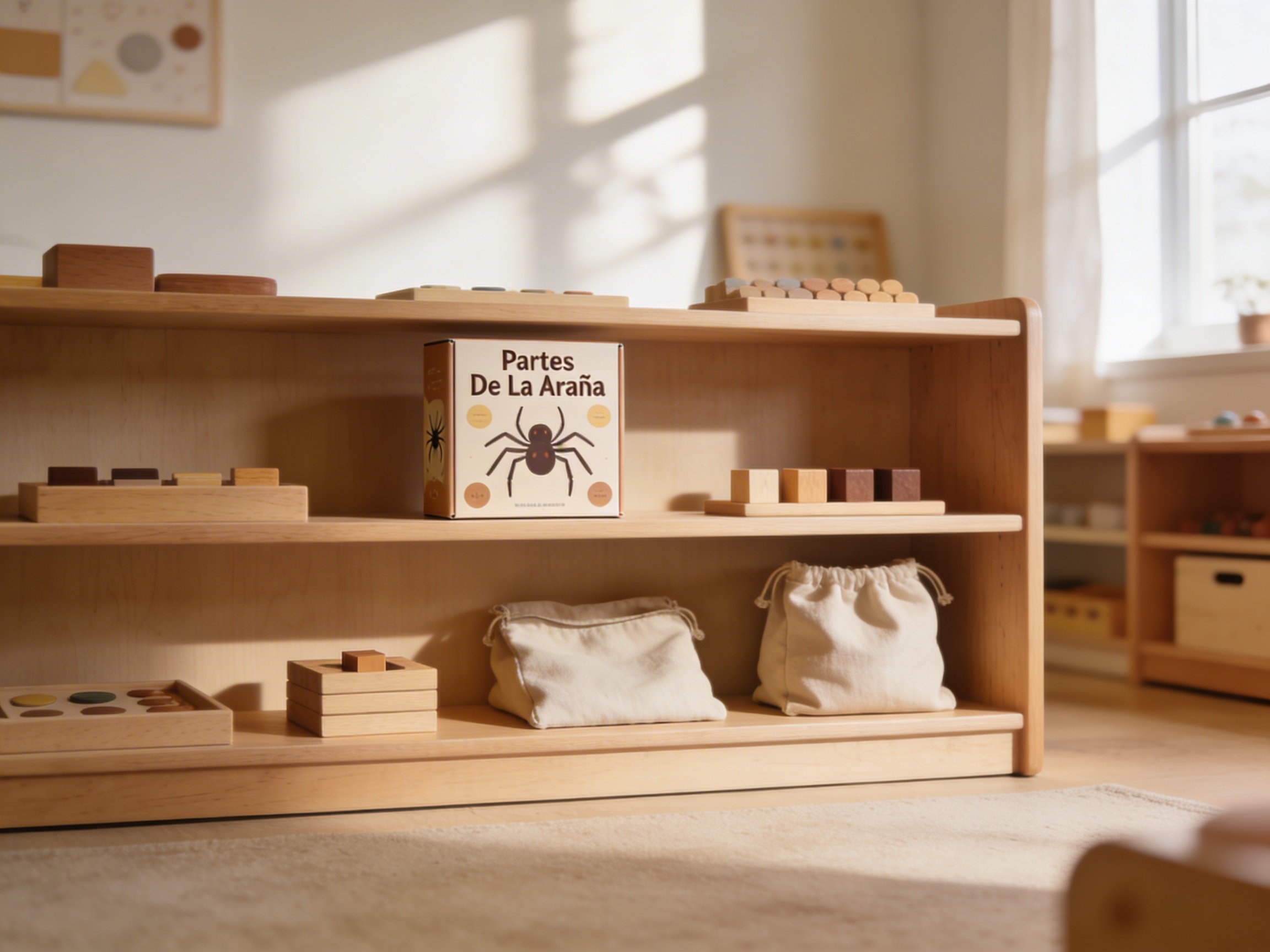
Each order includes everything needed for proper presentation and long-term use.
Follow the Montessori method of presentation for optimal child development.
Child examines control cards, naming known spider parts in Spanish
Match picture cards to corresponding control cards
Read label cards and place below matched pictures
Remove control cards and work with pictures and labels only
Use control cards to check work independently
Every material is carefully selected for durability, safety, and authentic Montessori experience.
Sourced from sustainably managed European forests. Beechwood is chosen for its exceptional durability, smooth grain, and natural warmth that invites touch.
Natural, unbleached cotton in child-friendly colors. The fabric provides the right amount of friction for developing fingers while being gentle on sensitive skin.
Water-based, child-safe finish that meets the strictest European safety standards. Designed to withstand years of daily use without chipping or peeling.
Each material supports multiple areas of child development simultaneously.
Builds precise Spanish language skills with anatomical terms like 'cefalotórax', supporting bilingual development and scientific literacy.
Color-coded anatomy sections help children identify and differentiate spider body parts while strengthening observation skills.
Three-part card format supports emerging readers by connecting images with written Spanish labels through hands-on matching.
Introduces zoological concepts and invertebrate anatomy, laying foundations for later scientific study.
Designed for child-sized hands
Professional tips from AMI-trained guides to maximize the educational value of this material.
“Present Spanish pronunciation clearly during initial three-period lesson with new vocabulary”
Store cards in labeled envelope to maintain organization and teach care of materials
Connect to zoology studies by examining real spiders or detailed models alongside cards
Create extension activities where children draw spiders and label parts in Spanish
Everything you need to know about this material.
These three-part nomenclature cards are designed for children ages 3-6, though they can be used with older children learning Spanish or studying spider anatomy.
The set includes three types of cards for each spider body part: control cards with pictures and labels, picture cards without text, and separate label cards for matching activities.
Children will learn key spider anatomy vocabulary including cefalotórax (cephalothorax), abdomen, patas (legs), quelíceros (chelicerae), pedipalpos (pedipalps), and other essential body parts in Spanish.
Children first explore the control cards to see the complete labeled image, then match the picture cards with the corresponding label cards, promoting independent learning and vocabulary development through hands-on manipulation.
Yes, the visual nature of the cards and the matching system allows children to work independently, and parents can learn alongside their children using the control cards as reference guides.
Can't find what you're looking for?
Contact Our Experts
Share your experience with this material and help other educators and parents.


