
Pressure CylindersSpring-Loaded Pairs for Weight Discrimination
The first photo is the maker's own. The other shots are illustrative.
Inv. no. NIE-001300
- Maker
- Nienhuis Montessori, since 1929
- Approval
- AMI
- Cylinders
- Solid beechwood
- Springs
- Precision steel springs, 6 graduated tensions
- EAN
- 8719924000165
Final price incl. VAT. Free delivery.
Advice, warranty and returns are handled by us.
Why it costs €163.90
Behind the price of the original are things you can check yourself.
AMI approval
The material is approved by the Association Montessori Internationale (AMI). Nienhuis has made Montessori materials since 1929.
A verifiable original
The EAN 8719924000165 is on the box. It is the maker's number, not ours.
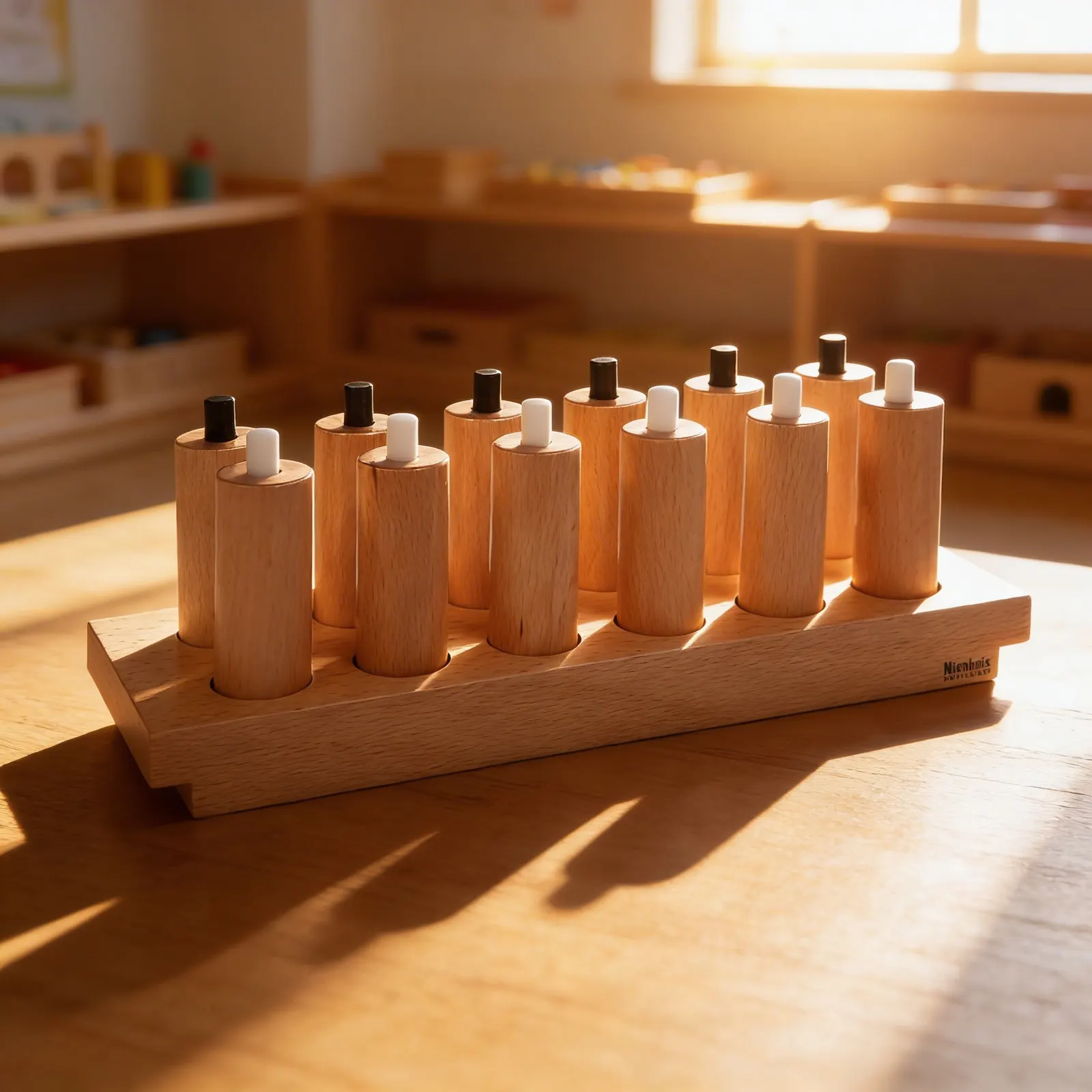
Pressure Cylinders in a child's hands
Six matching pairs of cylinders with spring-loaded plungers, pressed rather than lifted. Pressure is a sense most materials never touch, and it has to be met on its own terms: the child pushes a plunger, feels how hard it pushes back, and finds the cylinder that resists the same amount. Nothing about the outside tells them, so the hand is the only instrument. Pairing comes first, then grading from least to most resistance. Designed by George Russell. Beechwood with steel springs, for ages 3 to 6.
Tactile Discrimination
Distinguishing fine differences in pressure and resistance
Concentration
Requires focused, mindful touch to compare sensations
Memory
Holding pressure sensations in working memory for comparison
Scientific Thinking
Systematic testing and comparison builds experimental mindset
How to present it
- 11
- 22
- 33
- 44
2 tips for parents
- Let children help with cooking tasks that involve pressing: kneading dough, pressing cookies
- Play pressure games: 'Press my hand lightly... now firmly... now in between'

If you are not sure it suits your child, we answer in person.
Norbert Kovalčín, founder of Faborino · write to him
There is no review here yet. We will ask you for one after you buy. Write the first review
What's in the Box
- Box A: Wooden box with 6 pressure cylinders
- Box B: Matching wooden box with 6 pressure cylinders
Size and material
| Packaging | 31 × 10 × 11 cm |
| Cylinders | Solid beechwood |
| Springs | Precision steel springs, 6 graduated tensions |
| Finish | Water-based lacquer, smooth surface |
| Recommended Age | 3.5-6 years |
| Montessori Level | Primary (Casa) |
Care
| Cleaning | Wipe with dry cloth. Do not submerge, protects springs. |
| Inspection | Check spring tension annually. Springs maintain calibration for years. |
Frequently Asked Questions
What do children learn from the Pressure Cylinders?
Children develop baric sense (weight discrimination) by pressing spring-loaded cylinder pairs and comparing the resistance. This refines tactile perception and prepares the mathematical mind for understanding measurement and gradation.
How are the Pressure Cylinders presented?
Present one pair at a time, pressing gently with the fingertips. Children compare the resistance of each cylinder in a pair, then grade all cylinders from lightest to heaviest pressure. The work develops concentration and systematic comparison skills.
At what age should children use this material?
The Pressure Cylinders are typically introduced between ages 3.5-5 years, after children have worked with other sensorial materials. The child should demonstrate refined hand control and interest in tactile discrimination activities.
How do Pressure Cylinders differ from the Baric Tablets?
While both develop weight discrimination, Pressure Cylinders use spring resistance rather than actual weight differences. This isolates a different aspect of the baric sense, active pressure versus passive weight, offering complementary sensorial experiences.
Can children self-correct with this material?
Yes, through careful comparison and repeated practice, children develop the sensitivity to detect differences between cylinders. Pairing exercises provide built-in control of error, as mismatched pairs feel noticeably different when pressed.
Product safety
Manufacturer: Nienhuis Montessori, Anders Celsiusstraat 15, 7442 PB Nijverdal, Netherlands
Pressure Cylinders