
Sandpaper Letter Tracing Tray
The first photos are the maker's own. The other shots are illustrative.
Inv. no. NIE-040800
- Maker
- Nienhuis Montessori, since 1929
- Approval
- AMI
- Tray
- Natural wood
- Letters
- Sandpaper on cardboard
- EAN
- 8719924012441
Final price incl. VAT. Delivery €5.90, €84.10 to go for free delivery.
Advice, warranty and returns are handled by us.
Why it costs €64.90
Behind the price of the original are things you can check yourself.
AMI approval
The material is approved by the Association Montessori Internationale (AMI). Nienhuis has made Montessori materials since 1929.
A verifiable original
The EAN 8719924012441 is on the box. It is the maker's number, not ours.
Sandpaper Letter Tracing Tray in a child's hands
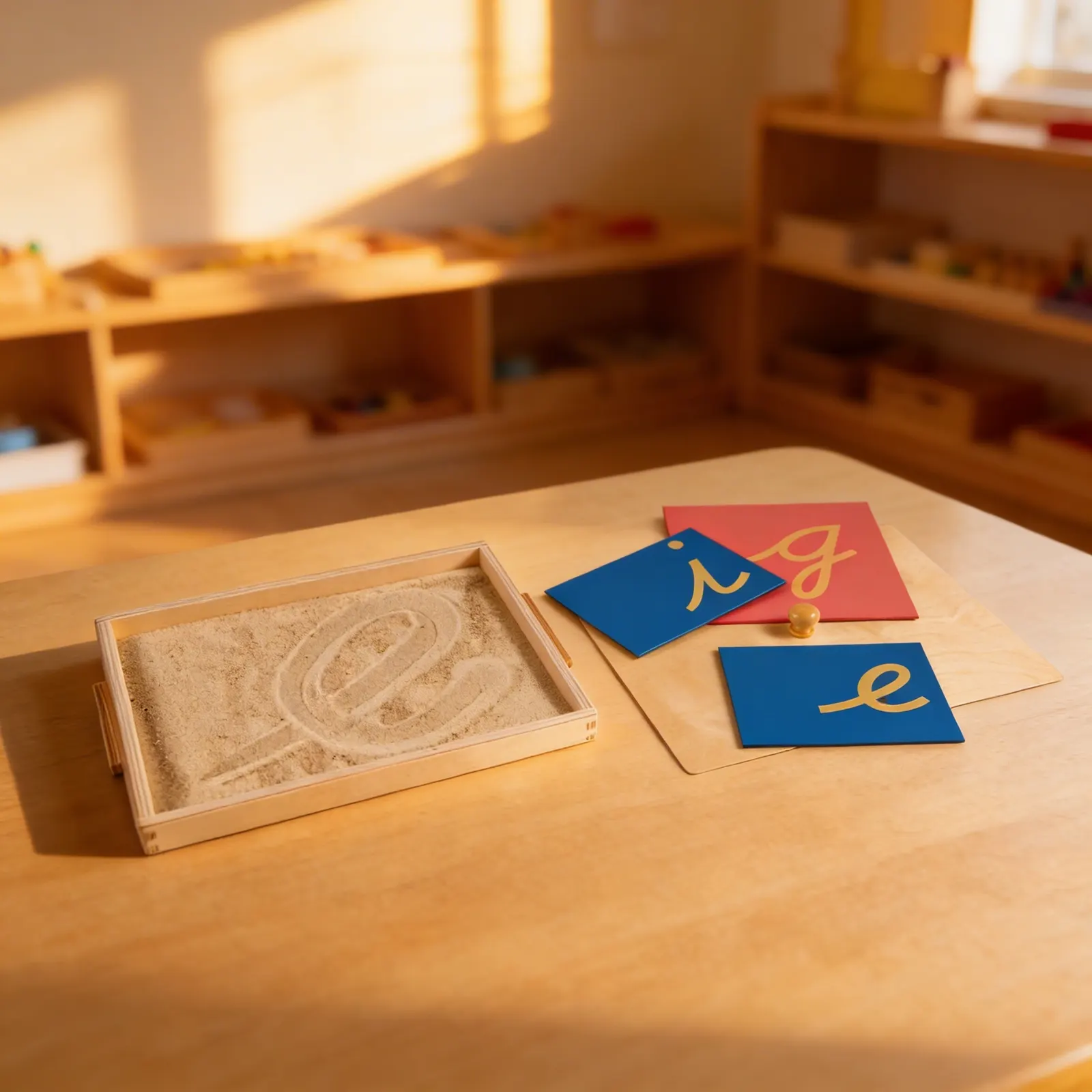
A complete teaching aid, this sandpaper letter tracing set combines tactile letter exploration with sand writing practice, providing multiple sensory pathways for letter formation mastery. The wooden tray filled with fine sand allows children to practice letter shapes freely, while the textured sandpaper letters mounted on color-coded cards (pink for vowels, blue for consonants) offer guided tactile experiences that prepare the hand for writing.
Pre-Writing Skills
Sand writing develops the fine motor control and muscle memory needed for pencil control without the pressure of permanent marks.
Multi-Sensory Learning
Combining touch, sight, and movement creates stronger neural pathways for letter recognition and formation.
Letter Formation Mastery
Tracing sandpaper letters teaches proper stroke order and direction while the sand tray allows free practice.
Phonemic Awareness
Color-coding helps children distinguish between vowel and consonant sounds while learning letter shapes.
How to present it
Place the sandpaper letters in order on the left side of the work area. Position the sand tray on the right. Ensure the sand is smooth and level by gently shaking the tray.
- 1Select one sandpaper letter card and place it in front of the child. Trace the letter slowly with your index and middle fingers while saying its sound.
- 2Invite the child to trace the sandpaper letter, guiding their fingers if needed. Repeat the sound as they trace.
- 3Move to the sand tray and demonstrate writing the same letter in the sand using the same two fingers.
- 4Have the child practice the letter in sand multiple times, shaking the tray gently between attempts to create a fresh surface.
3 tips for parents
- Practice tracing letters during daily activities - trace letters in flour while baking or in soap suds during bath time
- Focus on lowercase letters first as these appear most frequently in reading
- Keep sessions short (10-15 minutes) to maintain interest and concentration

If you are not sure it suits your child, we answer in person.
Norbert Kovalčín, founder of Faborino · write to him
There is no review here yet. We will ask you for one after you buy. Write the first review
What's in the Box
- Wooden tray: For sand writing practice
- Fine sand: Fills the tray
- Sandpaper letters: Approx. 5 cursive letters on colored cards
- Storage: Letters store separately from tray
Size and material
| Packaging | 35 × 28 × 6 cm |
| Tray | Natural wood |
| Letters | Sandpaper on cardboard |
| Tray Contents | Fine sand |
| Recommended Age | 3-6 years |
Care
Sift sand regularly, wipe tray with damp cloth, keep letters dry
Frequently Asked Questions
What is included in the Sandpaper Letter Tracing Tray set?
The set includes a wooden tray filled with fine sand for tracing practice, plus a complete set of sandpaper letters mounted on color-coded cards (pink cards for vowels, blue cards for consonants). The textured letters provide tactile guidance for proper letter formation.
How does this material help prepare children for writing?
This multi-sensory approach engages touch, sight, and movement simultaneously. Children trace sandpaper letters with their fingers to learn correct formation, then practice in sand for muscle memory development. This prepares the hand muscles and establishes proper letter formation patterns before using a pencil.
Why are the vowels and consonants on different colored cards?
The color-coding (pink for vowels, blue for consonants) helps children visually distinguish between these two letter categories, supporting phonetic awareness and early reading skills. This Montessori convention makes it easier for children to identify and remember vowel sounds.
At what age should children start using this material?
Children typically begin around age 3-3.5 when they show interest in letters and have developed adequate fine motor control. The material remains beneficial through age 6 as children refine their letter formation and prepare for formal writing.
How do I maintain the sand tray and keep it clean?
The sand should be kept dry and can be smoothed with a small rake or flat tool between uses. Periodically sift the sand to remove debris. Store sandpaper letters flat in a dry place. The wooden tray can be wiped clean with a damp cloth when needed.
Product safety
Manufacturer: Nienhuis Montessori, Anders Celsiusstraat 15, 7442 PB Nijverdal, Netherlands
Sandpaper Letter Tracing Tray