
Sandpaper Numerals: US Version
Made by Nienhuis Montessori · shipped by Heutink International (Netherlands) About the maker
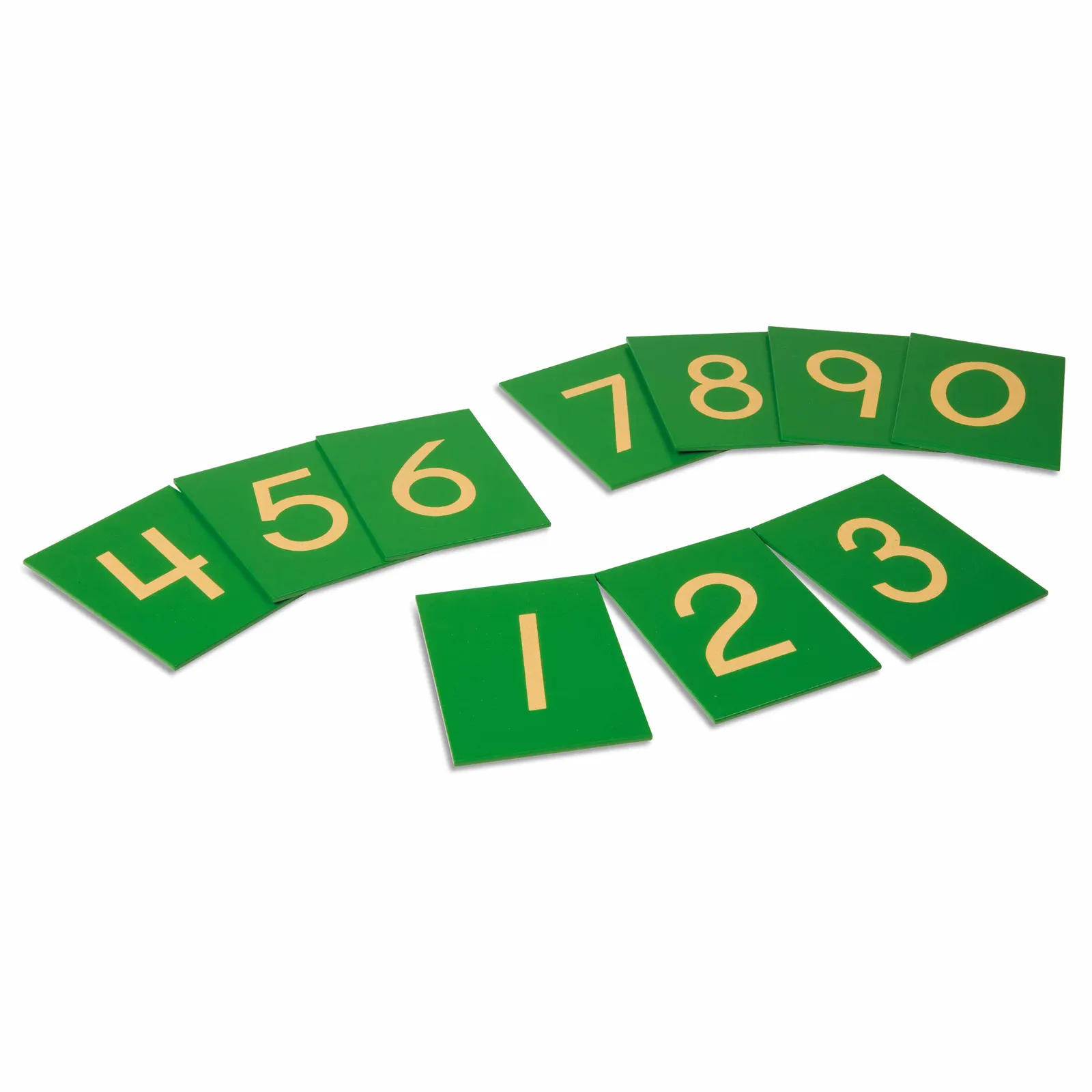
Sandpaper Numerals, US Version introduce children to the symbols zero through nine and their number names using ten rough sandpaper digits mounted on smooth green boards. By tracing each numeral in the exact style and direction it is written, children ages 3 to 6 prepare the hand movements needed for writing numbers while linking each symbol to its name through touch. The tactile, one board per numeral format lets a child work through the sequence at their own pace.
“The greatest sign of success for a teacher is to be able to say, 'The children are now working as if I did not exist.'”
The Sandpaper Numerals bridge sensorial exploration with mathematical abstraction by providing tactile pathways for numeral recognition.
- Recognition of numerals 0-9 through visual and tactile memory
- Correct formation patterns for writing numerals following US conventions
- Association between numeral symbols and their spoken names
- Preparation of hand muscles for pencil grip and numeral writing
Read More
Each green card isolates a single numeral from 0-9, allowing focused attention on one symbol at a time. The sandpaper's texture engages multiple senses simultaneously, the roughness guides finger movement along correct formation paths while the eyes track the numeral's shape. This US version respects American handwriting conventions, ensuring consistency between classroom learning and cultural writing practices. The green background specifically chosen for Sandpaper Numerals creates visual distinction from the Sandpaper Letters' pink and blue cards, helping children categorize mathematical symbols separately from phonetic ones. Through repeated tracing of these textured numerals, children internalize both the symbol's appearance and its kinesthetic formation before attempting pencil work.
How to present it
Follow the Montessori method of presentation for optimal child development.
Place three Sandpaper Numeral cards on a mat, choosing numerals with distinctly different formations (e.g., 1, 4, and 8). Sit to the child's dominant side.
- 1
First Period: Trace the first numeral with your index and middle fingers while saying 'This is one.' Invite the child to trace.
Use slow, deliberate movements to model the correct starting point and direction - 2
Repeat naming and tracing for the second and third numerals, allowing child practice between each introduction.
If a child traces incorrectly, simply model again without correction - 3
Second Period: Ask 'Can you trace three?' and 'Show me eight' to verify recognition through touch.
Mix up the order of requests to ensure true recognition rather than position memory - 4
Third Period: Point to a numeral and ask 'What is this?' allowing the child to trace before naming.
Only proceed to this step when the child shows confident recognition in the second period
Every Child Is a Little Creator

Heritage
Since 1929

In classrooms
Around the world

European brands
Nienhuis, GAM, Educo

AMI approved
To the association standard
Sandpaper Numerals: US Version
