
Second Colour Tablets Box: Eleven Pairs of Vibrant Colours
Made by Nienhuis Montessori · shipped by Heutink International (Netherlands) About the maker
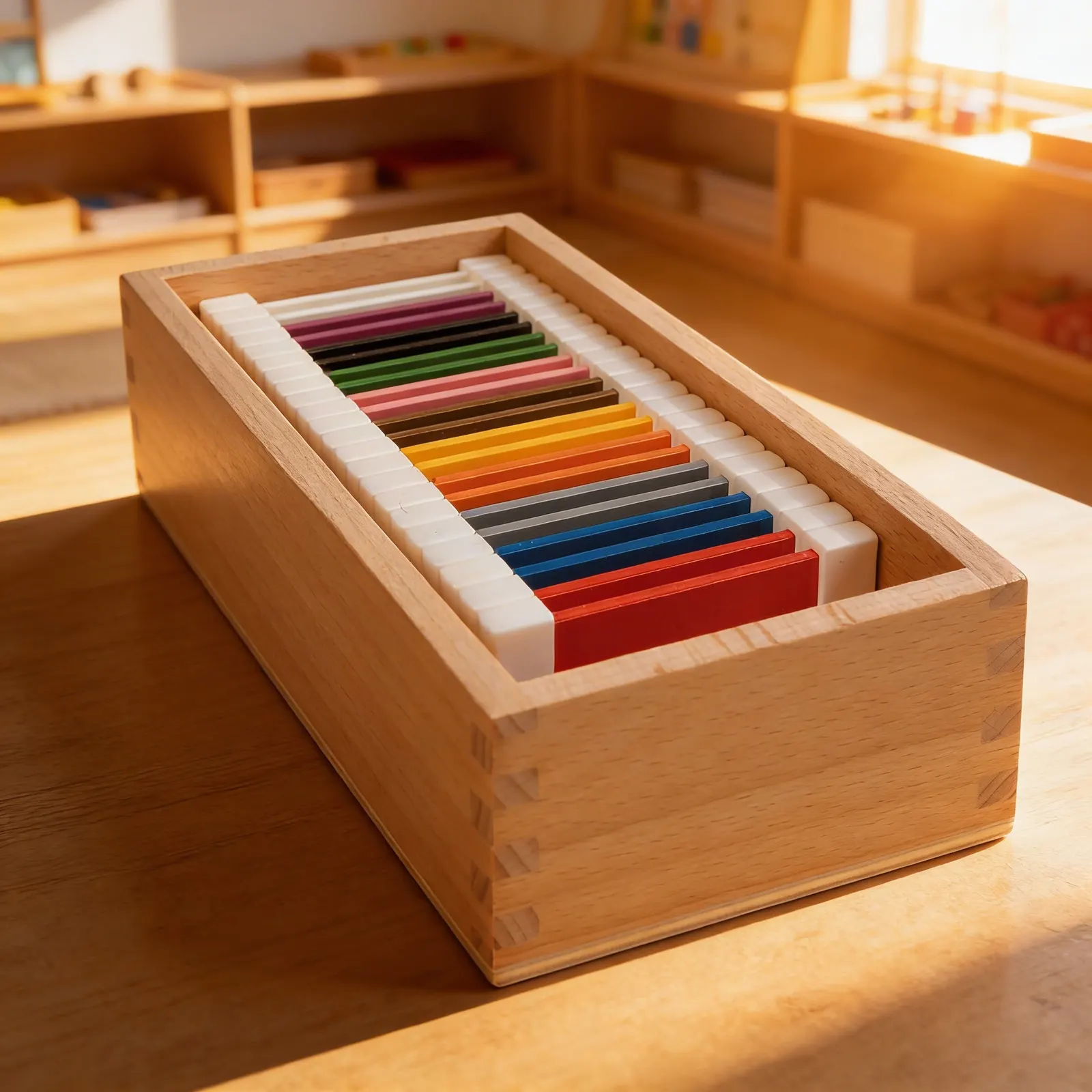
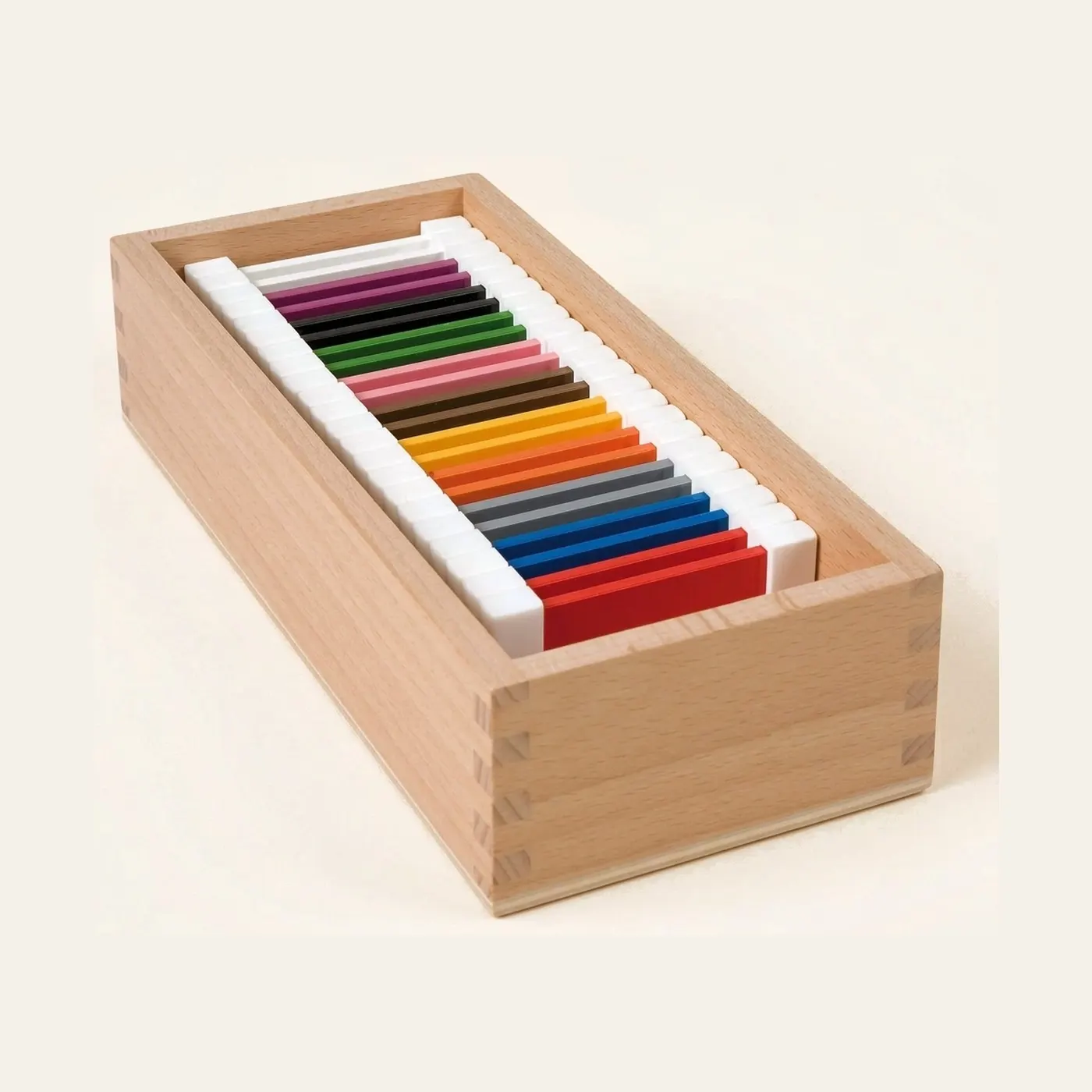
The Second Box of Colour Tablets brings the language of colour into one box: 22 tablets, a pair each of red, blue, yellow, orange, green, purple, brown, pink, grey, black and white. The child first matches the pairs, then learns the names, extending the precise vocabulary begun with the three primary pairs of the First Box. With eleven colours on the mat the matching becomes real visual work, and it prepares the eye for the graded shades of the Third Box, sold separately. Painted wooden tablets, for ages 3-6.
“Education is a natural process spontaneously carried out by the human individual, and is acquired not by listening to words but by experiences upon the environment.”
The Second Box of Color Tablets embodies Montessori's principle of isolation of difficulty, presenting color as the sole variable while maintaining identical size, shape, and texture across all tablets. This material bridges the gap between the basic discrimination of primary colors and the refined gradations of Color Box 3.
- Refined chromatic sense through discrimination of eleven distinct colors
- Development of precise hand-eye coordination through careful tablet manipulation
- Expansion of vocabulary with secondary and tertiary color names
- Preparation for art activities through understanding color relationships
Read More
Through precise pairing activities, children develop visual discrimination skills essential for later academic work, particularly in art and reading. The material's self-correcting nature allows children to independently verify their work, fostering the inner discipline and concentration that Montessori identified as crucial for normalized development. The systematic progression from primary to secondary colors, then to tertiary colors and shades, follows the child's natural developmental trajectory in visual perception.
How to present it
Follow the Montessori method of presentation for optimal child development.
Place the box on a neutral-colored mat. Ensure good natural lighting without direct sunlight. Remove tablets carefully by holding the wooden frames, never touching the colored centers.
- 1
Remove one tablet at a time, placing them randomly on the left side of the mat
Model slow, deliberate movements to emphasize care and respect for the material - 2
Select one tablet and place it in the center-top of the mat
Choose a distinctive color like red or blue for the first demonstration - 3
Scan the remaining tablets visually, then select its pair
Exaggerate the visual scanning movement to make the process visible to the child - 4
Place the matching tablet directly below the first, creating a vertical pair
Leave a small gap between tablets to emphasize they are separate but matched - 5
Continue pairing all tablets, arranging pairs from left to right
Work systematically but allow the child to choose the order when they work independently - 6
When complete, gather tablets by pairs and return to the box
This reinforces the pairing concept and provides additional practice
Every Child Is a Little Creator

Heritage
Since 1929

In classrooms
Around the world

European brands
Nienhuis, GAM, Educo

AMI approved
To the association standard
Second Colour Tablets Box: Eleven Pairs of Vibrant Colours
