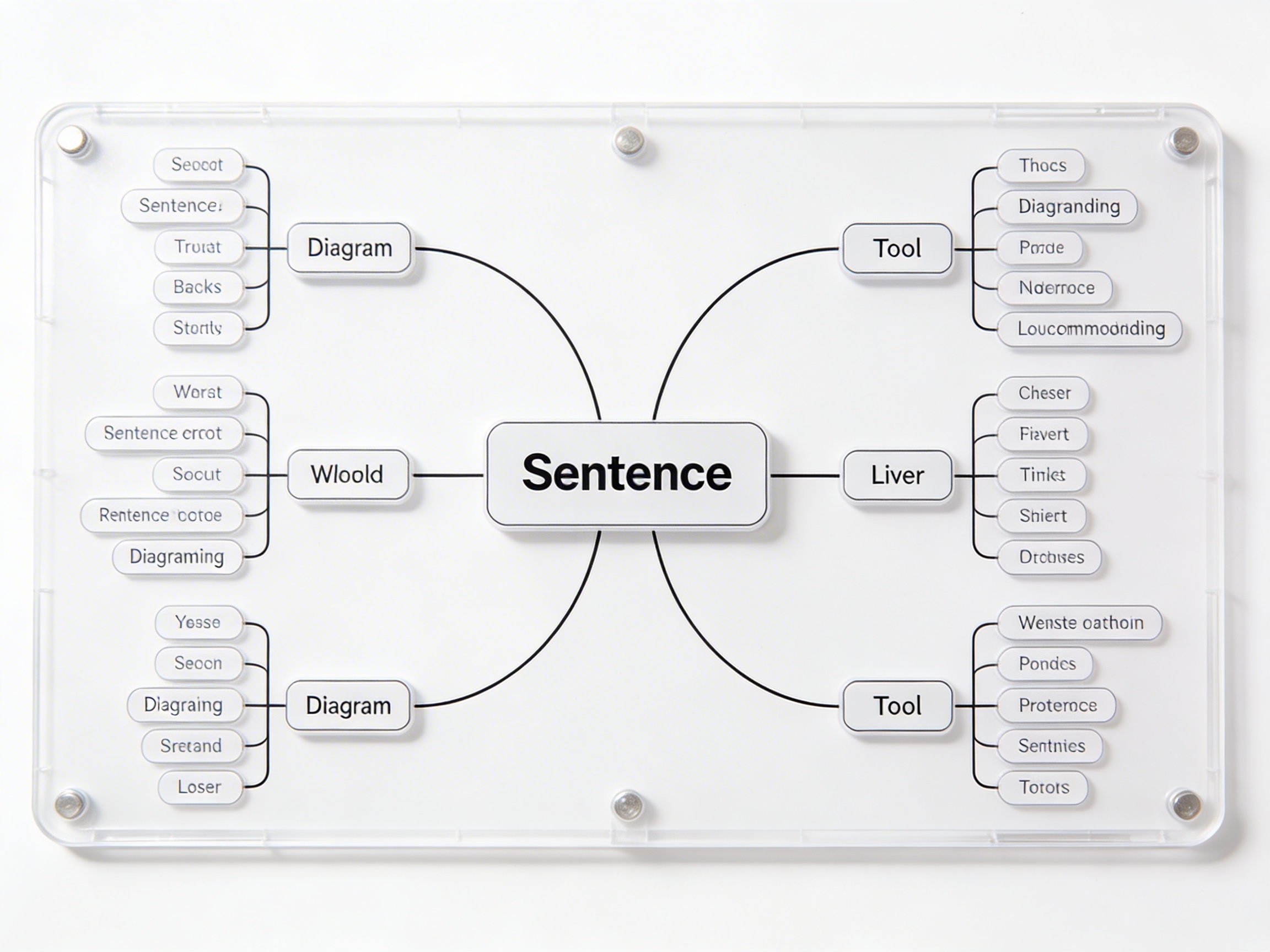
The Sentence Diagramming is a Language Montessori material designed for children aged 3-6, crafted by Nienhuis Montessori to AMI standards.
The Sentence Diagramming material introduces young learners to the fundamental structure of language through visual representation and hands-on manipulation. This essential Montessori language work helps children understand the relationships between words in a sentence, building a concrete foundation for grammar comprehension. Through systematic practice with this material, children develop analytical thinking skills while discovering the logical patterns that govern sentence construction.
“The greatest sign of success for a teacher is to be able to say, 'The children are now working as if I did not exist.'”— Maria MontessoriThe Absorbent Mind
“Free the child's potential, and you will transform him into the world.”
— Maria Montessori, To Educate the Human Potential
Sentence Diagramming transforms abstract grammatical concepts into concrete visual experiences that children can manipulate with their hands. The material addresses the developmental need of the absorbent mind to categorize and organize language systematically between ages three and six. By physically arranging words and symbols, the child discovers how sentences follow predictable patterns rather than arbitrary rules. Sentence Diagramming provides a bridge between the sensorial exploration of language sounds and the intellectual analysis of grammar structure. Each diagram created becomes a visual map revealing the hidden architecture within everyday speech. The color-coding and spatial arrangement inherent in diagramming work engages the child's tendency toward order while satisfying their need to understand the 'why' behind language conventions. Through repeated work with Sentence Diagramming, grammatical relationships become as clear and logical as mathematical equations, preparing the foundation for advanced language study.
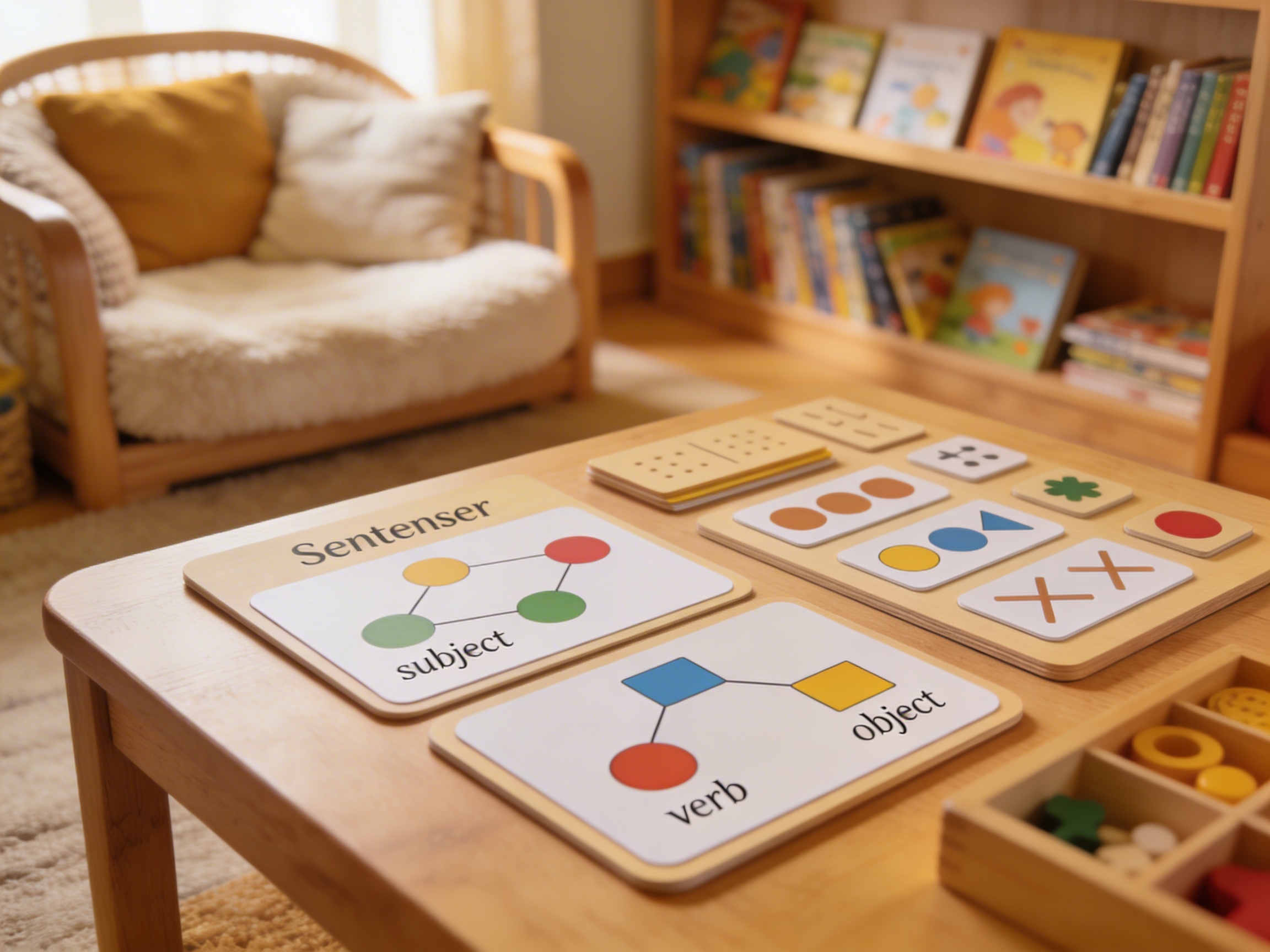
Each order includes everything needed for proper presentation and long-term use.
Follow the Montessori method of presentation for optimal child development.
Begin with a simple two-word sentence like 'Birds fly' and place the subject card above the predicate
Show how to draw or place the horizontal line between subject and predicate, explaining this shows the sentence's basic division
Gradually introduce modifiers, placing adjectives on slanted lines below the nouns they describe
Add direct objects on horizontal lines extending from the verb, showing the action's receiver
Progress to compound subjects and predicates, showing how conjunctions connect parallel elements
Every material is carefully selected for durability, safety, and authentic Montessori experience.
Sourced from sustainably managed European forests. Beechwood is chosen for its exceptional durability, smooth grain, and natural warmth that invites touch.
Natural, unbleached cotton in child-friendly colors. The fabric provides the right amount of friction for developing fingers while being gentle on sensitive skin.
Water-based, child-safe finish that meets the strictest European safety standards. Designed to withstand years of daily use without chipping or peeling.
Each material supports multiple areas of child development simultaneously.
Provides visual representation of abstract grammatical concepts, making sentence structure tangible and understandable for young minds.
Develops logical reasoning skills as children learn to break down sentences into their component parts and understand relationships.
Builds meta-linguistic skills by helping children consciously analyze how language works beyond just using it intuitively.
Strengthens understanding of sentence meaning by visualizing how words relate to each other within the sentence structure.
Designed for child-sized hands
Professional tips from AMI-trained guides to maximize the educational value of this material.
“Present diagramming after children have mastered basic grammar symbols and can identify nouns and verbs confidently”
Keep initial sentences concrete and action-based, avoiding abstract concepts or complex tenses
Allow children to create their own sentences for diagramming once they understand the basic patterns
Connect diagramming work to the child's creative writing by analyzing their own sentence structures
Everything you need to know about this material.
Yes, when presented using Montessori methods with concrete materials and simple sentences. Children first work with basic subject-predicate relationships using moveable symbols and progress gradually to more complex structures as their reading skills develop.
The set typically includes wooden or card symbols for parts of speech, connecting lines or arrows, a work mat or board for arranging sentences, and control cards with example sentences. Materials are color-coded following Montessori grammar symbol conventions.
Unlike abstract grammar lessons, Montessori sentence diagramming uses hands-on manipulation of physical symbols, allowing children to literally build sentences and see relationships. This concrete approach makes abstract grammar concepts accessible to young learners through sensorial exploration.
Children should be comfortable reading simple sentences and have basic familiarity with parts of speech through Montessori grammar symbols. Typically introduced after initial work with the noun family and verb family in the language area.
Children begin with simple two-word sentences (noun-verb), then add articles, adjectives, and adverbs. They physically arrange symbols and draw connecting lines, progressing to more complex sentences with phrases and clauses as their understanding deepens.
Can't find what you're looking for?
Contact Our Experts
Share your experience with this material and help other educators and parents.


