
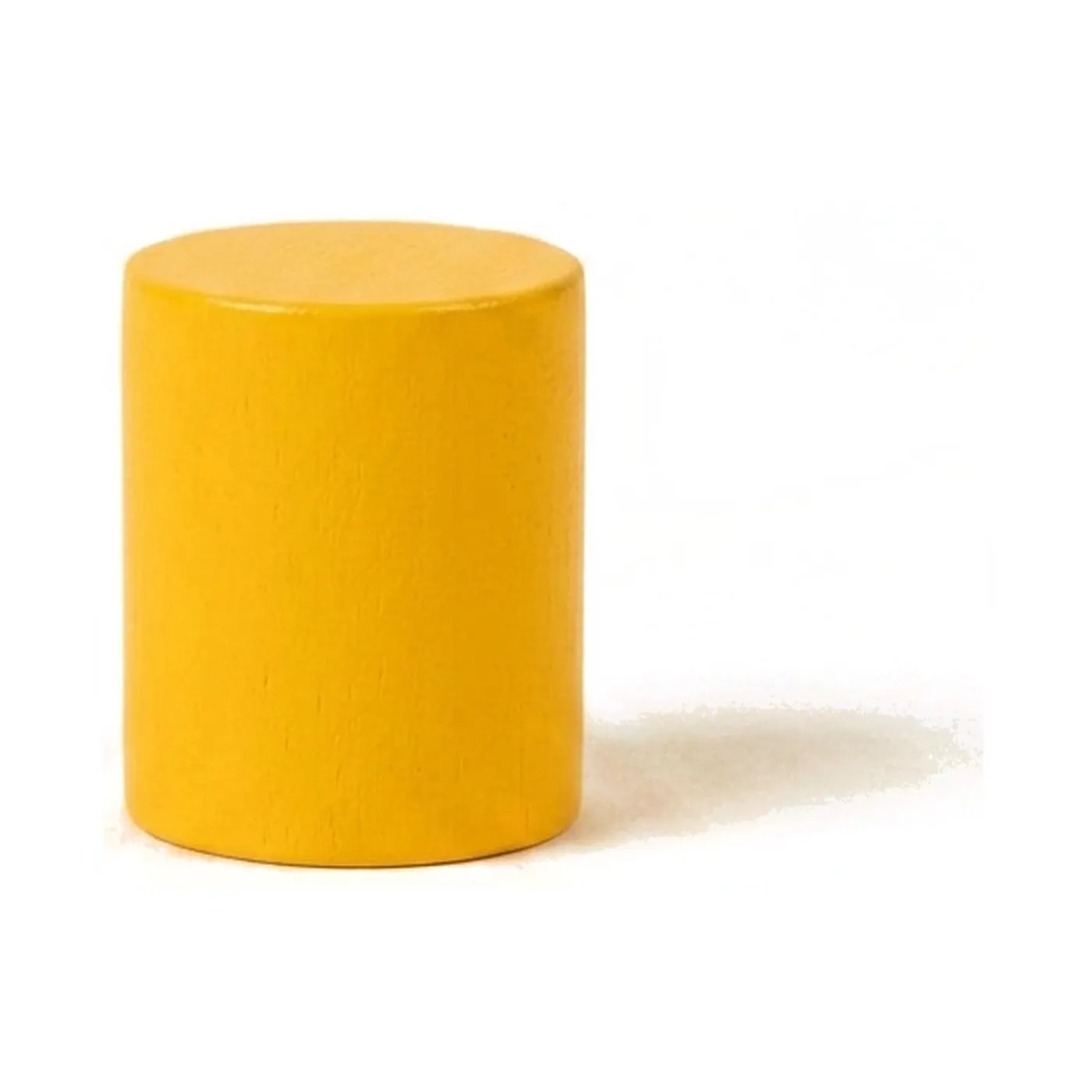
Knobless Cylinders SetFour Blocks for Dimension Discrimination
€238.90In Stock. Delivery in 5 to 9 working days.
The first photos are the maker's own. The other shots are illustrative.
Inv. no. NIE-002300
- Maker
- Nienhuis Montessori, since 1929
- Approval
- AMI
- Primary Material
- Solid wood construction
- Finish
- Painted wood
- EAN
- 8719924000714
€238.90
Final price incl. VAT. Free delivery.
✓ In StockDelivery in 5 to 9 working days.
1
30 daysto return
Advicebefore and after
Invoicefor companies
Advice, warranty and returns are handled by us.
The original
Why it costs €238.90
Behind the price of the original are things you can check yourself.
AMI approval
The material is approved by the Association Montessori Internationale (AMI). Nienhuis has made Montessori materials since 1929.
A verifiable original
The EAN 8719924000714 is on the box. It is the maker's number, not ours.
What the child does
Knobless Cylinders Set in a child's hands
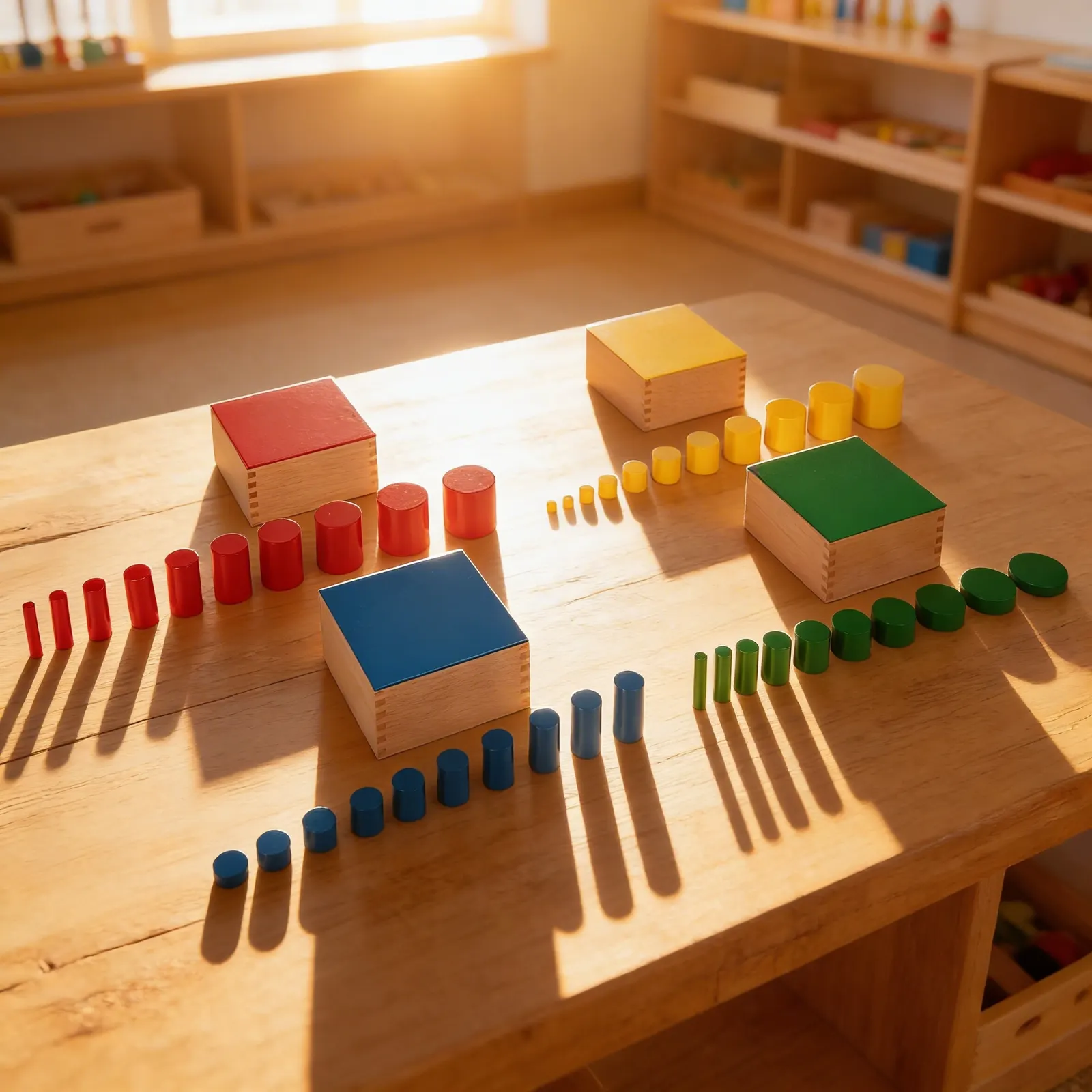
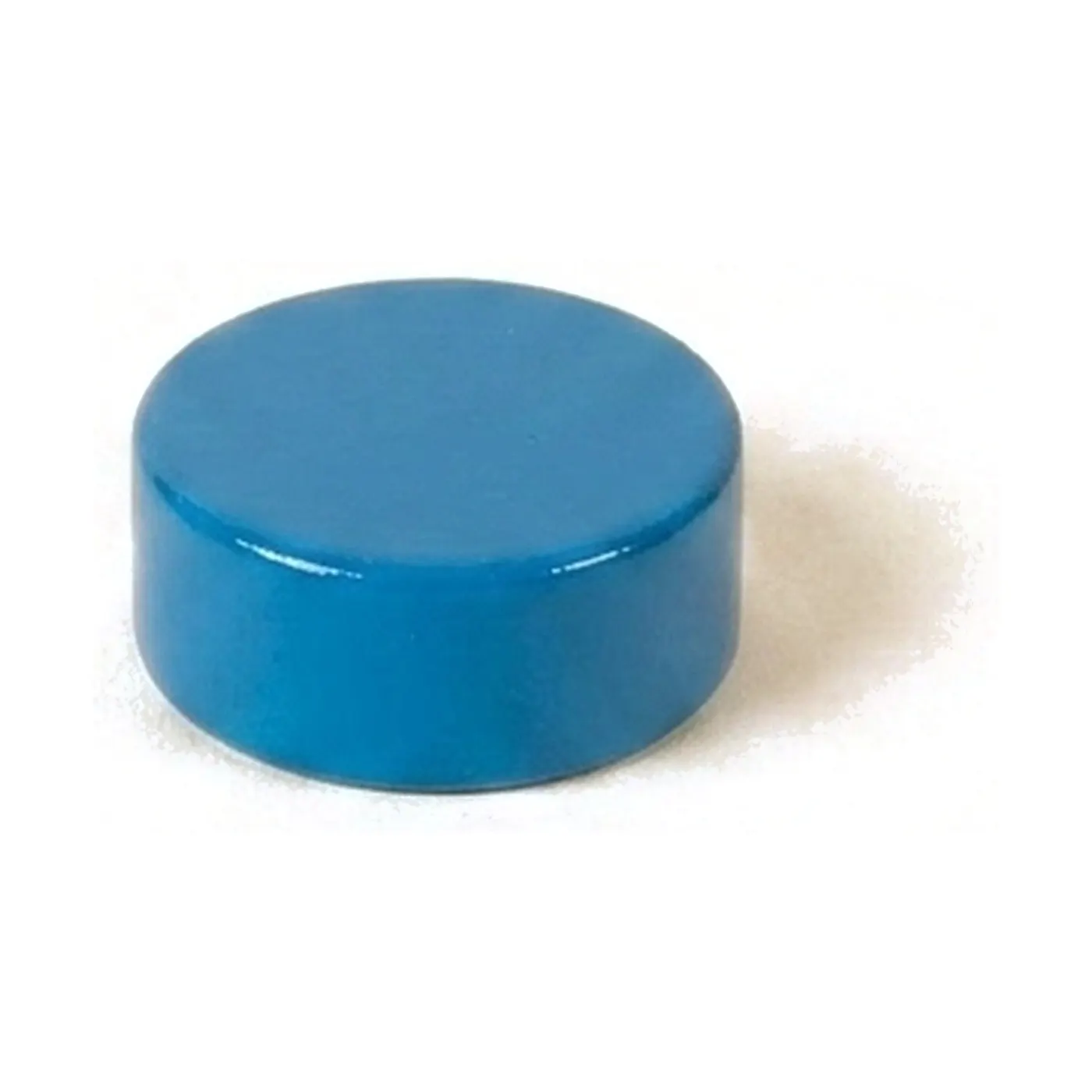
The Knobless Cylinders are the final stage of the dimensional material: four sets of ten graduated cylinders, each set in its own beechwood box with the lid painted in the set's colour. With no knobs and no block to receive them, the child seriates by eye and hand alone, builds towers, lays rows and compares the sets against each other, and the four boxes combine as certainty grows. Where the Cylinder Blocks still controlled the error, here the child's own judgement carries the work. Painted solid wood, ages 3-6.
Visual Discrimination
Refines ability to perceive subtle differences in dimension through systematic comparison and matching.
Mathematical Preparation
Introduces concepts of gradation, seriation, and dimension that form the foundation for geometry.
Concentration Development
Extended work with cylinders builds focus and attention to detail through engaging, self-correcting activities.
Activity Guide
How to present it
Place one box on a table mat. Sit to the child's right. Remove lid with deliberate movements, placing it silently under the box. Remove cylinders randomly, placing them on the mat.
- 1Grade the cylinders from largest to smallest, using visual discrimination
- 2Build a tower with red cylinders (varying in height and diameter)
- 3Create a horizontal series with yellow cylinders (varying in height only)
- 4Arrange blue cylinders (varying in diameter only) concentrically
- 5Combine sets to create patterns and discover relationships
3 tips for parents
- Resist correcting errors - children learn through self-discovery and repetition
- Create a designated workspace at home for uninterrupted exploration
- Connect to everyday objects: 'Can you find something as tall as this cylinder?'
From the same maker
Spare parts
Why it is in our selection
If you are not sure it suits your child, we answer in person.
Norbert Kovalčín, founder of Faborino · write to him
There is no review here yet. We will ask you for one after you buy. Write the first review
Details
What's in the Box
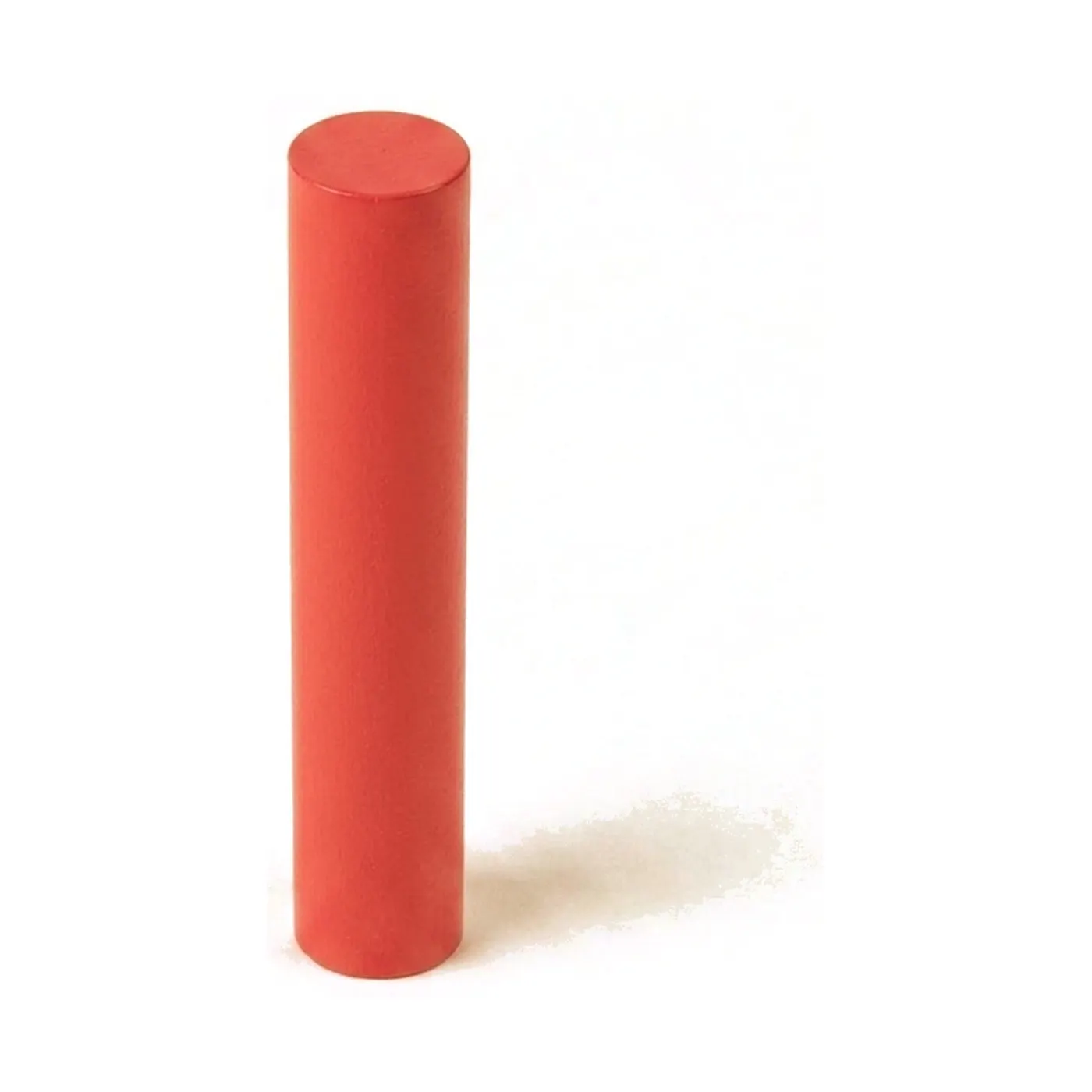
- Red Cylinder Box: Height variations only
- Yellow Cylinder Box: Height and diameter variations
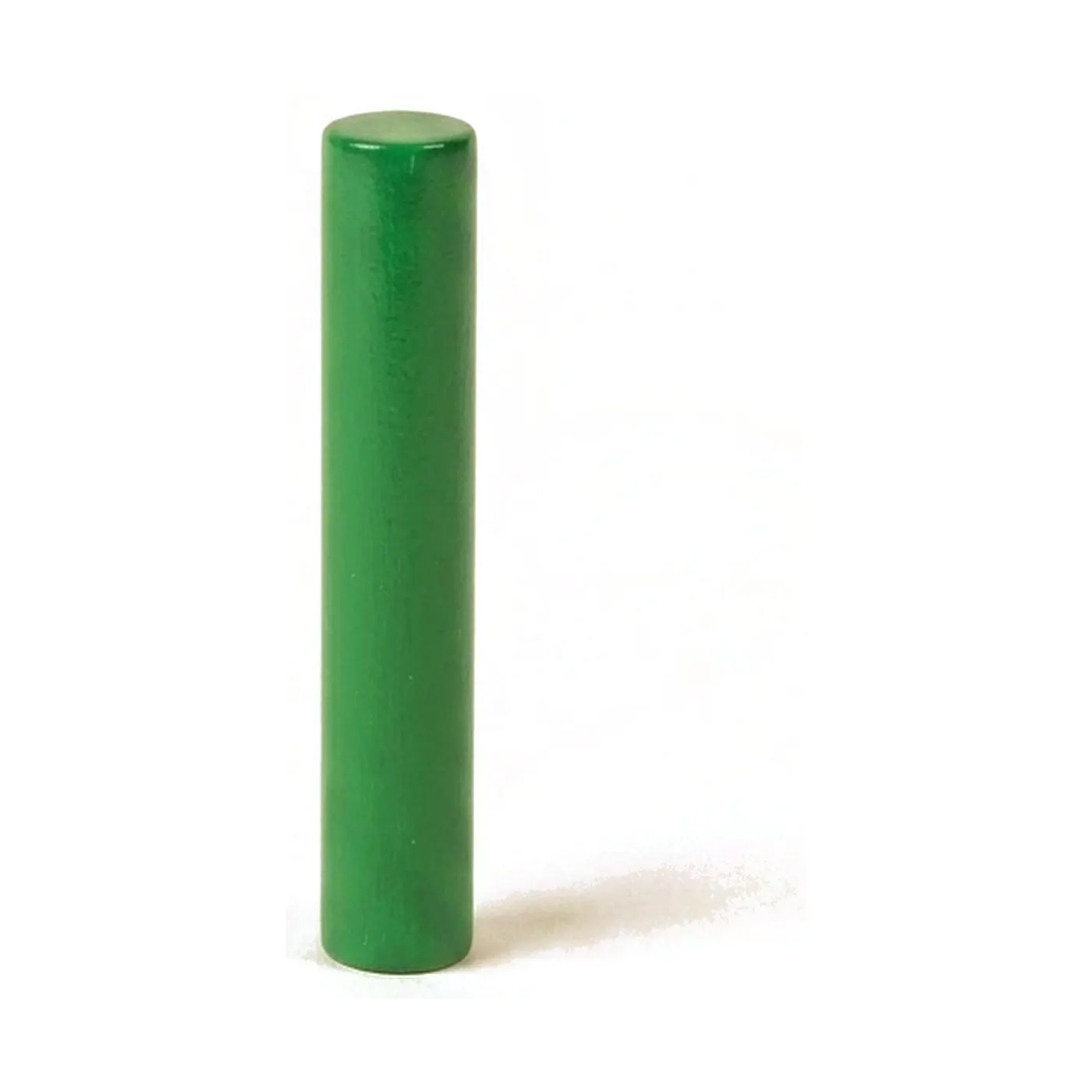
- Green Cylinder Box: Diameter variations only
- Blue Cylinder Box: Inverse height and diameter variations
Size and material
| Packaging | 29 × 15 × 17 cm |
| Primary Material | Solid wood construction |
| Finish | Painted wood |
| Recommended Age | 3-6 years |
Care
Wipe with slightly damp cloth; dry immediately
Frequently Asked Questions
What dimensions and variations are included in the complete set?
The set includes four boxes: Red cylinders varying in diameter only, Yellow cylinders varying in diameter and height, Green cylinders varying in height only, and Blue cylinders varying in height inversely to diameter. Each box contains 10 cylinders.
How do knobless cylinders differ from knobbed cylinders?
Knobless cylinders lack the knob handle found on traditional cylinder blocks, requiring children to use refined pincer grip and more precise hand movements. This progression challenges children to rely purely on visual discrimination rather than tactile feedback from the knobs.
What mathematical concepts do these materials prepare children for?
The cylinders introduce concepts of seriation, gradation, dimension, volume, and spatial relationships. They prepare children for understanding mathematical progressions, measurement, geometry, and algebraic thinking through concrete manipulation of systematically varying objects.
How should children progress through using all four boxes?
Children typically begin with one box at a time, mastering each variation before combining boxes. Advanced work includes building towers, creating patterns across boxes, matching cylinders from different sets, and discovering mathematical relationships between the variations.
What activities can extend learning beyond basic sorting?
Extensions include distance matching exercises, memory games with cylinders hidden, creating horizontal patterns, combining with other sensorial materials like the pink tower, language work describing dimensions, and mathematical explorations measuring and comparing cylinders.
Product safety
Manufacturer: Nienhuis Montessori, Anders Celsiusstraat 15, 7442 PB Nijverdal, Netherlands
Knobless Cylinders Set
€238.90