
Shoe Lacing Frame: Authentic Criss-Cross Pattern with Leather Panels
Made by Nienhuis Montessori · shipped by Heutink International (Netherlands) About the maker
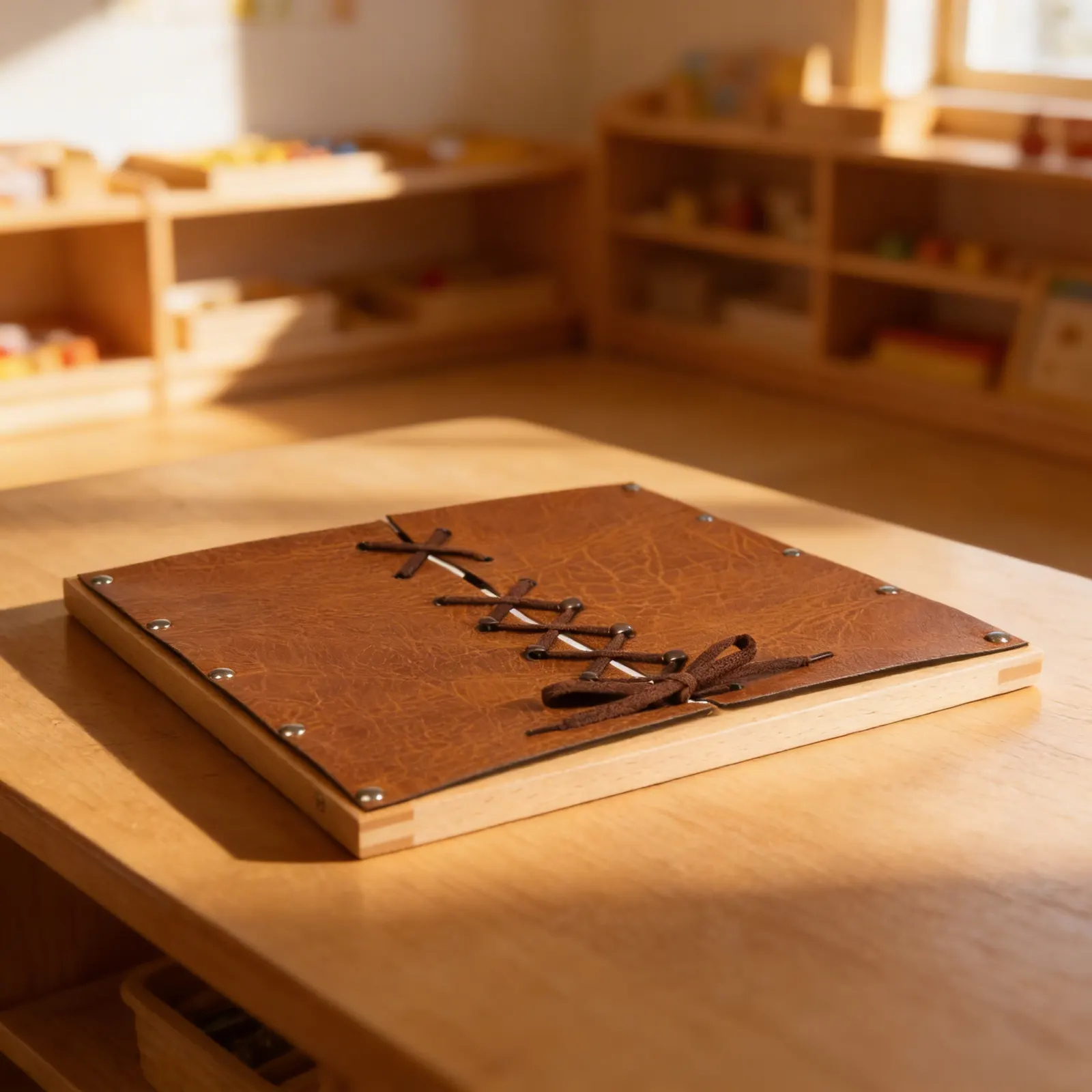
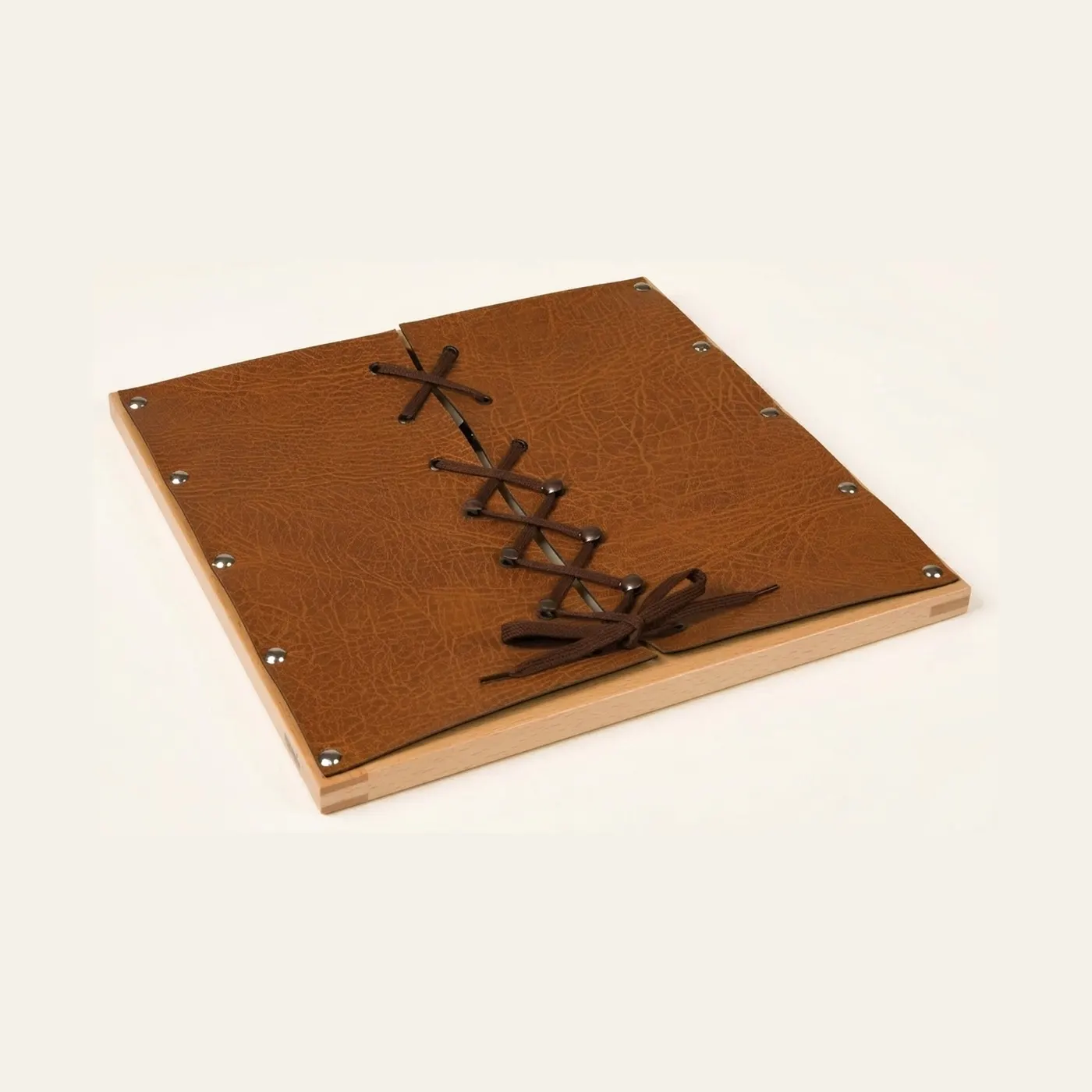
The shoe lacing frame with leather panels laced criss cross, beechwood with durable textile, 29.5 by 29.5 cm. This is the only frame that rehearses a task normally done on your own foot, where the work is upside down, at arm's length and partly out of sight. Flat on a table and facing the child, the same criss cross becomes something they can actually watch themselves do, which is the whole reason the frame exists. Wood, leather and laces, for ages 3 to 6.
“Children display a universal love of mathematics, which is par excellence the science of precision, order, and intelligence.”
The Shoe Lacing Frame with Leather Panels addresses the fundamental Montessori principle that children possess an innate drive to master real-world skills independently.
- Master the sequential steps of criss-cross shoe lacing through repetitive practice on stationary leather panels
- Develop pincer grip strength and finger dexterity by manipulating fabric laces through authentic eyelet holes
- Build bilateral coordination by using both hands simultaneously to thread and pull laces across the wooden frame
- Understand proper lace tension by feeling the resistance of leather panels when tightening the criss-cross pattern
Read More
This wooden frame with authentic leather panels replicates the exact challenge children face when preparing themselves each morning - the complex motor sequence required for shoe lacing. Dr. Montessori observed that children experience profound satisfaction when conquering tasks that adults perform effortlessly, and the criss-cross lacing pattern on this frame provides the isolated practice necessary for this mastery. The black fabric laces move through authentic eyelet holes in genuine leather panels, offering the same tactile resistance and threading experience as actual shoes. By practicing on this stationary frame, children develop the precise finger movements, bilateral coordination, and sequential thinking required for independent dressing. The leather panels provide realistic feedback when laces are pulled too tight or too loose, teaching proper tension control. This concentrated work with the Shoe Lacing Frame builds the child's confidence and fine motor precision, ultimately contributing to their independence and self-care capabilities in daily life.
How to present it
Follow the Montessori method of presentation for optimal child development.
Place the frame on a table at the child's working height. Sit to the child's right if you are right-handed. Ensure the laces are fully laced in a proper criss-cross pattern before beginning the presentation.
- 1
Show how to loosen the laces by pulling each cross section from top to bottom
Use slow, deliberate movements, pausing between each action to allow the child to absorb the sequence - 2
Demonstrate pulling the bow loops to untie, then pull the lace ends to remove the bow completely
Emphasize the pincer grip by exaggerating the thumb and index finger position - 3
Starting from the bottom, pull each lace out of its eyelet systematically
Count the eyelets aloud initially to help children remember the sequence - 4
Re-lace by threading from the bottom eyelets upward in a criss-cross pattern
Show how to hold the lace tip firmly between thumb and index finger for easier threading - 5
Create the bow by making two loops and tying them together
Practice making 'bunny ears' separately before attempting the full bow - 6
Tighten by pulling each cross section from bottom to top
Check that the shoe panels lie flat against each other when properly tightened
Every Child Is a Little Creator

Heritage
Since 1929

In classrooms
Around the world

European brands
Nienhuis, GAM, Educo

AMI approved
To the association standard
Shoe Lacing Frame: Authentic Criss-Cross Pattern with Leather Panels
