
Triangular Prism: Short Based Geometric Solid
Made by Nienhuis Montessori · shipped by Heutink International (Netherlands) About the maker
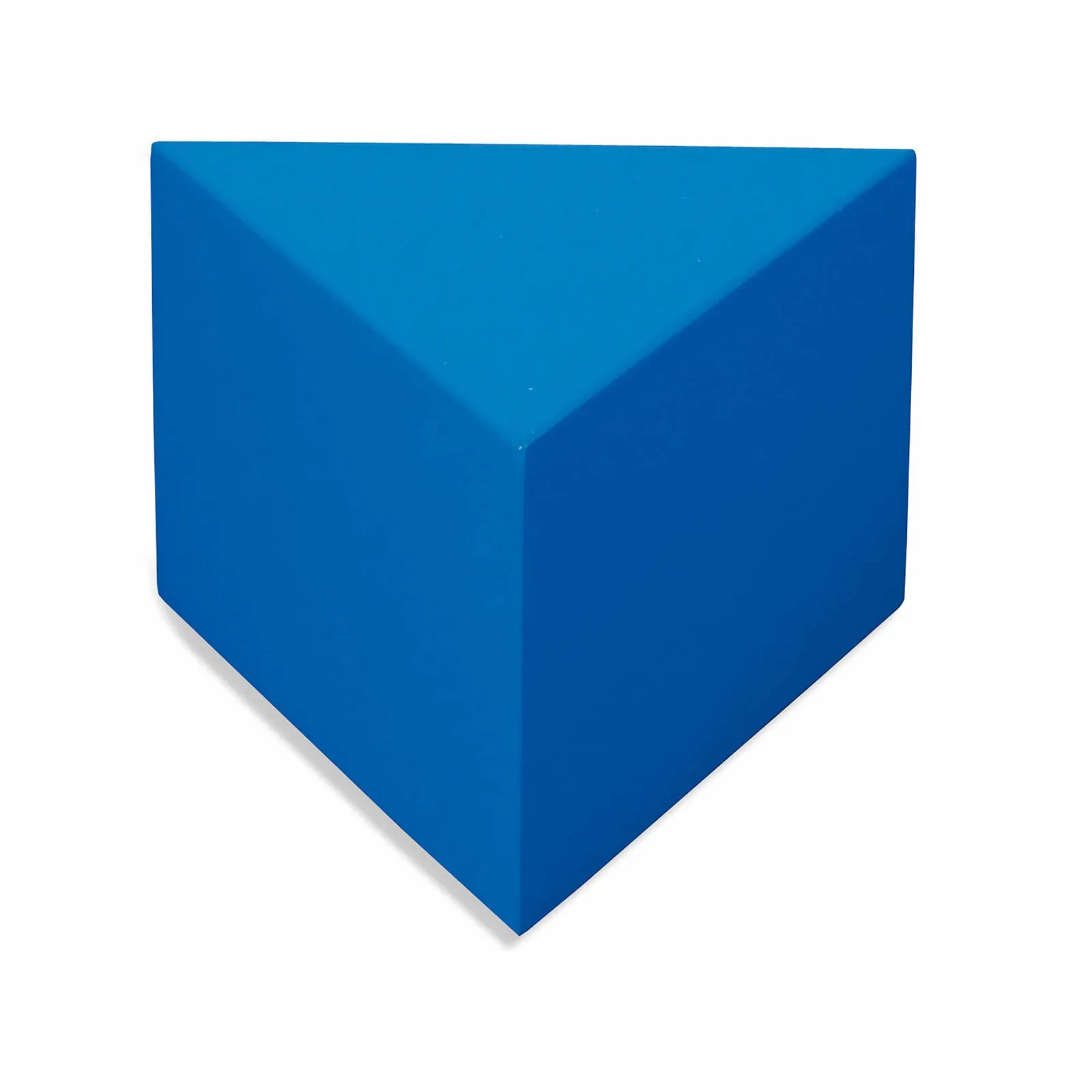
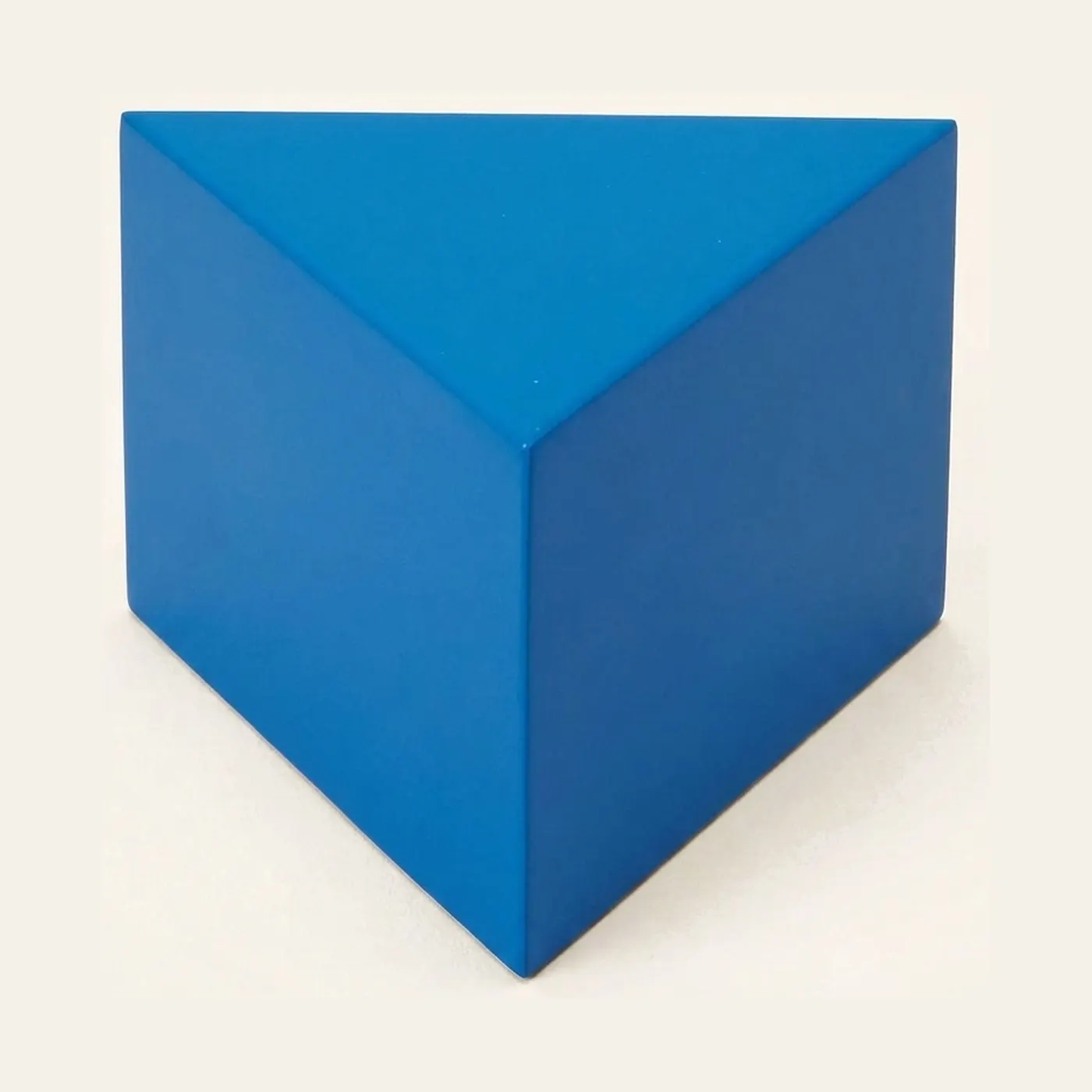
The short version of the triangular prism, on the same 10 by 10 cm base but only 6.66 cm tall against the standard 20 cm. That figure is not arbitrary: a third of twenty, which makes this prism hold exactly what the pyramid on the same base holds. Filling the pyramid into the short prism and finding it level is the moment a child stops taking the one third rule on trust. Sold individually, for ages 6 to 12.
“Free the child's potential, and you will transform him into the world.”
The Triangular Prism, Short Based Geometric Solid serves as a concrete foundation for understanding three-dimensional geometry in the elementary classroom.
- Identifies the defining characteristics of triangular prisms through tactile exploration
- Distinguishes between rectangular faces and triangular bases on the geometric solid
- Develops spatial reasoning by examining the prism from multiple angles and orientations
- Builds geometric vocabulary specific to three-dimensional triangular prism properties
Read More
Children at ages 6-12 require tangible experiences with geometric forms to develop spatial reasoning and mathematical thinking. The triangular prism's unique combination of rectangular faces and triangular bases allows young learners to explore the relationship between two-dimensional shapes and three-dimensional forms. When children manipulate the short-based triangular prism, they discover how flat triangular shapes create solid geometric structures through depth and volume. This wooden geometric solid provides essential preparation for advanced mathematical concepts including surface area, volume calculations, and geometric proofs that emerge in later elementary work. The triangular prism's compact proportions make it ideal for detailed examination of edges, vertices, and faces, while its stability encourages repeated handling and investigation. Through direct sensorial contact with the triangular prism's surfaces and angles, children develop the foundational geometric vocabulary and spatial awareness necessary for abstract mathematical reasoning in upper elementary studies.
How to present it
Follow the Montessori method of presentation for optimal child development.
Place the triangular prism on a mat alongside paper, pencil, and ruler. Have the geometric solids basket nearby for comparison work.
- 1
Invite the child to explore the prism with closed eyes, feeling edges, vertices, and faces
This sensorial introduction connects to their earlier tactile work with geometric solids - 2
Introduce vocabulary: base, lateral faces, edges, vertices, using the three-period lesson
Point to each feature as you name it, allowing the child to trace with their finger - 3
Trace around each face on paper to create a net of the prism
Use different colored pencils for the bases and lateral faces to highlight the pattern - 4
Count and record the number of faces, edges, and vertices
Create a chart to compare with other prisms later - 5
Explore how the prism relates to the triangle from the geometric cabinet
Overlay the cabinet triangle on the prism's base to show the connection
Every Child Is a Little Creator

Heritage
Since 1929

In classrooms
Around the world

European brands
Nienhuis, GAM, Educo

AMI approved
To the association standard
Triangular Prism: Short Based Geometric Solid
