
Small ScoopFood Preparation
The first photo is the maker's own. The other shots are illustrative.
Inv. no. NIE-403100
- Maker
- Nienhuis Montessori, since 1929
- Primary Material
- Natural beechwood
- Finish
- Unfinished, natural wood
- EAN
- 8719924047085
Final price incl. VAT. Delivery €5.90, €146.70 to go for free delivery.
Advice, warranty and returns are handled by us.
Small Scoop in a child's hands
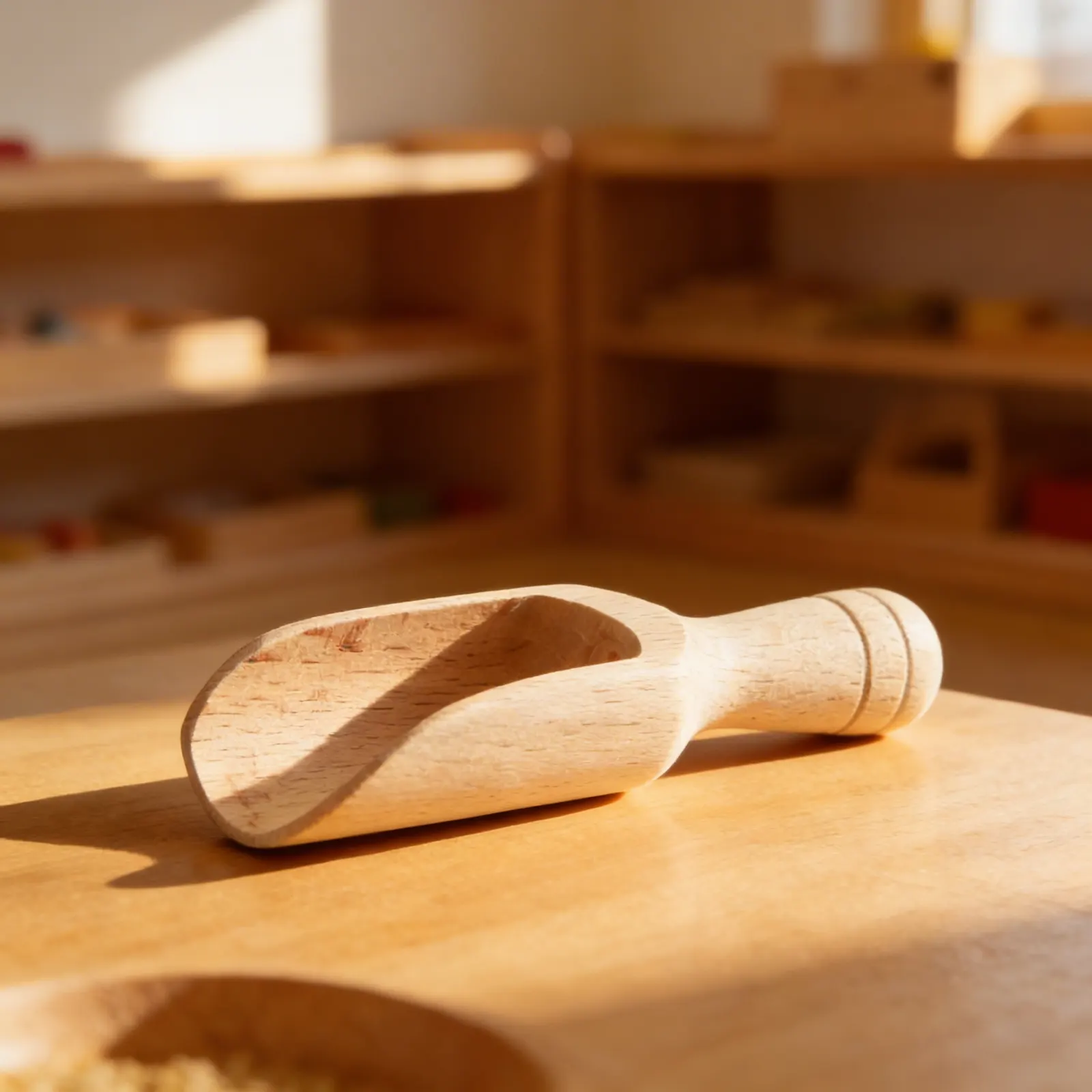
A small scoop in untreated beech, 7 cm, for pouring and transfer work. Seven centimetres is the last size before a spoon, and it is the one that asks the most: a small bowl means more journeys, and more journeys mean more chances to spill, so this is where a child finds out whether the movement has really been learned. Untreated wood, wipe rather than soak. The larger scoops are separate items.
Fine Motor Control
Scooping activities strengthen the pincer grasp and develop precise wrist movements essential for later writing skills.
Hand-Eye Coordination
Transferring materials between containers refines visual-motor integration and spatial awareness.
Concentration
Repetitive scooping movements help children develop focus and attention span through purposeful activity.
Practical Life Skills
Using real tools builds independence and confidence in everyday tasks like cooking and serving.
How to present it
Place the scoop on a tray with two small bowls containing rice or dried beans. Position bowls left to right, with the left bowl full and right bowl empty.
- 1Demonstrate holding the scoop with thumb and first two fingers, keeping wrist straight
- 2Scoop material from left bowl, lifting smoothly without spilling
- 3Rotate wrist to pour contents into right bowl
- 4Return empty scoop to starting position
3 tips for parents
- Practice scooping during meal preparation with safe ingredients
- Accept spills as part of learning - keep a small brush nearby
- Model slow, deliberate movements rather than correcting verbally

If you are not sure it suits your child, we answer in person.
Norbert Kovalčín, founder of Faborino · write to him
There is no review here yet. We will ask you for one after you buy. Write the first review
What's in the Box
- Wooden Scoop: Single piece beechwood construction
Size and material
| Packaging | 8 × 3 × 2 cm |
| Primary Material | Natural beechwood |
| Finish | Unfinished, natural wood |
| Recommended Age | 18 months - 3 years |
Care
| Cleaning | Wipe with damp cloth, air dry completely |
| Maintenance | Occasionally oil with food-safe wood oil |
Frequently Asked Questions
What age is the wooden scoop appropriate for?
The small wooden scoop is designed for children ages 0-3, though it's most commonly introduced around 18-24 months when children develop better hand control and show interest in transferring activities.
How do I clean and maintain the unfinished beechwood scoop?
Clean the scoop with a damp cloth and mild soap if needed, then dry immediately. Avoid soaking in water. Periodically treat with food-safe mineral oil to prevent cracking and maintain the smooth finish.
What transferring activities can children do with this scoop?
Children can use the scoop for transferring rice, beans, lentils, sand, or water between bowls. These activities develop fine motor skills, hand-eye coordination, concentration, and prepare for later pouring and measuring skills.
What size is the small scoop and how much does it hold?
The small scoop is perfectly sized for toddler hands, typically measuring 10-12cm in length. It holds approximately 1-2 tablespoons, ideal for controlled transferring exercises without overwhelming young children.
Why is unfinished wood better than plastic for Montessori materials?
Unfinished beechwood provides authentic sensory experiences with natural texture, weight, and warmth. It's non-toxic, sustainable, and helps children connect with natural materials while developing respect for their tools and environment.
Product safety
Manufacturer: Nienhuis Montessori, Anders Celsiusstraat 15, 7442 PB Nijverdal, Netherlands
Small Scoop