
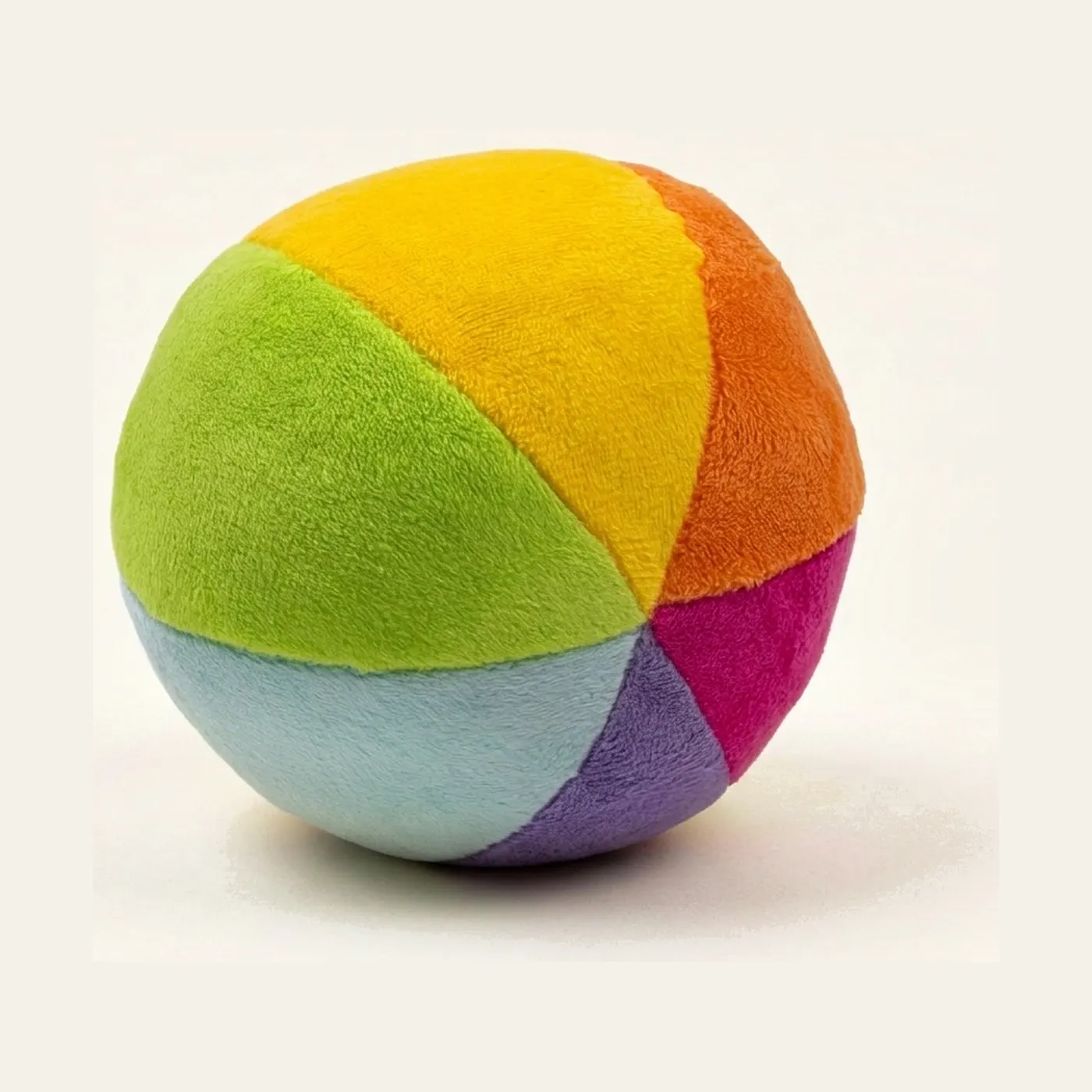
Soft Sensory Ball: Textured Fabric Rattle for Infants
Made by Nienhuis Montessori · shipped by Heutink International (Netherlands) About the maker
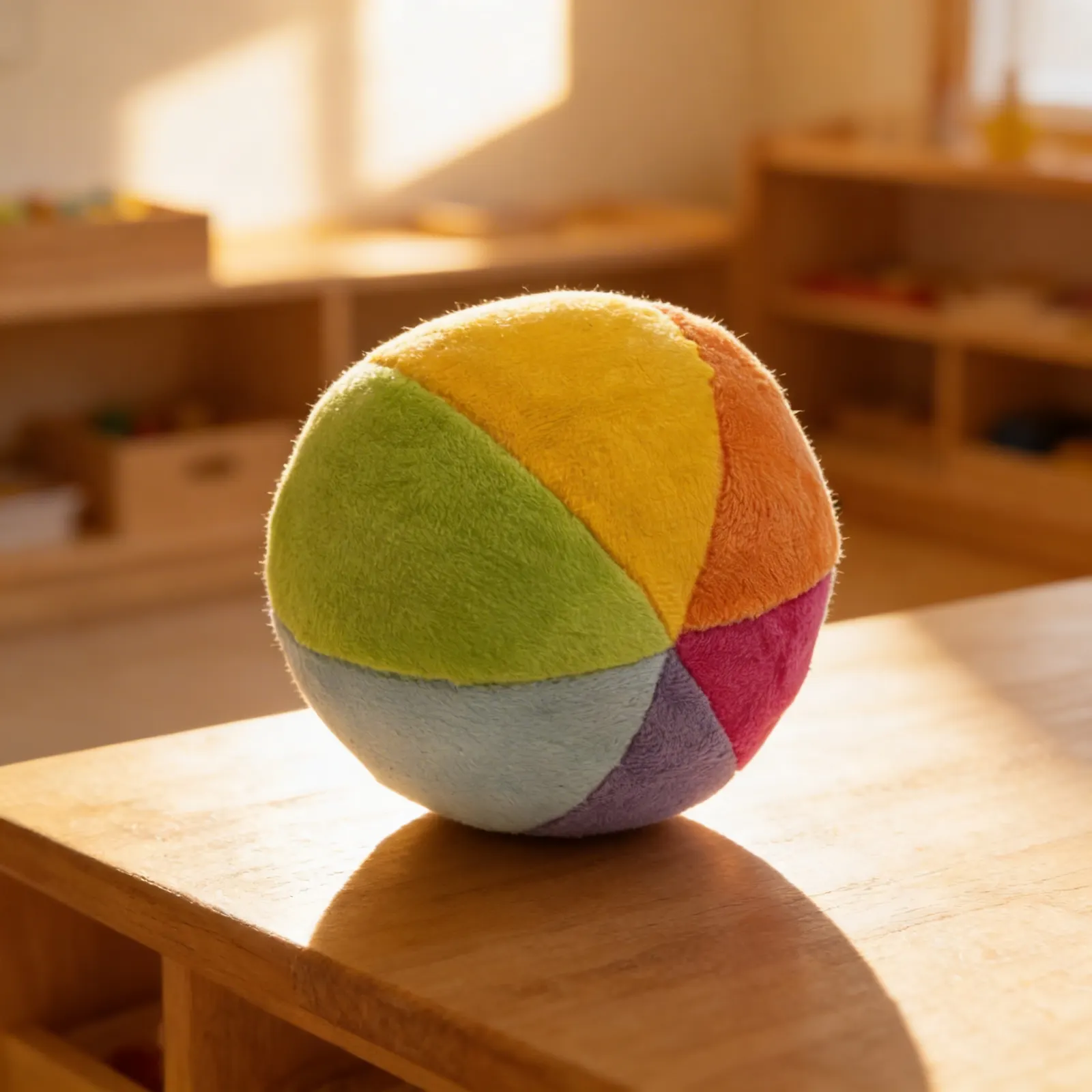
A soft fabric ball with a rattle inside, made to be shaken, grabbed, rolled and thrown. The rattle is the reason this ball earns its place: a sound that happens only when the infant moves is the clearest demonstration of cause and effect available at that age, and it arrives before the child can hold anything reliably. Soft fabric grips better than a smooth surface, so it survives a hand that is still learning to close.
“The senses, being explorers of the world, open the way to knowledge.”
In Montessori, the infant's environment must offer opportunities for sensorial exploration and purposeful movement.
- Development of voluntary grasping and releasing movements
- Refinement of visual tracking and focus through following the ball's movement
- Understanding of cause and effect through rattle sounds
- Strengthening of core muscles during reaching and rolling activities
Read More
This soft ball exemplifies the principle of isolation of difficulty - combining multiple sensory experiences (tactile, visual, auditory) while remaining simple enough for the youngest child to manipulate independently. Dr. Montessori observed that infants learn through their senses and movement, building neural pathways through repeated exploration. The ball respects the child's natural developmental progression from reflexive grasping to intentional manipulation, supporting what Montessori called 'the absorbent mind' - the child's innate capacity to absorb experiences directly from the environment. The gentle rattle sound provides immediate feedback, helping the infant understand cause and effect through their own actions, fostering independence and self-directed learning from the earliest age.
How to present it
Follow the Montessori method of presentation for optimal child development.
Place the ball within the infant's visual field during tummy time or on a low shelf at the child's eye level when sitting. Ensure the environment is calm and free from competing stimuli.
- 1
For non-mobile infants, place the ball just within reach during tummy time, allowing them to discover it through their own movement
Resist the urge to hand the ball directly to the child - let them discover and reach for it independently - 2
Once grasped, allow the infant to explore freely - mouthing, shaking, and transferring between hands
Observe without interrupting; the child's concentration is sacred in Montessori - 3
For mobile infants, roll the ball slowly away to encourage crawling or scooting
Keep movements slow and deliberate to match the child's processing speed - 4
For toddlers, introduce simple games like rolling back and forth while sitting
Follow the child's interest - if they prefer throwing, create a safe space for this exploration
Every Child Is a Little Creator

Heritage
Since 1929

In classrooms
Around the world

European brands
Nienhuis, GAM, Educo

AMI approved
To the association standard
Soft Sensory Ball: Textured Fabric Rattle for Infants
