
Wooden Clothes Pegs (25)
The first photo is the maker's own. The other shots are illustrative.
Inv. no. NIE-406200
- Maker
- Nienhuis Montessori, since 1929
- Primary Material
- Natural wood
- Finish
- Smooth, untreated
- EAN
- 8719924025830
Final price incl. VAT. Delivery €5.90, €127.10 to go for free delivery.
Advice, warranty and returns are handled by us.
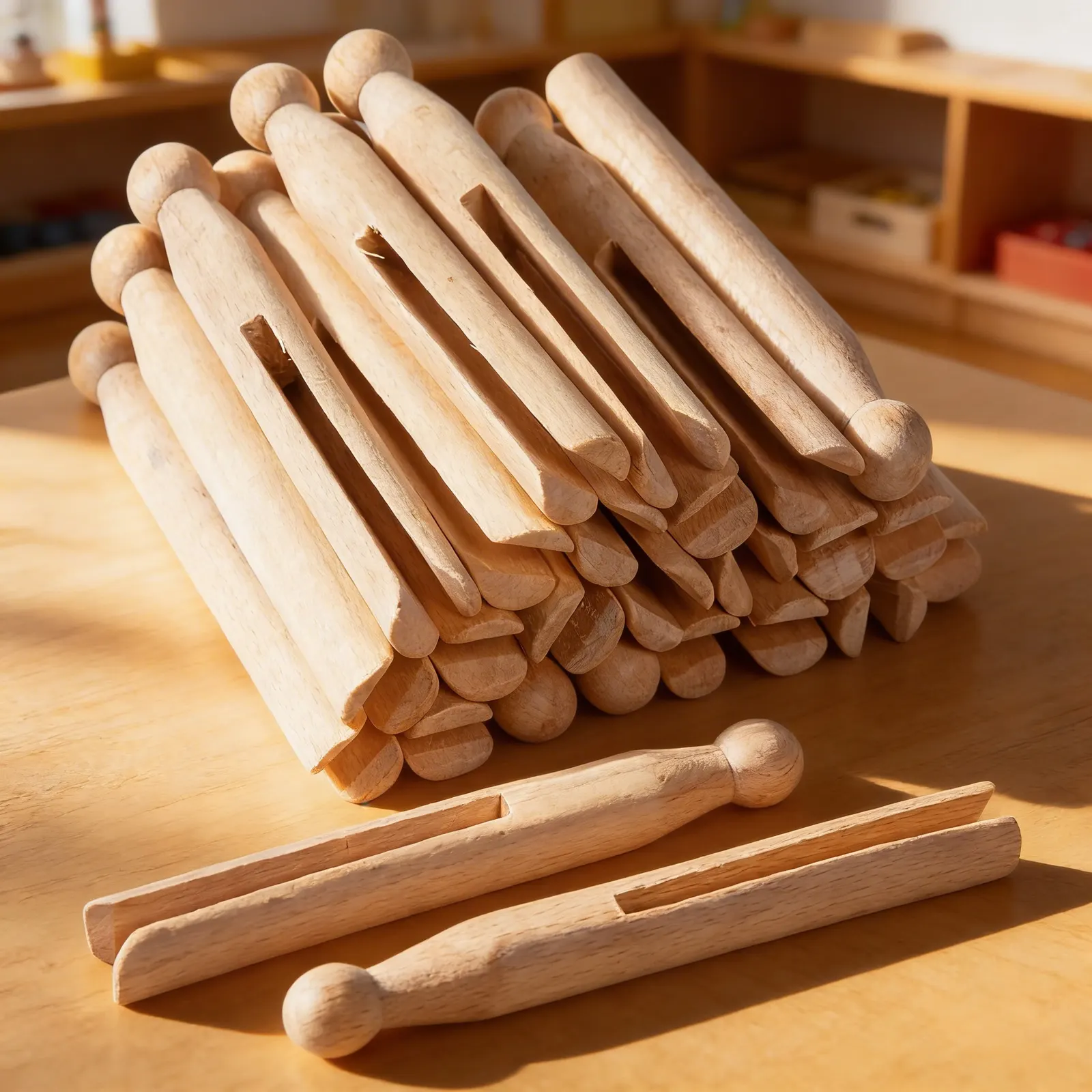
Wooden Clothes Pegs (25) in a child's hands
Twenty five wooden clothes pegs, which the maker describes as much easier for young children to handle than ordinary ones. Opening a peg is a pincer action of the thumb and two fingers, the same grip a pencil will ask for later, and it comes with the advantage of being real work: the washing goes on the line and stays there. In a toddler room a basket of pegs and a low line is one of the few jobs a child can carry out from beginning to end without an adult. Natural wood.
Fine Motor Development
The pinching action required to open pegs strengthens the thumb and index finger muscles essential for pencil grip.
Hand-Eye Coordination
Placing pegs on lines or containers requires visual tracking and precise hand movements.
Concentration
The repetitive nature of peg activities helps children develop focused attention and task persistence.
Practical Life Skills
Working with pegs connects to real-world activities like hanging laundry, fostering independence and purpose.
How to present it
Place 10-12 pegs in a small basket on a tray. Add a low horizontal line or basket rim at child's working height. For fabric work, include small cloths or handkerchiefs.
- 1Demonstrate holding the peg with thumb and index finger, slowly squeezing to open
- 2Clip one peg onto the line or basket rim with deliberate, slow movement
- 3Continue clipping pegs in a row, working left to right
- 4For fabric work, show how to hold cloth with one hand while clipping with the other
3 tips for parents
- Keep a small basket of pegs accessible during real laundry tasks
- Let children help hang washcloths after bath time using their pegs
- Create a low clothesline between two chairs for independent practice

If you are not sure it suits your child, we answer in person.
Norbert Kovalčín, founder of Faborino · write to him
There is no review here yet. We will ask you for one after you buy. Write the first review
What's in the Box
- Wooden Cloth Pegs: 25 pieces
Size and material
| Packaging | 15 × 12 × 4 cm |
| Primary Material | Natural wood |
| Finish | Smooth, untreated |
| Recommended Age | 0-3 years |
Care
Wipe with damp cloth, air dry completely
Frequently Asked Questions
At what age can children start using these wooden cloth pegs?
Children can begin exploring these pegs around 18-24 months when they develop the hand strength and coordination for pinching movements. Start with supervision and progress to independent use as the child demonstrates readiness.
How do these pegs support pre-writing development?
The pinching action required to open the pegs strengthens the same muscles children will later use for holding pencils. This pincer grasp development is crucial for proper pencil grip and writing control.
What activities can children do with 25 wooden pegs?
Children can hang washcloths on a line, sort pegs by attaching them to containers, create patterns along a rope, transfer pegs between bowls, or practice opening and closing them to build hand strength.
Are these pegs safe for young children who still put things in their mouth?
While made from smooth natural wood, these pegs contain springs and should be used under supervision with children under 3. They're designed for children who have moved past the mouthing stage, typically around 18+ months.
How strong is the spring mechanism for small hands?
The spring resistance is specifically calibrated for young children - firm enough to provide beneficial exercise for developing hand muscles, yet gentle enough for toddlers to operate successfully with practice.
Product safety
Manufacturer: Nienhuis Montessori, Anders Celsiusstraat 15, 7442 PB Nijverdal, Netherlands
Wooden Clothes Pegs (25)