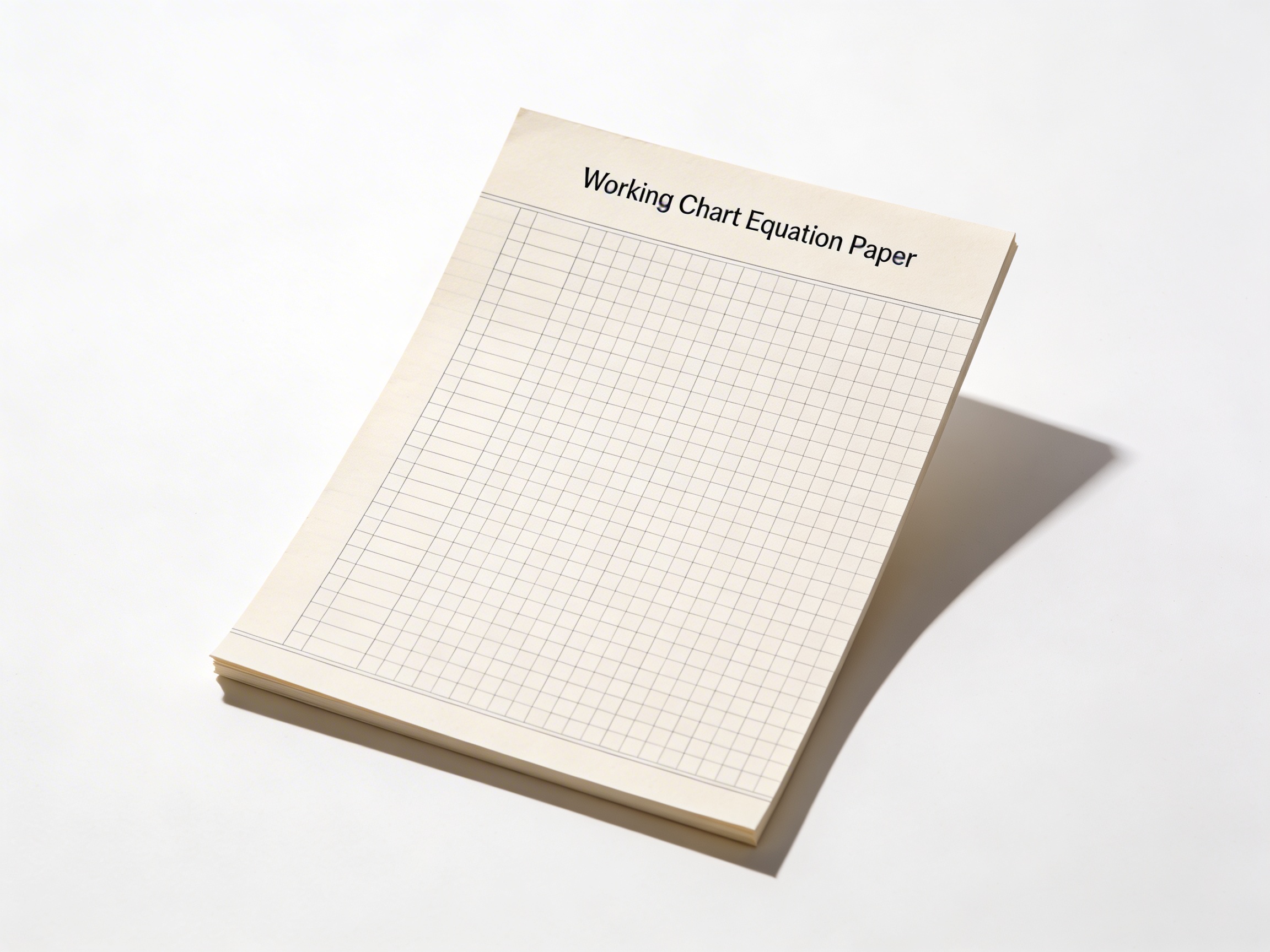
The Working Chart Equation Paper is a Mathematics Montessori material designed for children aged 3-6, crafted by Nienhuis Montessori to AMI standards.
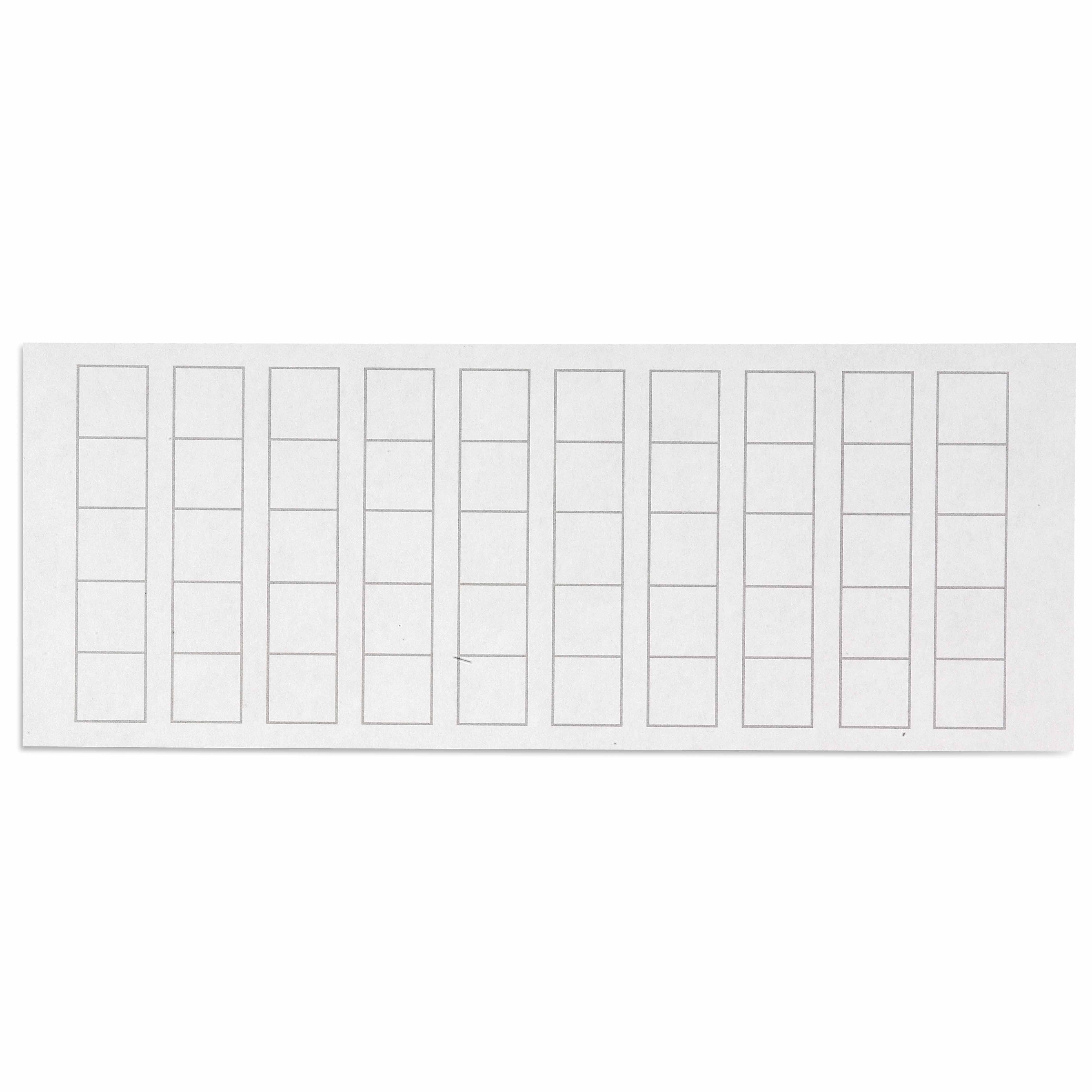
This Working Chart Equation Paper provides a structured grid system essential for elementary mathematical work in the Montessori classroom. The chart features 60 precisely arranged cells organized in 10 vertical columns, each containing 6 rows, allowing children to systematically record equations and explore mathematical relationships. The clean, minimal design supports focused work while developing organizational skills crucial for abstract mathematical thinking.
“Children display a universal love of mathematics, which is par excellence the science of precision, order, and intelligence.”— Maria MontessoriThe Discovery of the Child
“The greatest sign of success for a teacher is to be able to say, 'The children are now working as if I did not exist.'”
— Maria Montessori, The Absorbent Mind
The Working Chart Equation Paper addresses the child's need to bridge concrete mathematical exploration with abstract recording. Each of the 60 cells on this chart provides a designated space where mathematical discoveries become visible and permanent. The 10 vertical columns mirror the base-ten system fundamental to mathematical understanding, while the 6 rows per column offer sufficient space for systematic equation recording. This paper chart transforms ephemeral manipulative work into documented mathematical knowledge. The grid structure of the Working Chart teaches precision in mathematical notation—each equation occupies its own cell, creating visual order from numerical relationships. By providing this structured recording system, the chart enables children to see patterns across multiple equations simultaneously. The minimal design of the Working Chart eliminates distractions, allowing focus on the mathematical content itself rather than decorative elements.
Each order includes everything needed for proper presentation and long-term use.
Follow the Montessori method of presentation for optimal child development.
Begin with the first column, starting at the top cell. Write one complete equation per cell
Progress down the column before moving to the next, maintaining left-to-right progression
Use consistent spacing between numbers and operation symbols within each cell
Review completed columns to identify patterns or relationships between equations
Every material is carefully selected for durability, safety, and authentic Montessori experience.
Sourced from sustainably managed European forests. Beechwood is chosen for its exceptional durability, smooth grain, and natural warmth that invites touch.
Natural, unbleached cotton in child-friendly colors. The fabric provides the right amount of friction for developing fingers while being gentle on sensitive skin.
Water-based, child-safe finish that meets the strictest European safety standards. Designed to withstand years of daily use without chipping or peeling.
Each material supports multiple areas of child development simultaneously.
The structured grid system helps children develop systematic approaches to recording and solving equations, building essential organizational skills for advanced mathematics.
The clear column and row arrangement supports children in identifying mathematical patterns and relationships through visual organization.
Transitioning from concrete materials to written equations on the chart develops abstract mathematical reasoning and symbolic representation skills.
Writing equations within defined cells enhances pencil control and spatial awareness while reinforcing mathematical concepts.
Designed for child-sized hands
Professional tips from AMI-trained guides to maximize the educational value of this material.
“Introduce the chart only after children demonstrate comfort recording simple equations on plain paper”
Model using one equation per cell during initial presentations to establish the organizational system
Keep multiple charts available so children can dedicate different charts to different operation types
Use completed charts during individual conferences to discuss mathematical discoveries and patterns
Everything you need to know about this material.
The chart features a 10x6 grid layout with 60 cells total, printed on high-quality paper designed for repeated classroom use. The paper is durable enough to withstand daily handling by young children while maintaining its clean appearance.
The structured grid helps children organize their mathematical thinking by providing clear spaces for recording equations. It supports the transition from concrete manipulatives to abstract concepts by allowing systematic documentation of mathematical relationships discovered during hands-on work.
This chart is ideal for recording addition and subtraction equations with golden beads, documenting skip counting patterns, organizing multiplication facts, and creating visual representations of number relationships. It's particularly useful with stamp game work and bead chain explorations.
While the chart is designed for pencil use, many teachers choose to laminate it for repeated use with dry-erase markers. This allows children to practice equation writing multiple times while maintaining the chart's longevity in the classroom environment.
We recommend having 4-6 charts available for a classroom of 20-25 children, as multiple children often work on mathematical activities simultaneously. Having extras ensures materials are always accessible when children are ready for abstract mathematical work.
Can't find what you're looking for?
Contact Our Experts
Share your experience with this material and help other educators and parents.


