
1st Green Cylinder
The first photo is the maker's own. The other shots are illustrative.
Inv. no. NIE-00230004
- Maker
- Nienhuis Montessori, since 1929
- Primary Material
- Solid wood
- Finish
- Green paint
- EAN
- 8719924000745
Final price incl. VAT. Delivery €5.90, €144.20 to go for free delivery.
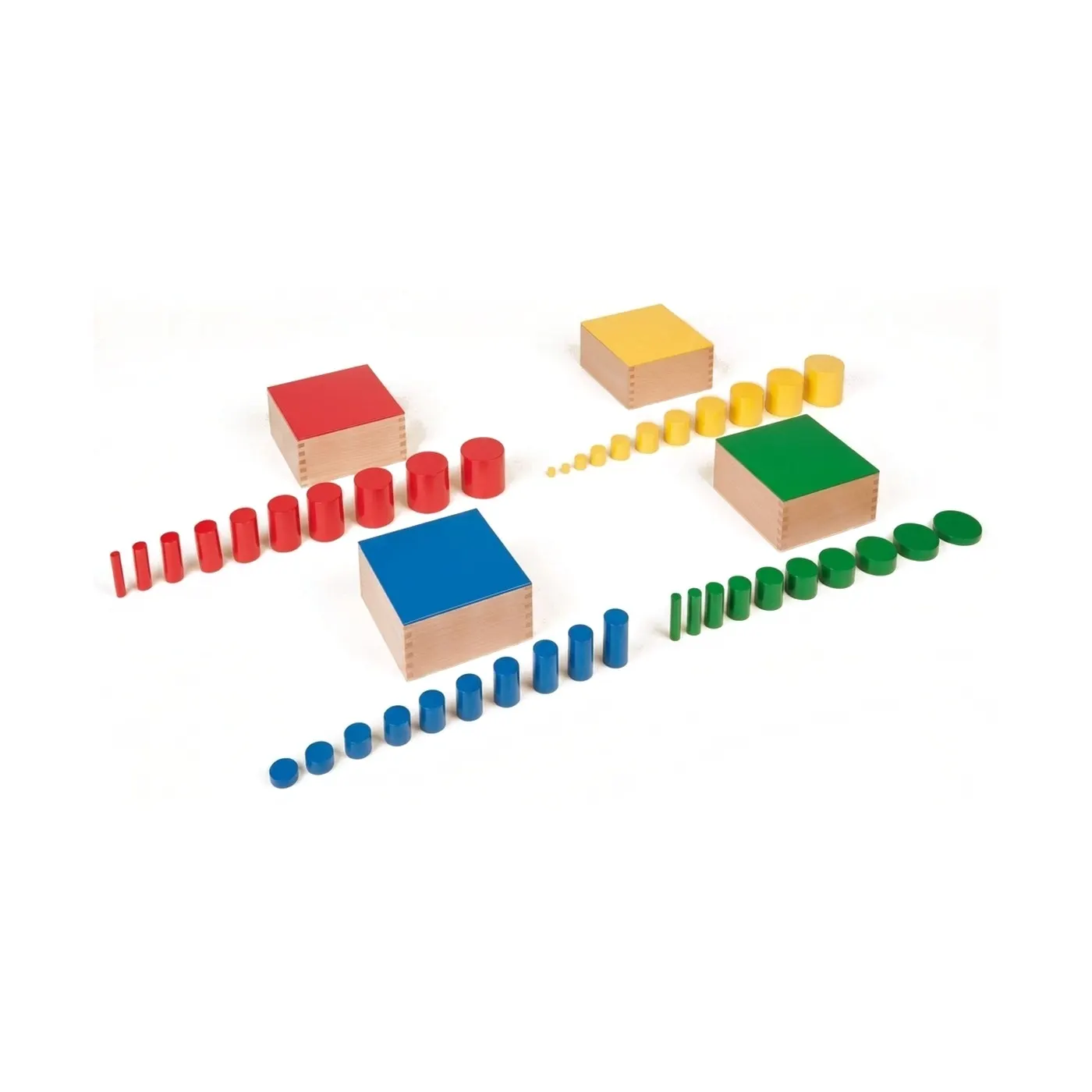 Knobless Cylinders Set €238.90
Advice, warranty and returns are handled by us.
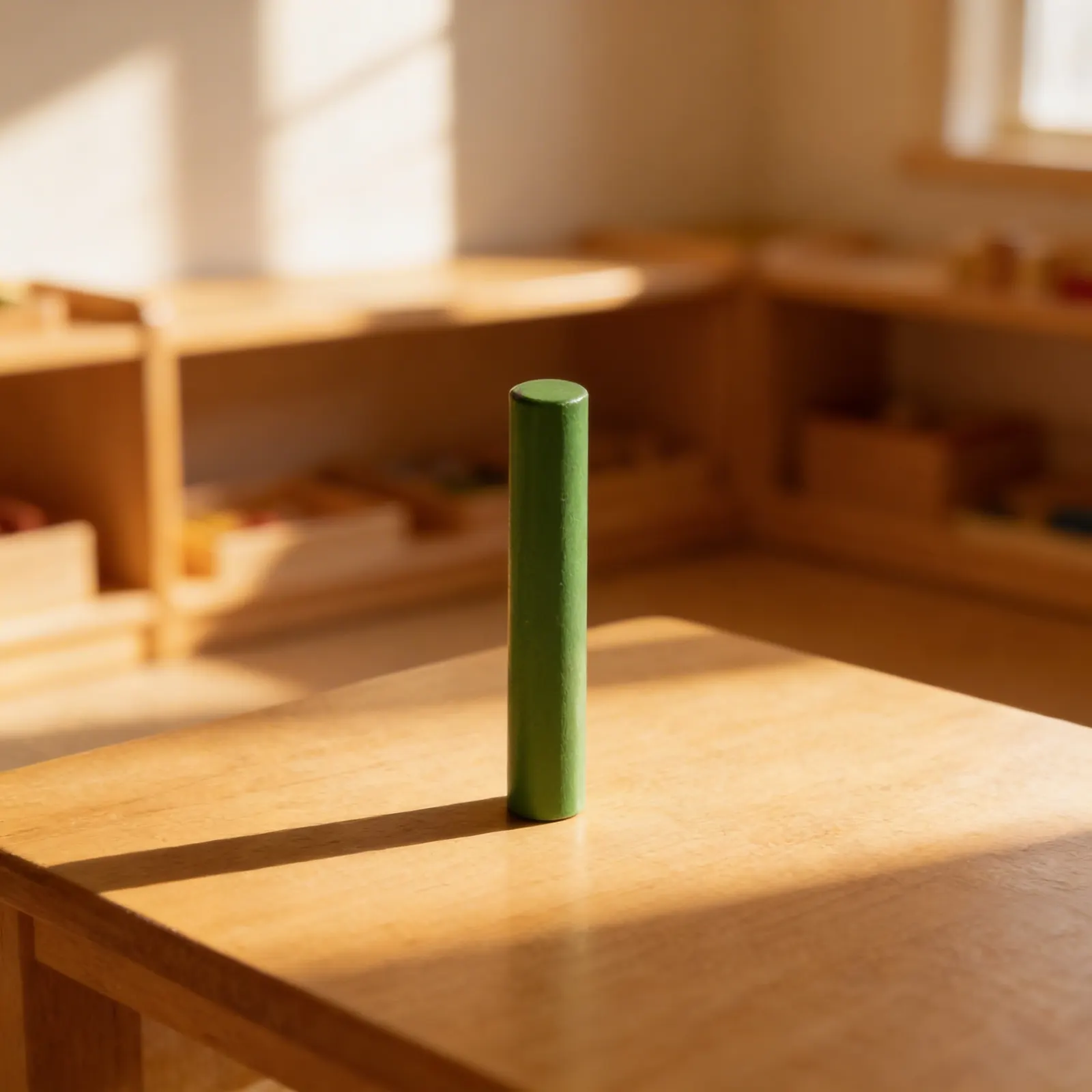
1st Green Cylinder in a child's hands
The first green cylinder from the knobless cylinders, a single replacement piece. Unlike the knobbed blocks, these sets arrive in boxes with no wooden case to put them back into, which changes the work: the order is something the child builds on the mat rather than something the material hands them. That is harder, and it is the reason the knobless sets come later. Painted wood. The complete green set is a separate item.
Visual Discrimination
Helps children recognize and differentiate uniform dimensions through careful observation and comparison.
Fine Motor Control
Grasping and manipulating the cylinder refines pincer grip and hand-eye coordination.
Order and Sequence
Part of systematic cylinder block work that develops understanding of gradation and dimensional relationships.
Concentration
Precise placement activities foster sustained attention and careful movement control.
How to present it
Place the cylinder on a tray at the child's work table. Ensure the corresponding cylinder block is available if conducting a full exercise.
- 1Demonstrate holding the cylinder by its knob using thumb and two fingers
- 2Lift the cylinder vertically and examine its dimensions
- 3If using with block, lower the cylinder into various sockets to find the correct fit
- 4Remove and replace the cylinder several times
- 5Invite the child to handle the cylinder independently
3 tips for parents
- Practice similar pincer grasp activities at home using household items like jar lids or bottle caps
- Point out height differences in everyday objects to reinforce the concept
- Create simple sorting games with objects of uniform width but varying heights

If you are not sure it suits your child, we answer in person.
Norbert Kovalčín, founder of Faborino · write to him
There is no review here yet. We will ask you for one after you buy. Write the first review
What's in the Box
- 1st Green Cylinder: Single replacement piece
Size and material
| Packaging | 6 × 1 × 1 cm |
| Primary Material | Solid wood |
| Finish | Green paint |
| Recommended Age | 3-6 years |
Care
Wipe with damp cloth, dry immediately
Frequently Asked Questions
What makes this green cylinder different from other cylinder blocks?
The 1st Green Cylinder features a uniform diameter design, meaning all cylinders in this set have the same width but vary in height. This isolates the concept of height variation, helping children focus on one dimension at a time for clearer understanding of size relationships.
Is this a complete cylinder block set or just one piece?
This is a single replacement cylinder piece from the green cylinder block series, not a complete set. It's designed to replace lost or damaged pieces from your existing Montessori cylinder block collection.
What skills does working with the green cylinder series develop?
The green cylinder series develops visual discrimination of height, fine motor control through the pincer grasp, hand-eye coordination, concentration, and preparation for mathematical concepts like seriation and dimensional relationships.
What are the exact dimensions of this cylinder?
This cylinder measures 3×10×3 cm. The uniform diameter (3 cm) remains constant while the height (10 cm) represents this specific cylinder's place in the height gradation series.
At what age should children start using cylinder blocks?
Children typically begin working with cylinder blocks around age 3, when they have developed sufficient fine motor control. The exercise remains engaging and beneficial through age 6, as children refine their visual discrimination and problem-solving skills.
Product safety
Manufacturer: Nienhuis Montessori, Anders Celsiusstraat 15, 7442 PB Nijverdal, Netherlands
1st Green Cylinder