
2 Bells MountedA
The first photo is the maker's own. The other shots are illustrative.
Inv. no. NIE-0063A010
- Maker
- Nienhuis Montessori, since 1929
- Approval
- AMI
- Bell Dome
- Polished metal
- Wooden part
- Beech
- EAN
- 8719924004088
Final price incl. VAT. Free delivery.
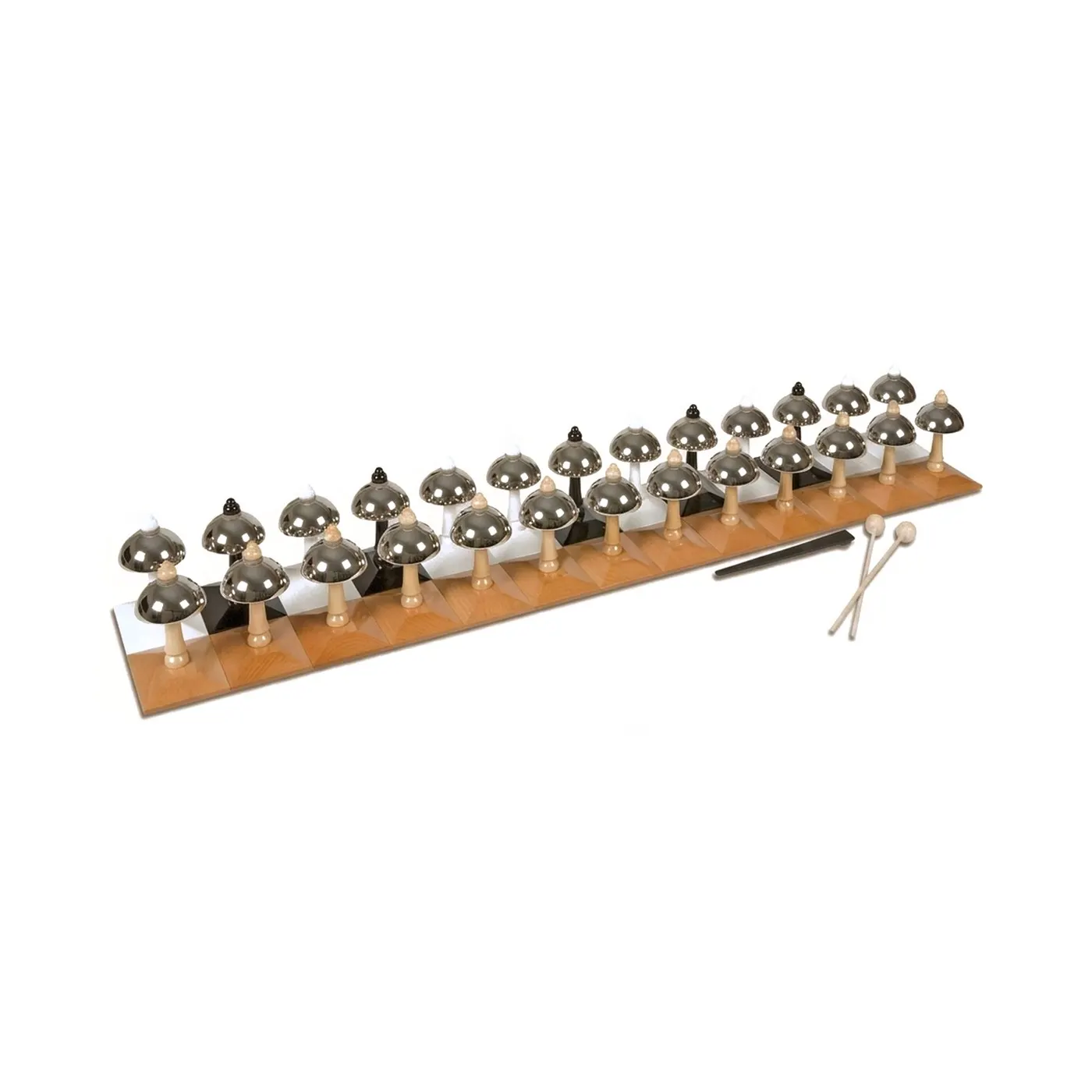 Montessori Bells Complete Set €1,421.90
Advice, warranty and returns are handled by us.
Why it costs €151.90
Behind the price of the original are things you can check yourself.
AMI approval
The material is approved by the Association Montessori Internationale (AMI). Nienhuis has made Montessori materials since 1929.
A verifiable original
The EAN 8719924004088 is on the box. It is the maker's number, not ours.
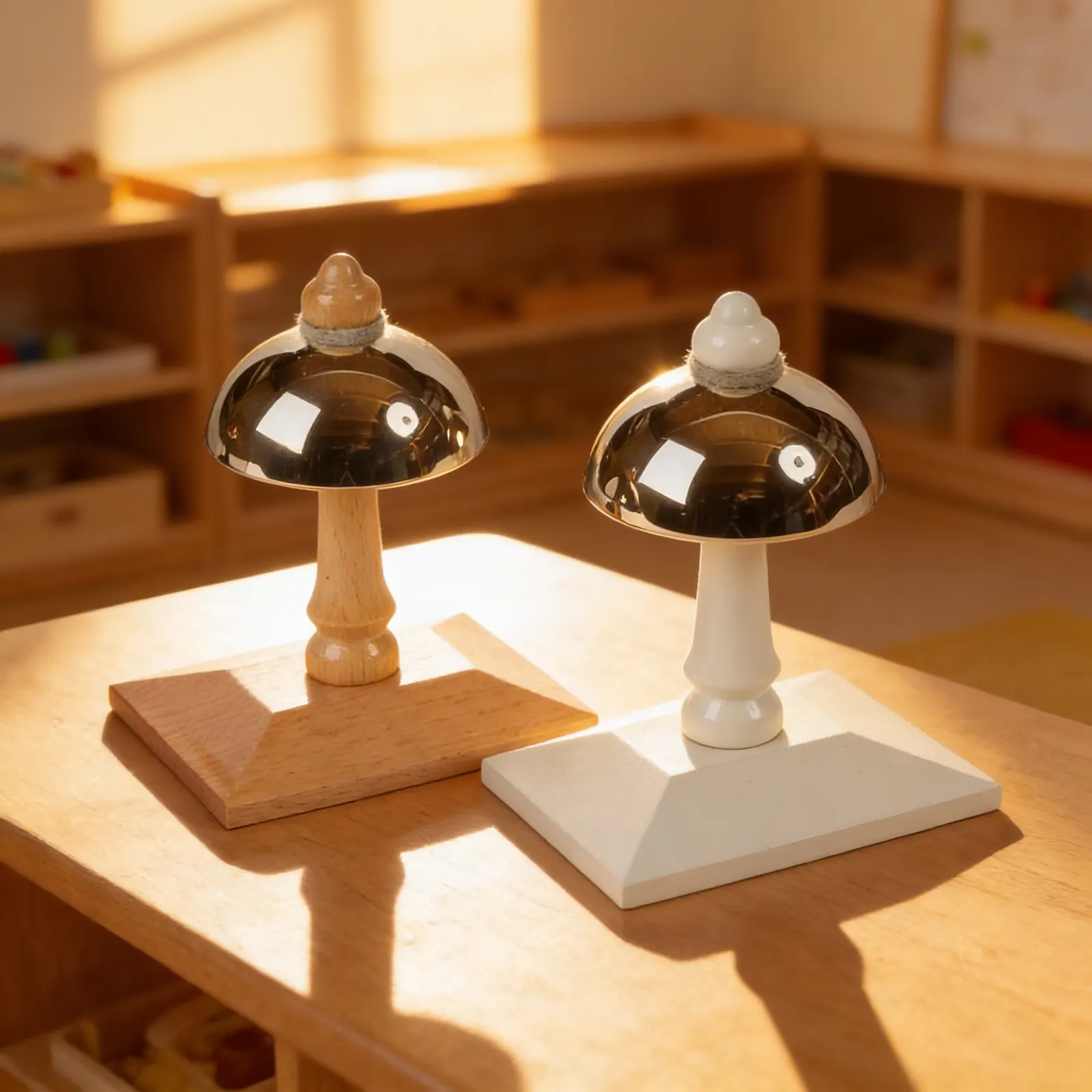
2 Bells Mounted in a child's hands
This pair of mounted bells is tuned to the note A, the sixth note of the C major scale, which lies between G and B. Both bells sound the same note, so the child can listen to them one after the other and check whether they match, or compare the tone with other tones, above all its neighbours. The bells are made of metal and wood. Packed, the pair measures 15 × 15 × 11 cm and weighs 480 g. The metal is wiped with a soft dry cloth and the wood with a damp one. For ages 3 to 6.
Auditory Discrimination
Children refine their ability to distinguish between different pitches and tones, laying groundwork for music appreciation and phonemic awareness.
Sound Memory
Matching and grading activities with the bells develop auditory memory crucial for language development and musical training.
Concentration
The focused attention required to perceive subtle tonal differences strengthens concentration and mindful listening skills.
Fine Motor Control
Grasping the turned handles and striking the bells with controlled movements refines hand coordination and wrist flexibility.
How to present it
Place both bells on a mat, spaced apart. Have the child sit comfortably where they can reach both bells easily. Ensure a quiet environment for optimal sound perception.
- 1Demonstrate striking one bell gently with its handle, allowing the tone to ring fully before it fades
- 2Strike the second bell in the same manner, listening to its complete tone
- 3Strike the first bell again, then immediately the second, comparing their tones
- 4Invite the child to strike each bell, exploring how different striking forces create varied volumes
- 5If tones match, celebrate the recognition; if different, acknowledge the observation
3 tips for parents
- Practice deep listening at home by sitting quietly and identifying different sounds in your environment
- When your child notices sounds (birds, vehicles, instruments), pause to listen together and discuss what you hear
- Avoid background music or TV during focused activities to develop your child's appreciation for purposeful sound

If you are not sure it suits your child, we answer in person.
Norbert Kovalčín, founder of Faborino · write to him
There is no review here yet. We will ask you for one after you buy. Write the first review
What's in the Box
- Pair of mounted bells: tone A
Size and material
| Packaging | 15 × 15 × 11 cm |
| Bell Dome | Polished metal |
| Wooden part | Beech |
| Recommended Age | 3-6 years |
Care
Wipe metal with soft dry cloth; clean wood with damp cloth
Frequently Asked Questions
What skills do the 2 Bells Mounted develop in children?
These bells develop auditory discrimination, pitch recognition, and sound matching abilities. Children learn to distinguish subtle differences in tone, practice careful listening, and build concentration skills essential for language development and musical awareness.
How are these bells used in Montessori sensorial activities?
Children use the bells for matching exercises, finding identical sounds between sets, and grading activities where they arrange bells by pitch. They also explore concepts of loud/soft, high/low, and develop vocabulary for describing sound qualities through hands-on exploration.
What makes these bells suitable for ages 3-6?
The bells feature sturdy wooden handles sized for small hands, stable bases that prevent tipping, and clear tones that young children can easily distinguish. The simple striking motion helps develop fine motor control while the engaging sounds maintain interest during repetitive practice.
Are these the same as Montessori bell sets with multiple pitches?
No, this 2-bell set focuses on fundamental matching and comparison activities. For pitch grading exercises with multiple tones, you would need a complete Montessori bell set. These mounted bells are ideal for introducing auditory work before progressing to more complex bell materials.
What is the quality and durability of these educational bells?
The bells feature precision-crafted metal domes that produce consistent, clear tones, mounted on solid wooden handles with decorative finials. The stable wooden bases ensure safe classroom use, while the quality construction withstands daily handling by multiple children over many years.
Product safety
Manufacturer: Nienhuis Montessori, Anders Celsiusstraat 15, 7442 PB Nijverdal, Netherlands
2 Bells Mounted