
2 Bells MountedC Sharp
The first photo is the maker's own. The other shots are illustrative.
Inv. no. NIE-0063A002
- Maker
- Nienhuis Montessori, since 1929
- Approval
- AMI
- Bell Domes
- Metal with brass/gold finish
- Bases
- Natural and black-stained wood
- EAN
- 8719924004002
Final price incl. VAT. Free delivery.
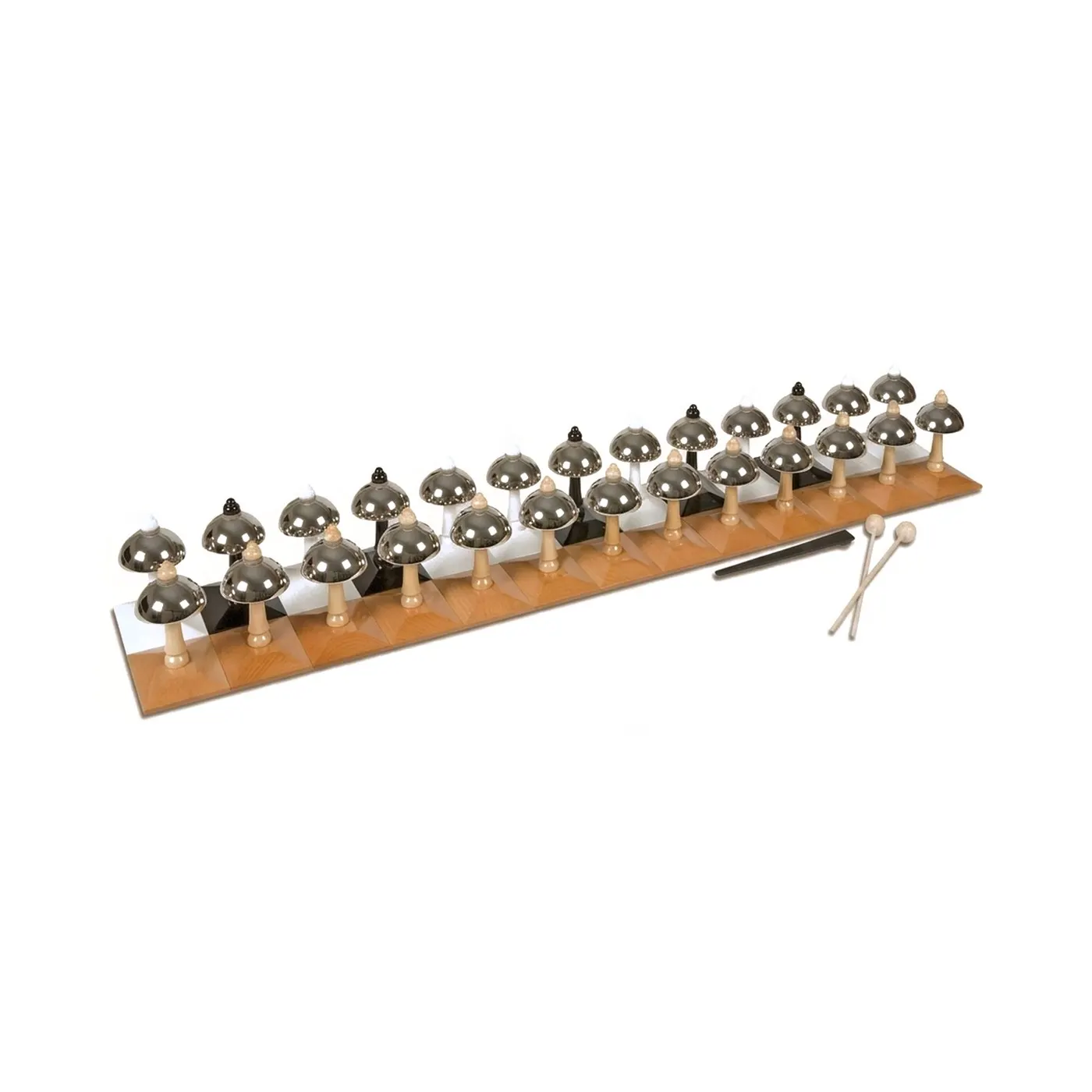 Montessori Bells Complete Set €1,421.90
Advice, warranty and returns are handled by us.
Why it costs €151.90
Behind the price of the original are things you can check yourself.
AMI approval
The material is approved by the Association Montessori Internationale (AMI). Nienhuis has made Montessori materials since 1929.
A verifiable original
The EAN 8719924004002 is on the box. It is the maker's number, not ours.
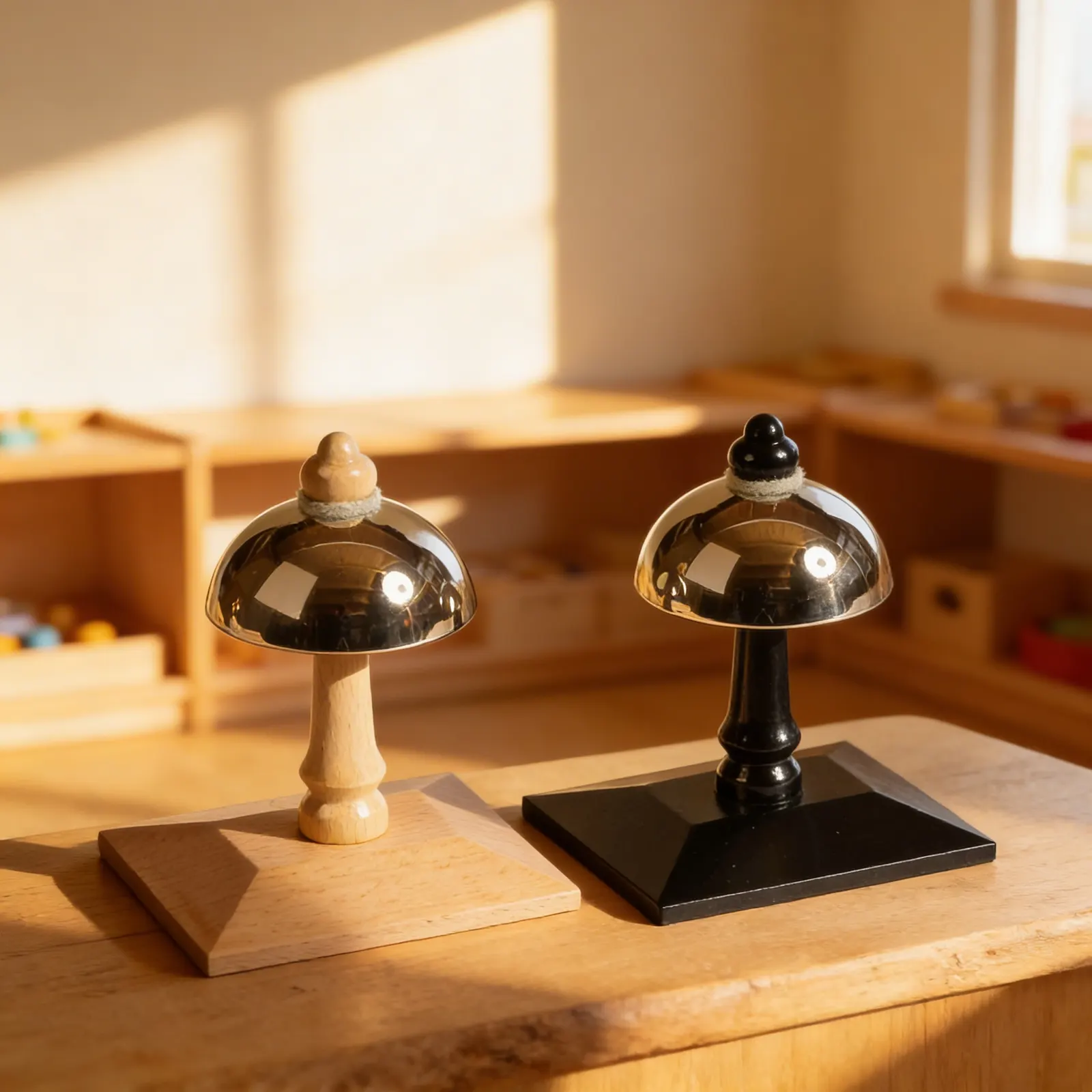
2 Bells Mounted in a child's hands
C sharp, one of the five bells that turn the plain scale into a chromatic one. The sharps and flats are introduced only after the naturals are secure, and they are where the work gets genuinely difficult: a semitone is a small enough step that a child has to stop, strike again, and listen properly rather than deciding at a glance. Adding them one at a time is why the set is sold bell by bell. Metal on a wooden base, for ages 3 to 6.
Auditory Discrimination
Refines the child's ability to perceive subtle differences in pitch and tone quality through careful listening exercises.
Musical Intelligence
Introduces fundamental concepts of pitch, resonance, and tonal memory essential for musical development.
Concentration Skills
Focused listening activities with the bells develop sustained attention and mindful awareness.
Sensorial Refinement
Combines auditory, visual, and tactile experiences to create rich sensorial impressions.
How to present it
Place both C Sharp bells on a mat with adequate spacing. Position the mallet between them. Ensure a quiet environment for optimal listening conditions.
- 1Strike the natural-based bell gently with the mallet, listening until the sound completely fades
- 2Strike the black-based bell with identical force, attending to the full duration of the tone
- 3Alternate between bells, inviting the child to identify that both produce the same pitch
- 4Invite the child to strike each bell, discovering the matching C Sharp tones independently
3 tips for parents
- Create quiet moments at home for focused listening to environmental sounds
- Sing simple songs using sustained single notes to reinforce pitch awareness
- Notice and name matching sounds in daily life, two birds chirping, identical timer beeps

If you are not sure it suits your child, we answer in person.
Norbert Kovalčín, founder of Faborino · write to him
There is no review here yet. We will ask you for one after you buy. Write the first review
What's in the Box
- C Sharp Bell: Natural wood base with handle
- C Sharp Bell: Black wood base with handle
Size and material
| Packaging | 15 × 15 × 11 cm |
| Bell Domes | Metal with brass/gold finish |
| Bases | Natural and black-stained wood |
| Handles | Solid wood construction |
| Recommended Age | 3-6 years |
Care
| Cleaning | Wipe metal bells with soft dry cloth; clean wooden bases with slightly damp cloth |
| Storage | Store in dry location away from moisture |
Frequently Asked Questions
What makes these C Sharp bells suitable for Montessori music education?
These bells are precision-tuned to produce identical C Sharp tones, allowing children to explore pitch matching and develop auditory discrimination skills. The contrasting wooden bases (natural and black) provide visual cues that help children understand how different instruments can produce the same pitch, a fundamental concept in Montessori music education.
How do children use these bells in the classroom?
Children strike each bell with a mallet to hear the C Sharp tone, then compare the sounds to identify that they're identical despite the visual difference. This activity develops pitch recognition, auditory memory, and the ability to match tones. Teachers often use them for pairing exercises, memory games, and as an introduction to musical scales.
Why are the bases different colors if the bells produce the same note?
The contrasting natural and black wooden bases serve an important educational purpose. They help children understand that identical sounds can come from visually different sources, reinforcing the concept of auditory discrimination independent of visual cues. This design principle is fundamental to Montessori sensorial education.
What skills do children develop using these bells?
Children develop auditory discrimination, pitch matching abilities, concentration, and musical ear training. The activity also enhances fine motor control when using the mallet, supports cognitive development through sound comparison, and introduces basic music theory concepts in a concrete, hands-on way.
Are these bells part of a larger Montessori bell set?
Yes, these C Sharp bells are typically part of the complete Montessori bell cabinet system. While they can be used independently for pitch matching exercises, they're designed to work with other pitched bells to teach musical scales, intervals, and more complex auditory discrimination activities as children progress.
Product safety
Manufacturer: Nienhuis Montessori, Anders Celsiusstraat 15, 7442 PB Nijverdal, Netherlands
2 Bells Mounted