
2 Bells MountedD Sharp
The first photo is the maker's own. The other shots are illustrative.
Inv. no. NIE-0063A004
- Maker
- Nienhuis Montessori, since 1929
- Approval
- AMI
- Bell Domes
- Polished metal with gold finish
- Handles & Bases
- Turned wood (natural and black finishes)
- EAN
- 8719924004026
Final price incl. VAT. Free delivery.
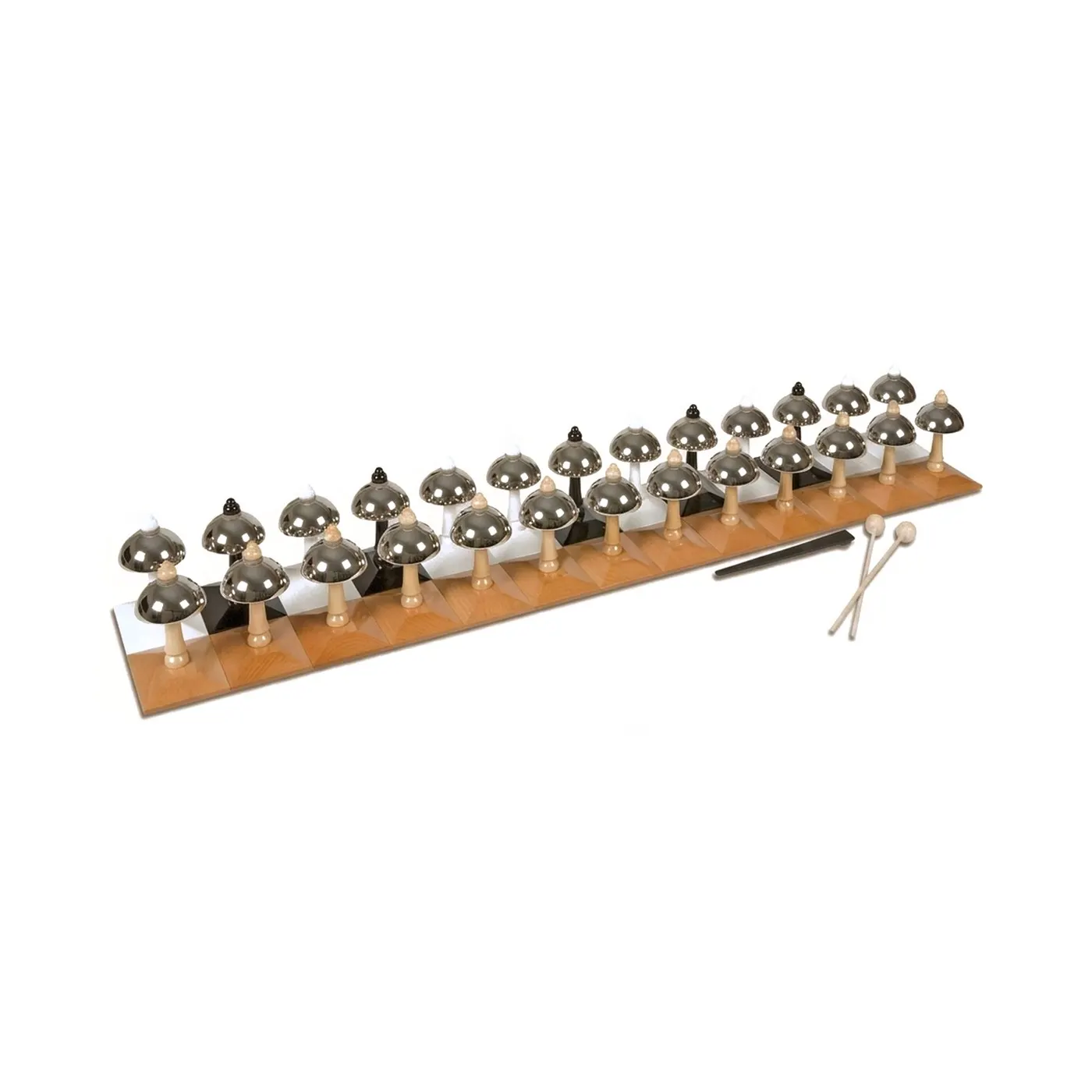 Montessori Bells Complete Set €1,421.90
Advice, warranty and returns are handled by us.
Why it costs €151.90
Behind the price of the original are things you can check yourself.
AMI approval
The material is approved by the Association Montessori Internationale (AMI). Nienhuis has made Montessori materials since 1929.
A verifiable original
The EAN 8719924004026 is on the box. It is the maker's number, not ours.
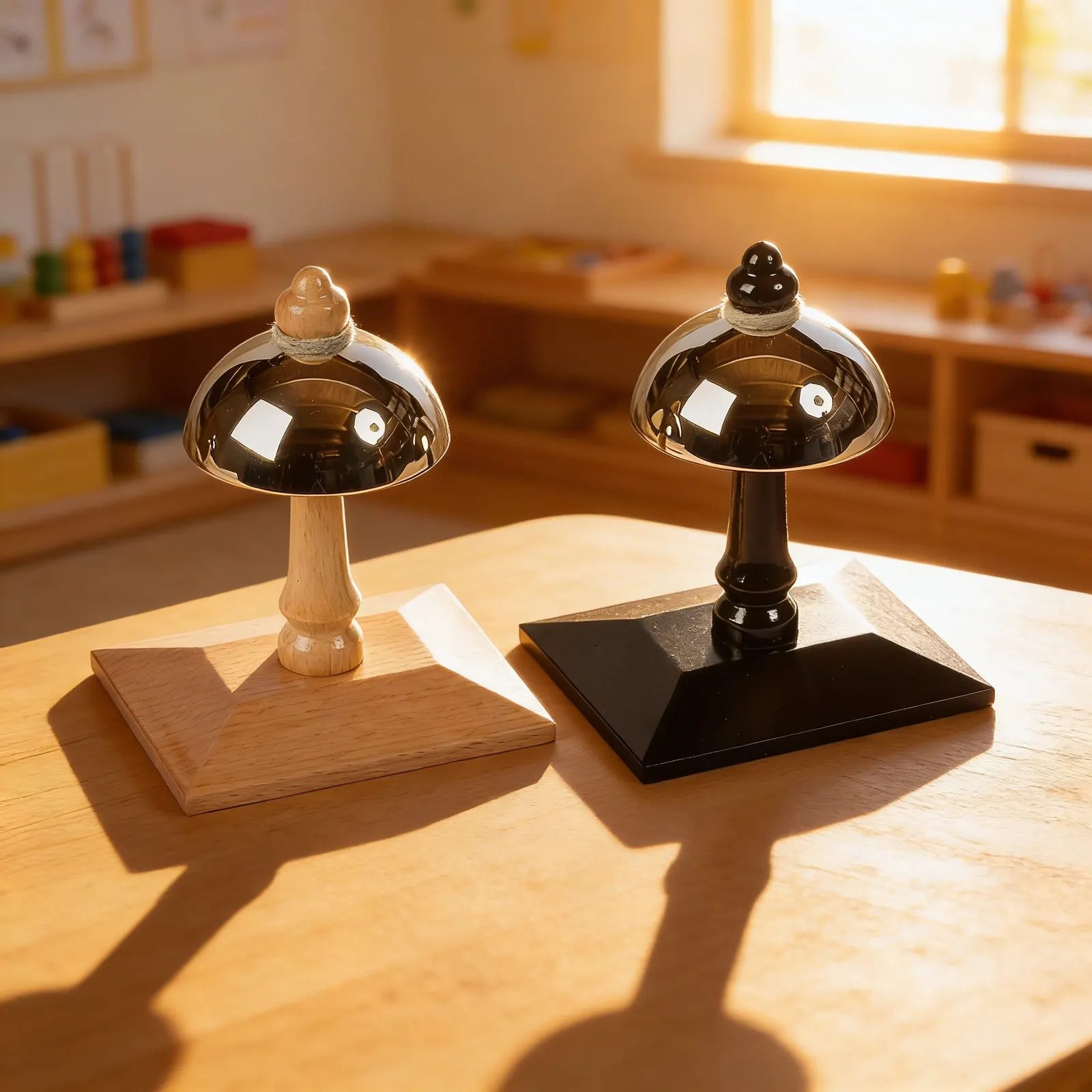
2 Bells Mounted in a child's hands
Sharpening perception one step at a time, these precision-tuned D Sharp bells offer children a refined introduction to pitch discrimination and musical exploration. Each bell features a polished metal dome that produces a clear, sustained tone when struck, mounted on sturdy bases, one in natural wood and one in black, allowing for visual as well as auditory differentiation. Essential for developing acute listening skills and musical sensitivity in the Montessori sensorial curriculum.
Auditory Discrimination
Matching identical pitches refines the child's ability to perceive subtle sound differences, preparing for musical education.
Concentration Development
Careful listening required for pitch matching activities strengthens focus and attention to detail.
Musical Intelligence
Early exposure to pure tones and pitch relationships builds foundation for understanding melody and harmony.
Sensory Integration
Combining visual differences (wood colors) with auditory similarities supports multi-sensory learning.
How to present it
Place both bells on a mat, spaced about 12 inches apart. Set the striker between them. Ensure a quiet environment for optimal sound perception.
- 1Demonstrate striking the first bell gently at its crown, allowing the D Sharp tone to ring fully
- 2Strike the second bell with identical force and placement, inviting the child to listen
- 3Invite the child to strike each bell, asking 'Do these sound the same?'
- 4Once matching is established, play memory games: strike one bell while child closes eyes, then have them identify which was played
3 tips for parents
- Practice finding D Sharp sounds in your environment, some microwaves beep at this frequency
- Encourage your child to close their eyes while listening to eliminate visual distractions
- If your child seems frustrated, return to simpler sound games with everyday objects first

If you are not sure it suits your child, we answer in person.
Norbert Kovalčín, founder of Faborino · write to him
There is no review here yet. We will ask you for one after you buy. Write the first review
What's in the Box
- D Sharp Bell with Natural Wood Base: Precision-tuned with turned handle
- D Sharp Bell with Black Wood Base: Matching pitch for comparison work
Size and material
| Packaging | 15 × 15 × 11 cm |
| Bell Domes | Polished metal with gold finish |
| Handles & Bases | Turned wood (natural and black finishes) |
| Internal Components | Metal striker mechanism |
| Recommended Age | 3-6 years |
Care
| Cleaning | Wipe metal domes with soft dry cloth; clean wooden bases with damp cloth |
| Maintenance | Check striker mechanism periodically; avoid dropping to maintain tuning |
Frequently Asked Questions
What age group are the D Sharp bells suitable for?
These bells are designed for children ages 3-6 years, aligning with the Montessori primary curriculum for sensorial development and early musical education.
How do children use the two bells in Montessori activities?
Children strike each bell separately to hear the identical D Sharp pitch, then match the sounds to develop pitch discrimination. The different colored bases (natural wood and black) help with visual organization while focusing on auditory matching.
What is the educational purpose of having two identical pitched bells?
Two identical bells allow children to practice sound matching, develop auditory memory, and refine their ability to recognize pitch. This prepares them for more complex musical activities like the Montessori bell cabinet.
How durable are these bells for classroom use?
The bells feature polished metal domes mounted on sturdy wooden bases, designed to withstand regular classroom use. The precision-tuned construction maintains accurate pitch over time with proper care.
Can these bells be combined with other Montessori music materials?
Yes, these D Sharp bells complement other Montessori music materials like bell sets, tone bars, and resonator bells. They can be used for pitch matching games, ear training exercises, and as part of a complete sensorial music curriculum.
Product safety
Manufacturer: Nienhuis Montessori, Anders Celsiusstraat 15, 7442 PB Nijverdal, Netherlands
2 Bells Mounted