
2 Bells MountedHigh C
The first photo is the maker's own. The other shots are illustrative.
Inv. no. NIE-0063A013
- Maker
- Nienhuis Montessori, since 1929
- Approval
- AMI
- Bell Dome
- Polished metal
- Handle & Base
- Natural wood
- EAN
- 8719924004118
Final price incl. VAT. Free delivery.
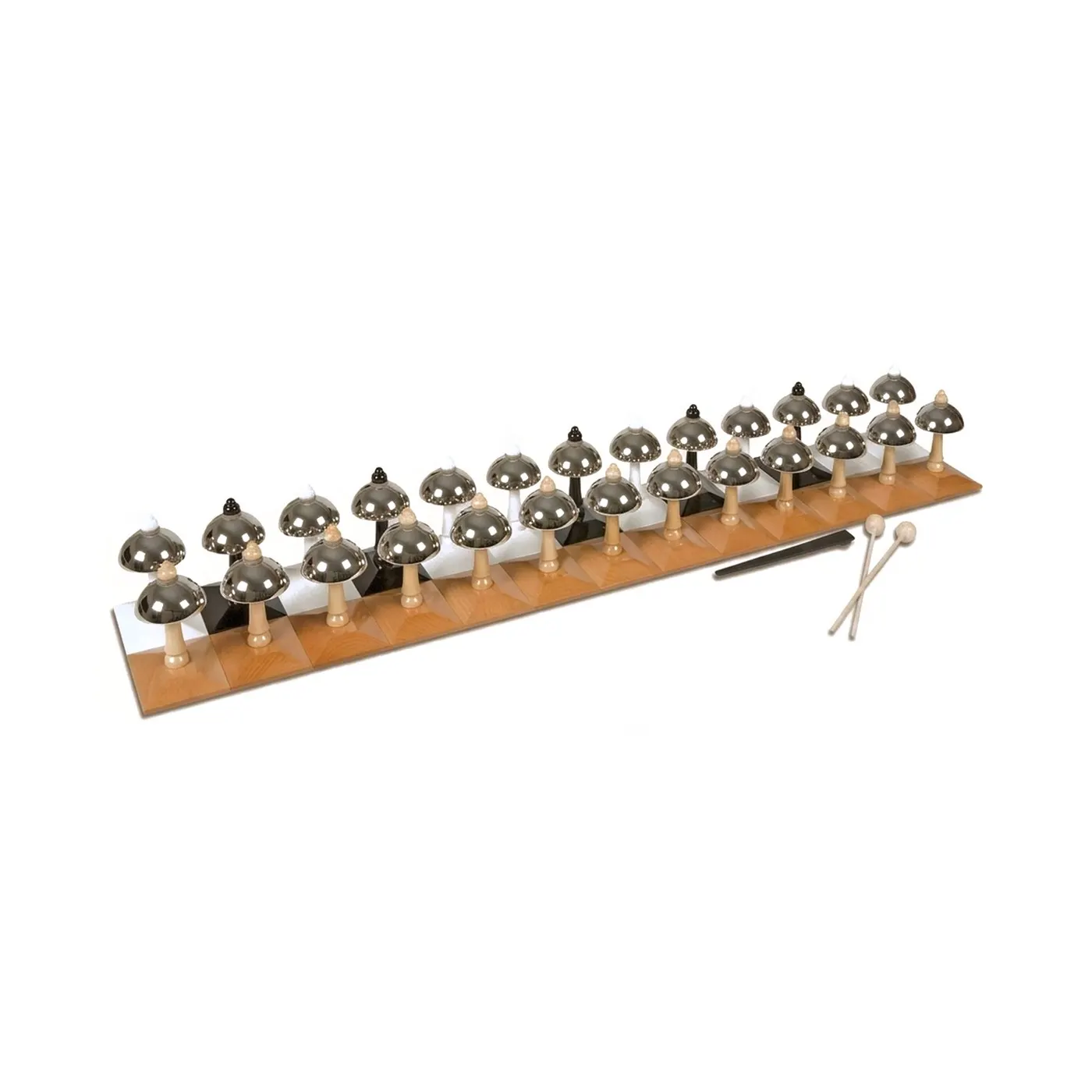 Montessori Bells Complete Set €1,421.90
Advice, warranty and returns are handled by us.
Why it costs €151.90
Behind the price of the original are things you can check yourself.
AMI approval
The material is approved by the Association Montessori Internationale (AMI). Nienhuis has made Montessori materials since 1929.
A verifiable original
The EAN 8719924004118 is on the box. It is the maker's number, not ours.
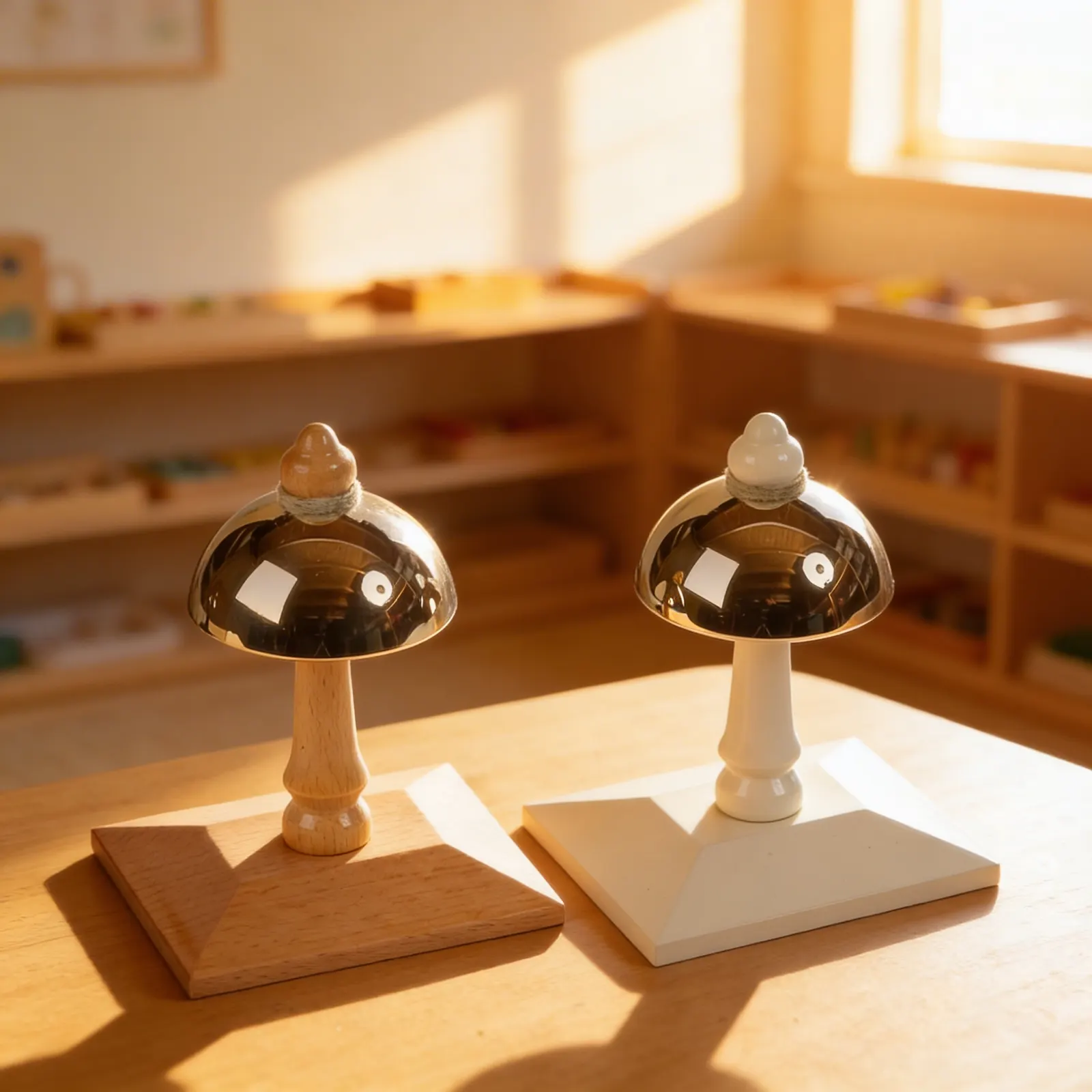
2 Bells Mounted in a child's hands
High C is the eighth note of the C major scale, the one that closes it. It lies an octave above the low C: the name is the same, but the sound is higher. Two bells tuned to this note are mounted on wood, with metal domes above. The child can compare their tone with the low C and hear the same note at a higher pitch. Packed, the pair measures 15 × 15 × 11 cm and weighs 480 g. The metal is wiped with a dry cloth, the wood with a damp one and then dried at once. For ages 3 to 6.
Auditory Discrimination
Matching identical pitches develops the child's ability to perceive subtle differences in sound and tone.
Musical Foundation
Introduction to pitch concepts prepares children for future music education and appreciation.
Fine Motor Control
Grasping and ringing bells with controlled movements refines hand coordination and wrist mobility.
Concentration Development
Focused listening activities enhance attention span and mindful awareness of auditory stimuli.
How to present it
Place both bells on a table mat, spacing them approximately 12 inches apart. Set a small striker between them. Ensure the room is quiet enough for clear sound perception.
- 1Demonstrate lifting the first bell by its handle with your dominant hand
- 2Strike the bell gently with the striker held in your other hand
- 3Listen to the complete resonance until the sound fades entirely
- 4Repeat with the second bell, maintaining the same striking force
- 5Invite the child to strike both bells and compare the sounds
3 tips for parents
- Create a quiet space at home for sound exploration without competing noises
- Use everyday objects like glasses with water to extend pitch exploration
- Respect your child's need to repeat the same sound many times for mastery

If you are not sure it suits your child, we answer in person.
Norbert Kovalčín, founder of Faborino · write to him
There is no review here yet. We will ask you for one after you buy. Write the first review
What's in the Box
- High C Bell: First bell tuned to High C
- High C Bell: Second bell tuned to High C for matching
Size and material
| Packaging | 15 × 15 × 11 cm |
| Bell Dome | Polished metal |
| Handle & Base | Natural wood |
| Recommended Age | 3-6 years |
Care
Wipe metal with dry cloth; clean wood with damp cloth and dry immediately
Frequently Asked Questions
What is the purpose of having two identical High C bells?
The two identical bells allow children to practice matching sounds, develop auditory memory, and engage in activities like finding pairs or playing simple rhythmic patterns. This duplication is essential for Montessori sound matching exercises.
How do these bells support early music education?
These bells introduce pitch recognition, develop auditory discrimination skills, and provide a concrete way to explore musical concepts. Children learn to produce consistent sounds through controlled movements while building the foundation for understanding musical notes.
What activities can children do with these mounted bells?
Children can practice sound matching, create simple rhythms, explore loud and soft sounds, play call-and-response games, and combine with other bell sets to learn about different pitches. They also develop fine motor control through proper striking techniques.
Are these bells durable enough for classroom use?
Yes, these bells feature sturdy wooden bases and quality metal construction designed for repeated use in educational settings. The ergonomic handles are sized for small hands, and the materials are built to withstand daily classroom activities while maintaining their precise tuning.
What age is most appropriate for introducing these bells?
While suitable for ages 3-6, most children benefit most from these bells starting around age 3.5-4 when they have developed sufficient motor control and attention span. Younger children can explore basic sound production, while older children can engage in more complex pitch discrimination activities.
Product safety
Manufacturer: Nienhuis Montessori, Anders Celsiusstraat 15, 7442 PB Nijverdal, Netherlands
2 Bells Mounted