
2 Bells MountedLow C
The first photo is the maker's own. The other shots are illustrative.
Inv. no. NIE-0063A001
- Maker
- Nienhuis Montessori, since 1929
- Approval
- AMI
- Bell
- Polished metal
- Handle & Base
- Turned hardwood
- EAN
- 8719924003999
Final price incl. VAT. Free delivery.
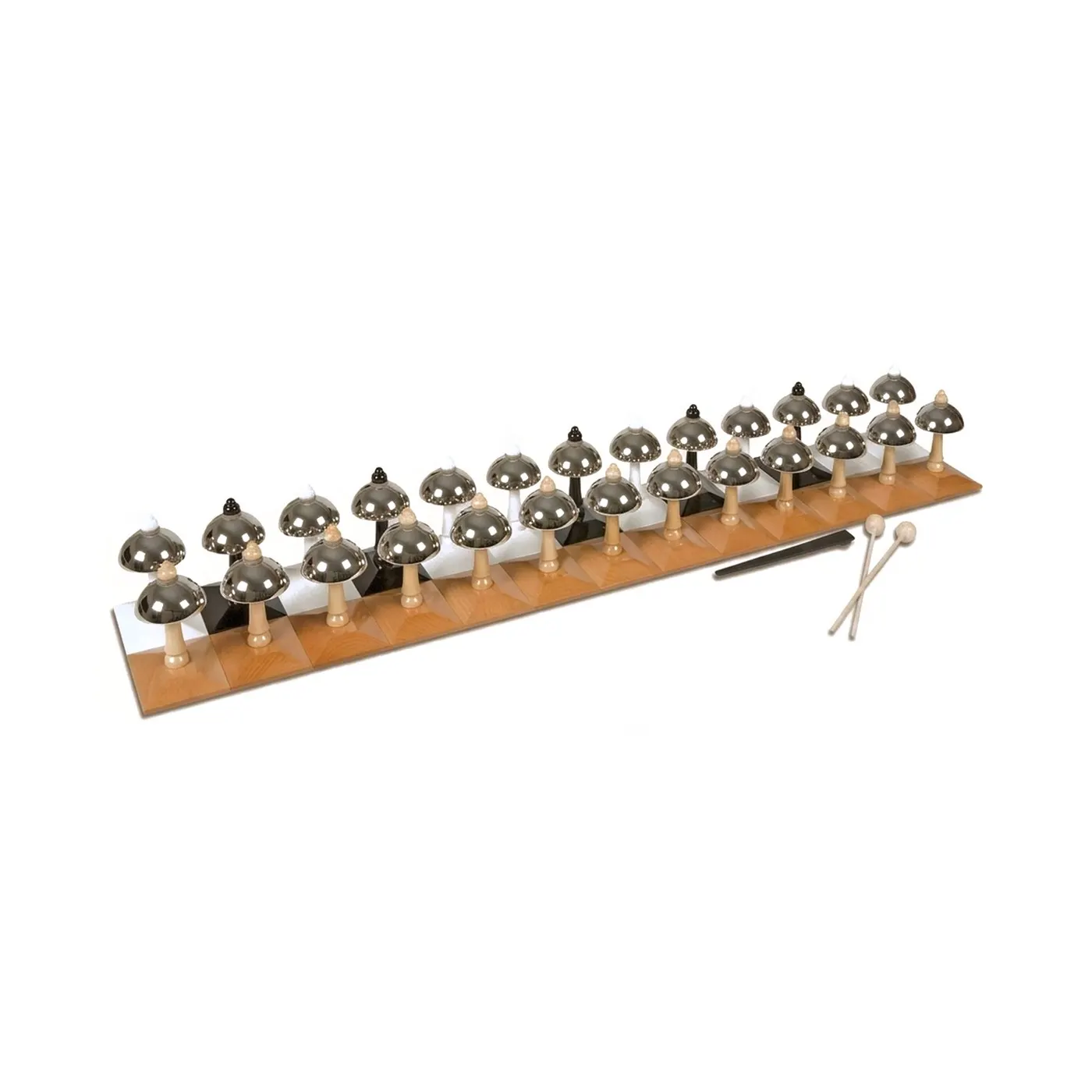 Montessori Bells Complete Set €1,421.90
Advice, warranty and returns are handled by us.
Why it costs €151.90
Behind the price of the original are things you can check yourself.
AMI approval
The material is approved by the Association Montessori Internationale (AMI). Nienhuis has made Montessori materials since 1929.
A verifiable original
The EAN 8719924003999 is on the box. It is the maker's number, not ours.
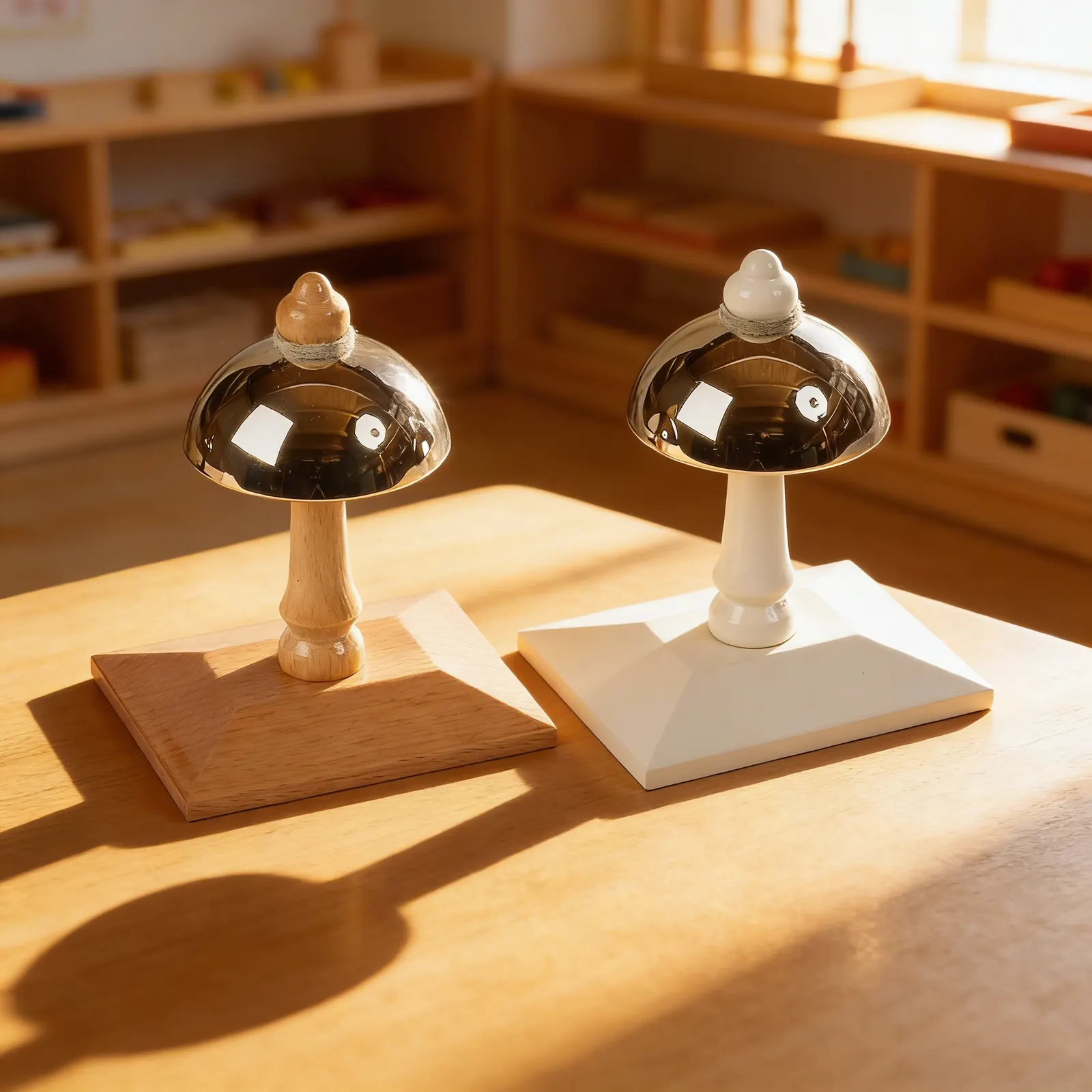
2 Bells Mounted in a child's hands
The low C, which is where the bell material begins and the note every other bell in the set is eventually measured against. A mounted pair gives the child one bell to strike and one to match, and matching by ear alone is the whole exercise: the bells look identical on purpose, so nothing but the sound can decide. Starting at the bottom of the range matters, because a low note is the easiest to hold in memory while hunting for its twin. Metal on a wooden base, for ages 3 to 6.
Auditory Discrimination
Develops the ability to perceive subtle differences in pitch through matching identical tones.
Musical Intelligence
Builds foundation for understanding musical scales and tonal relationships.
Concentration
Requires focused attention to distinguish and remember specific pitches.
Sensorial Refinement
Isolates the auditory sense to develop acute listening skills essential for language and music.
How to present it
Place both Low C bells on a table mat, spaced about 12 inches apart. Position the mallet to the right of the bells. Ensure the room is quiet enough for clear tone perception.
- 1Strike the first Low C bell gently with the mallet, allowing the tone to ring fully
- 2After the sound fades, strike the second Low C bell with the same gentle motion
- 3Strike the first bell again, then immediately strike the second to compare
- 4Mix the bell positions and repeat the matching exercise
3 tips for parents
- Create a quiet space for bell work - background noise interferes with pitch discrimination
- Encourage your child to 'sing' the Low C tone after striking to internalize the pitch
- Practice similar/different games with household sounds to reinforce auditory discrimination skills

If you are not sure it suits your child, we answer in person.
Norbert Kovalčín, founder of Faborino · write to him
There is no review here yet. We will ask you for one after you buy. Write the first review
What's in the Box
- Low C Bell: First bell with wooden handle and base
- Low C Bell: Matching second bell for pairing exercises
Size and material
| Packaging | 15 × 15 × 11 cm |
| Bell | Polished metal |
| Handle & Base | Turned hardwood |
| Recommended Age | 3-6 years |
Care
Wipe metal with soft dry cloth; clean wood with damp cloth
Frequently Asked Questions
What is the purpose of having two identical Low C bells?
The paired bells allow children to perform matching exercises where they strike one bell and then find its match by ear. This develops auditory discrimination, memory, and concentration while introducing the concept of identical pitches.
What age is most appropriate for introducing these bells?
These bells are designed for children ages 3-6, aligning with the Montessori sensitive period for music. Children should have developed sufficient motor control to handle the bells carefully and strike them properly.
How do these bells fit into the complete Montessori bells curriculum?
The Low C bells are typically part of a larger set of 13 pairs covering a chromatic octave. Children begin with simple matching exercises using identical pairs before progressing to grading exercises with different pitches.
What materials are used and why are they important?
The bells feature polished metal construction for optimal sound quality and durability, mounted on turned wooden handles with stable wooden bases. These natural materials provide sensory feedback and ensure the bells produce consistent, clear tones.
How should children be shown to use these bells properly?
Demonstrate holding the wooden handle firmly, striking the bell gently with the mallet at the rim's edge, and allowing the tone to ring fully. Emphasize careful handling, one strike at a time, and listening to the complete sound before striking again.
Product safety
Manufacturer: Nienhuis Montessori, Anders Celsiusstraat 15, 7442 PB Nijverdal, Netherlands
2 Bells Mounted