
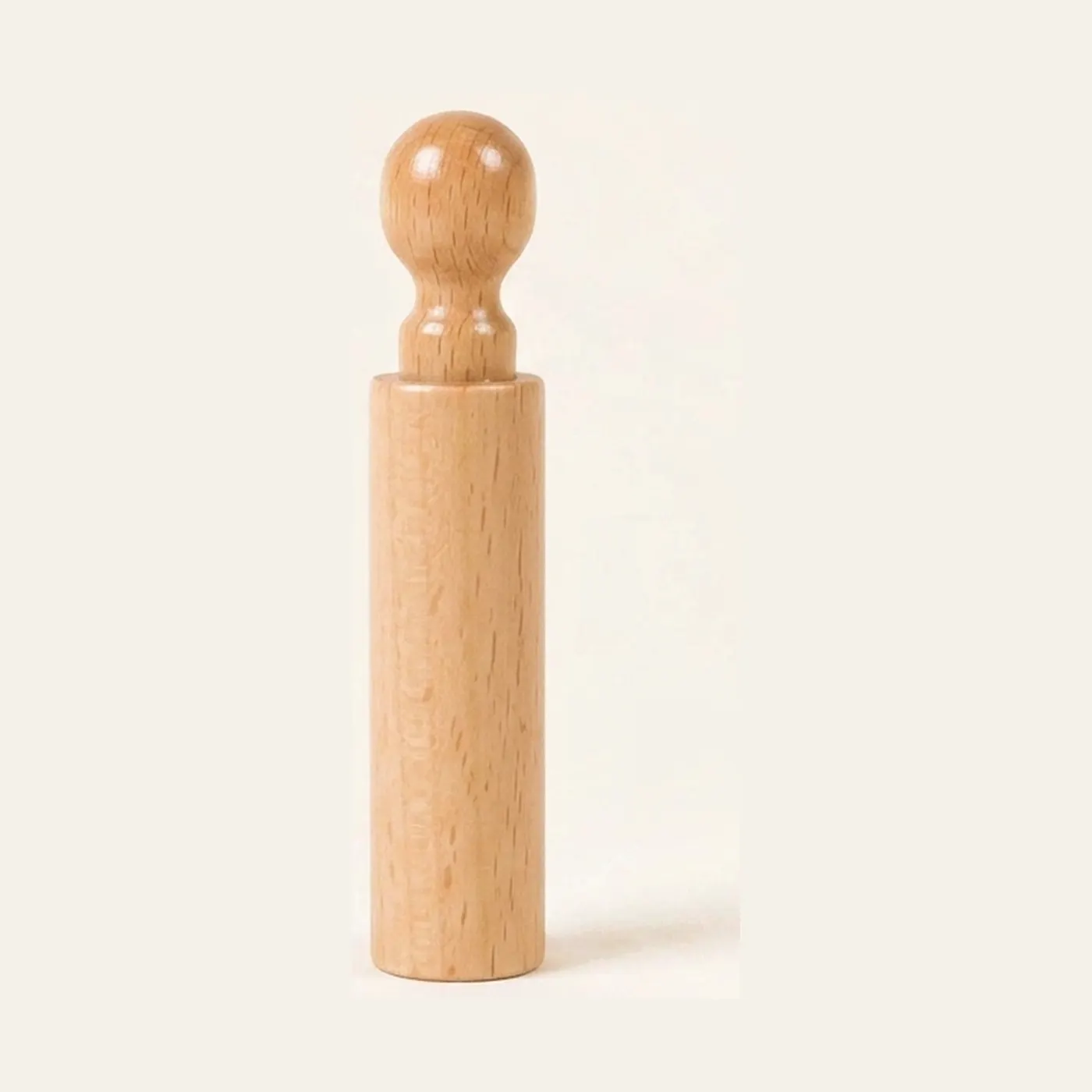
2nd Cylinder Of Block No. 3
Made by Nienhuis Montessori · shipped by Heutink International (Netherlands) About the maker
The second cylinder of block number three, a single replacement piece. This is the block where the word bigger stops working: each cylinder is wider than the one before it and shorter at the same time, so a child who has been sorting by size for a year has to decide which size is meant. That question is the point of block three, and it is the first time the material asks it. The complete cylinder block is a separate item.
“The hands are the instruments of man's intelligence.”
The 2nd Cylinder of Block No.
- Visual discrimination of height and diameter relationships
- Development of pincer grip through spherical knob manipulation
- Understanding of dimensional gradation and proportion
- Concentration through repetitive cylinder comparison
Read More
3 represents Maria Montessori's profound understanding of how children construct their intelligence through sensorial experiences. This specific wooden cylinder, with its unique combination of height and diameter, exists as part of a carefully calibrated series that isolates the concept of dimension. The spherical knob handle of this cylinder enables the child's three-finger grip to develop naturally while exploring size relationships. Block No. 3's cylinders decrease in both height and diameter together, creating a harmonious visual progression that the child's mind can order and classify. The smooth wooden surface of each cylinder provides consistent tactile feedback as small hands repeatedly grasp, lift, and compare. Through working with this individual cylinder alongside its companions, children build the cognitive framework for understanding mathematical relationships, spatial reasoning, and the concept of gradation that appears throughout nature and human-made environments.
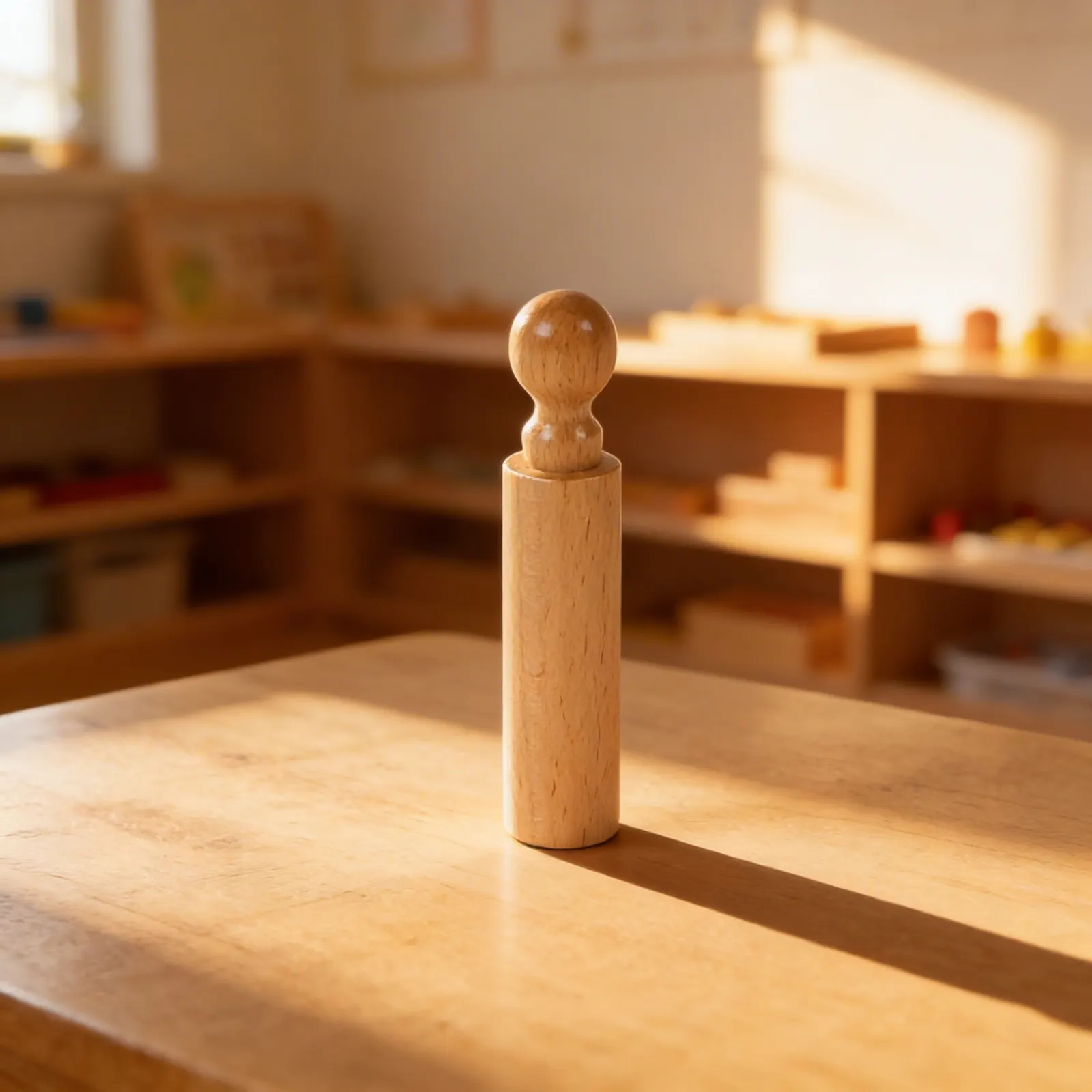
How to present it
Follow the Montessori method of presentation for optimal child development.
Place the 2nd cylinder from Block No. 3 on a tray with its corresponding socket block. Ensure the work surface is at child's elbow height when seated.
- 1
Demonstrate holding the spherical knob with thumb, index, and middle finger
Move slowly to allow the child to observe your precise grip - 2
Lift the cylinder vertically from its socket without tilting
Pause briefly to let the child see the empty socket - 3
Place the cylinder gently beside the block, aligning it parallel to the socket edge
Use deliberate movements to model care and precision - 4
Return the cylinder to its socket with a gentle rotating motion
Listen for the soft sound that indicates proper fit - 5
Invite the child to remove and replace the cylinder independently
Step back to allow full concentration without hovering
Every Child Is a Little Creator

Heritage
Since 1929

In classrooms
Around the world

European brands
Nienhuis, GAM, Educo
2nd Cylinder Of Block No. 3
