
4th Cylinder Of Block No. 3
Made by Nienhuis Montessori · shipped by Heutink International (Netherlands) About the maker
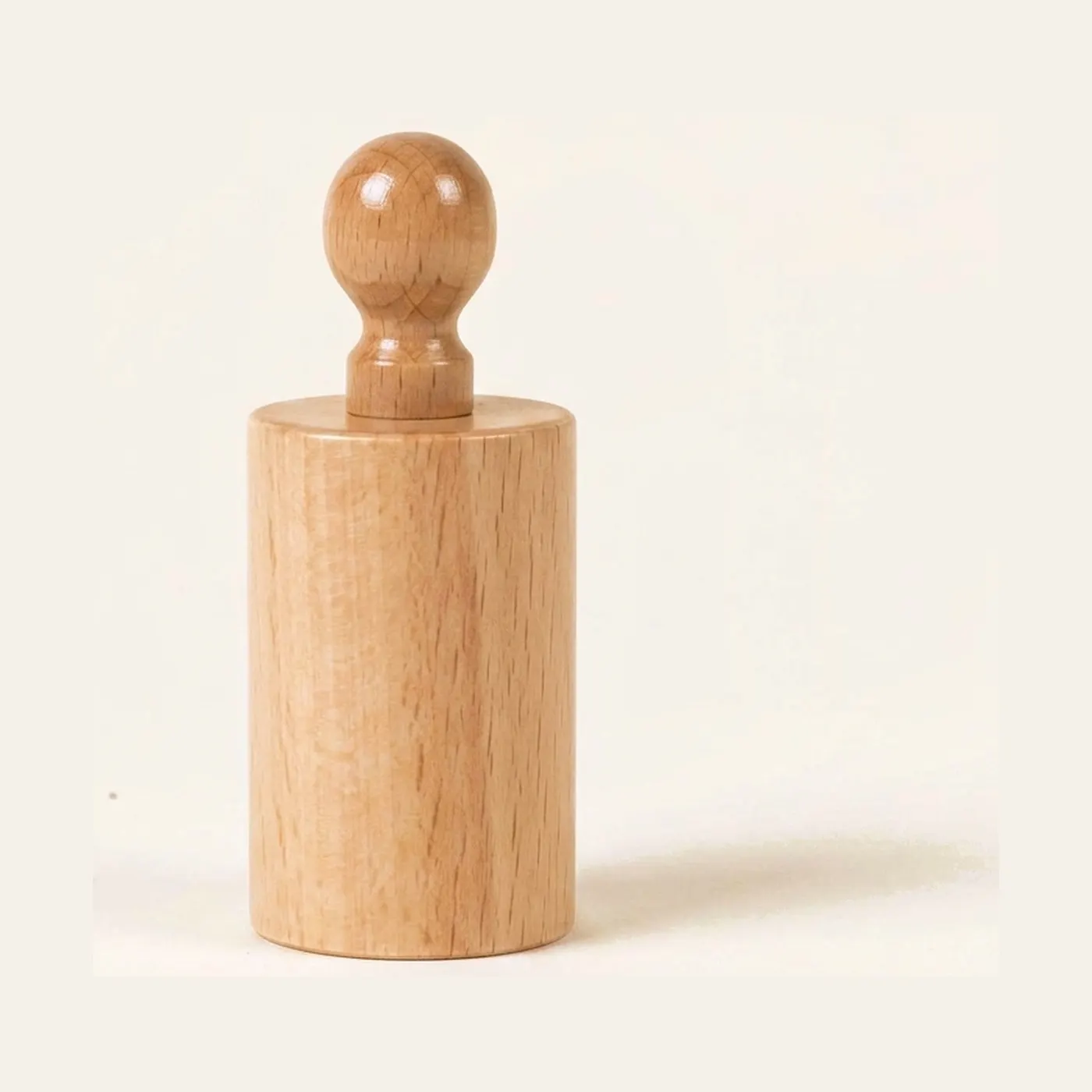
The fourth cylinder of block number three, a single replacement piece. Block three is where two measurements trade against each other, one growing while the other shrinks, and that is the quiet beginning of proportion: years before a child meets the word, the hand has already met the idea that gaining in one direction can cost you in another. Losing a cylinder from the middle of that series breaks the trade. The complete block is a separate item.
“Education is a natural process spontaneously carried out by the human individual, and is acquired not by listening to words but by experiences upon the environment.”
The 4th Cylinder of Block No.
- Develops visual discrimination of diameter differences
- Refines pincer grip through knob manipulation
- Builds vocabulary for dimensional comparisons (thick/thin, wide/narrow)
- Strengthens hand-eye coordination through precise placement
Read More
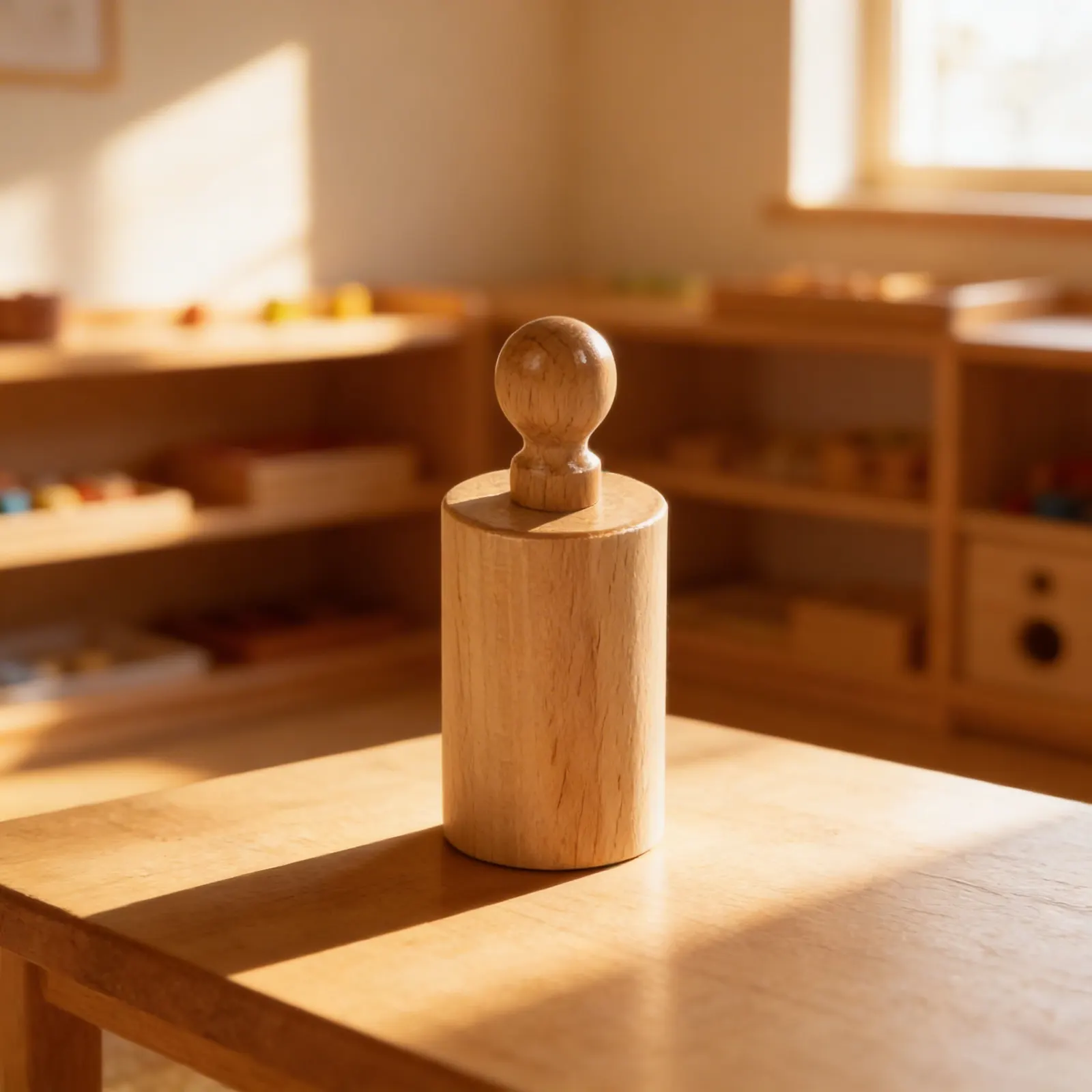
3 embodies Maria Montessori's principle of isolating a single quality for focused exploration. This wooden cylinder, with its specific diameter and spherical knob handle, creates a precise sensorial experience where children distinguish dimensional variations through touch and sight. The smooth wood surface and carefully calibrated size of this fourth cylinder provide exact feedback to small fingers learning to discriminate between subtle differences in diameter. By working with individual cylinders from Block No. 3, children build neural pathways for mathematical thinking through concrete manipulation of graduated dimensions. The spherical knob atop each cylinder serves as both a practical grip and a visual cue, helping young hands develop the pincer grasp essential for writing. This single cylinder's role within the complete Block No. 3 set demonstrates how isolated practice with one dimension, diameter variation with constant height, prepares the mind for understanding mathematical relationships and spatial concepts.
How to present it
Follow the Montessori method of presentation for optimal child development.
Place the 4th cylinder on a mat or tray. If available, arrange with other cylinders from Block No. 3 in random order. Ensure the work surface is at child's elbow height when seated.
- 1
Demonstrate holding the cylinder by its knob using thumb and first two fingers
Move slowly and deliberately to emphasize the pincer grasp - 2
If working with multiple cylinders, select two with noticeable diameter differences for initial comparison
Use minimal language - let the child's senses lead the exploration - 3
Place cylinders side by side to visually compare diameters
Align the bases precisely to highlight the diameter variation - 4
Introduce comparative language: 'This one is thicker, this one is thinner'
Point to the specific cylinder while naming its quality - 5
Invite the child to feel the diameter difference with fingertips
Suggest closing eyes to enhance tactile discrimination
Every Child Is a Little Creator

Heritage
Since 1929

In classrooms
Around the world

European brands
Nienhuis, GAM, Educo
4th Cylinder Of Block No. 3
