
A Key To Writing And Reading For English
The first photo is the maker's own. The other shots are illustrative.
Inv. no. NIE-005550
- Maker
- Nienhuis Montessori, since 1929
- Format
- Paperback
- Pages
- Educational guide
- EAN
- 8719924003333
Final price incl. VAT. Delivery €5.90, €136.00 to go for free delivery.
Advice, warranty and returns are handled by us.
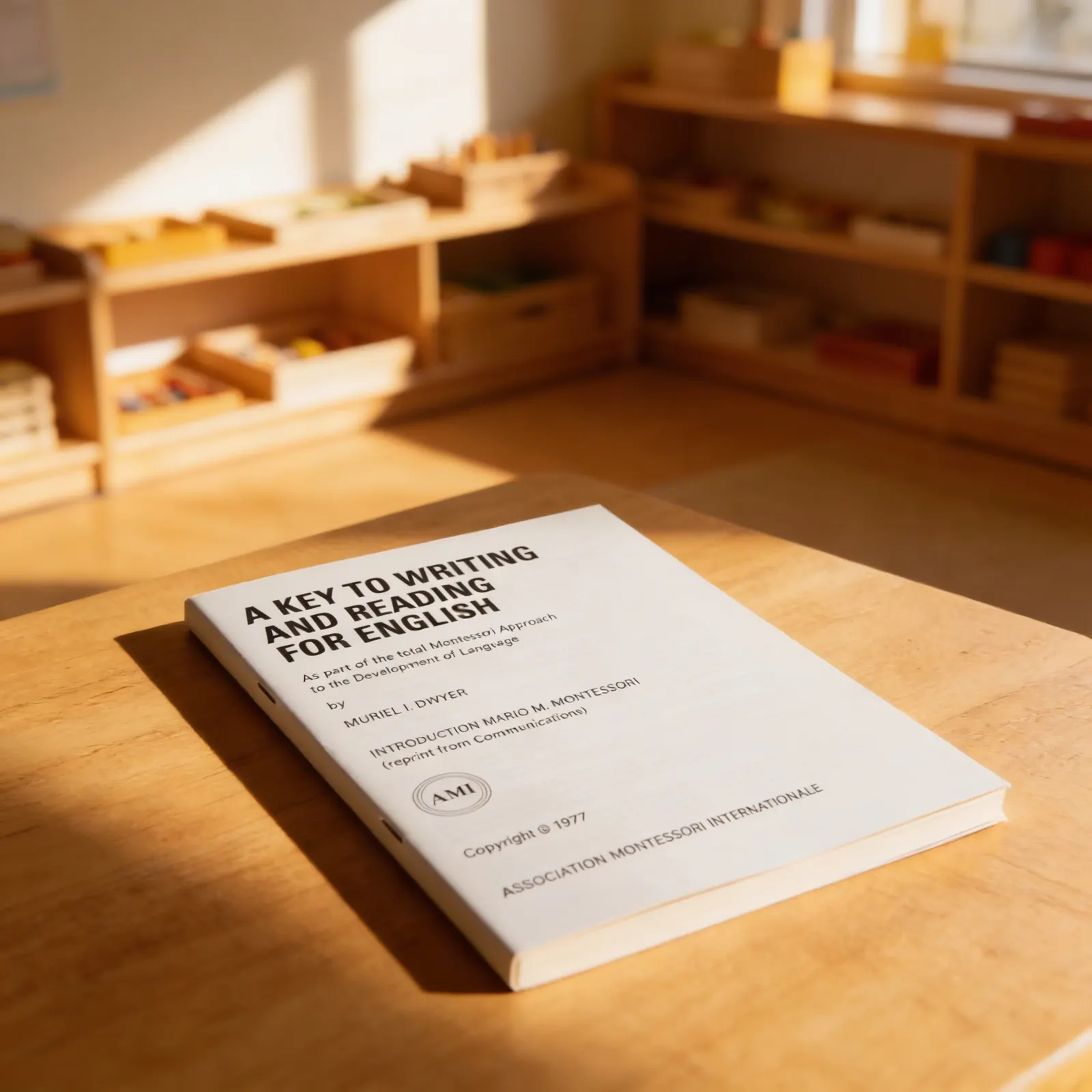
A Key To Writing And Reading For English in a child's hands
A twenty six page pamphlet for the adult, describing the reading scheme for English. It is documentation rather than material: it sets out the order the language work follows, which matters most in English, where what a letter says and how a word is spelled part company early. Read it before the sandpaper letters come off the shelf, so the sequence is decided in advance rather than improvised. The language materials themselves are separate items.
Language Foundation
Provides educators with the authentic Montessori approach to introducing written language systematically.
Sequential Learning
Guides the presentation of materials from sandpaper letters through moveable alphabet to reading.
Phonetic Understanding
Supports the child's natural progression from sound awareness to symbol recognition and writing.
Teacher Development
Essential reference for understanding the rationale behind Montessori language materials and their presentation.
How to present it
Create a quiet reading space with notebook and pen. Mark chapters corresponding to your classroom's current language materials. Have sample materials nearby for reference while reading.
- 1Begin with Chapter 1 on indirect preparation through practical life and sensorial work
- 2Study the sandpaper letter presentations, noting the precise movements described
- 3Review the moveable alphabet sequence, understanding when to introduce each box
- 4Examine the reading progression from phonetic words to complete sentences
3 tips for parents
- Request a language development timeline from your child's guide based on the book's progression
- Understand why invented spelling is celebrated before conventional spelling is introduced
- Learn which activities from the book can be adapted for home use without special materials

If you are not sure it suits your child, we answer in person.
Norbert Kovalčín, founder of Faborino · write to him
There is no review here yet. We will ask you for one after you buy. Write the first review
What's in the Box
- A Key to Writing and Reading for English: AMI publication with introduction by Mario M. Montessori
Size and material
| Packaging | 21 × 15 × 1 cm |
| Format | Paperback |
| Pages | Educational guide |
| Recommended Age | 3-6 years |
Care
Keep in dry location away from direct sunlight
Frequently Asked Questions
Is this guide suitable for home educators without Montessori training?
While this AMI guide is designed primarily for trained Montessori teachers, dedicated parents can use it with careful study. The systematic approach is clearly outlined, but understanding the underlying Montessori philosophy and having access to appropriate materials will enhance its effectiveness.
What specific language materials and exercises are covered in this guide?
The guide covers the complete sequence of Montessori language materials including sandpaper letters, moveable alphabet, metal insets, phonetic reading exercises, and progression to total reading. It details the presentation methods and timing for introducing each material.
How does this 1977 edition remain relevant for today's English language learners?
The fundamental principles of how children acquire written language haven't changed. This guide focuses on the timeless Montessori approach of following the child's natural development, making it as relevant today as when first published, particularly for understanding the authentic AMI methodology.
What age range within 3-6 years is most appropriate for starting these activities?
While the guide covers ages 3-6, most children begin formal writing preparation around 4-4.5 years when they show readiness signs like interest in letters and developed pincer grip. The guide helps identify these readiness indicators and adapt presentations to individual development.
Does this guide address children with different learning styles or reading difficulties?
The Montessori approach naturally accommodates various learning styles through multi-sensory materials and individualized pacing. While not specifically focused on learning difficulties, the systematic, hands-on approach often helps children who struggle with traditional reading methods.
Product safety
Manufacturer: Nienhuis Montessori, Anders Celsiusstraat 15, 7442 PB Nijverdal, Netherlands
A Key To Writing And Reading For English