
Animals Of The Seven Continents
The first photo is the maker's own. The other shots are illustrative.
Inv. no. NIE-EC0579
- Maker
- Nienhuis Montessori, since 1929
- Material
- Durable plastic
- Finish
- Pre-cut with rounded corners
- EAN
- 8719924043025
Final price incl. VAT. Delivery €5.90, €82.10 to go for free delivery.
Advice, warranty and returns are handled by us.
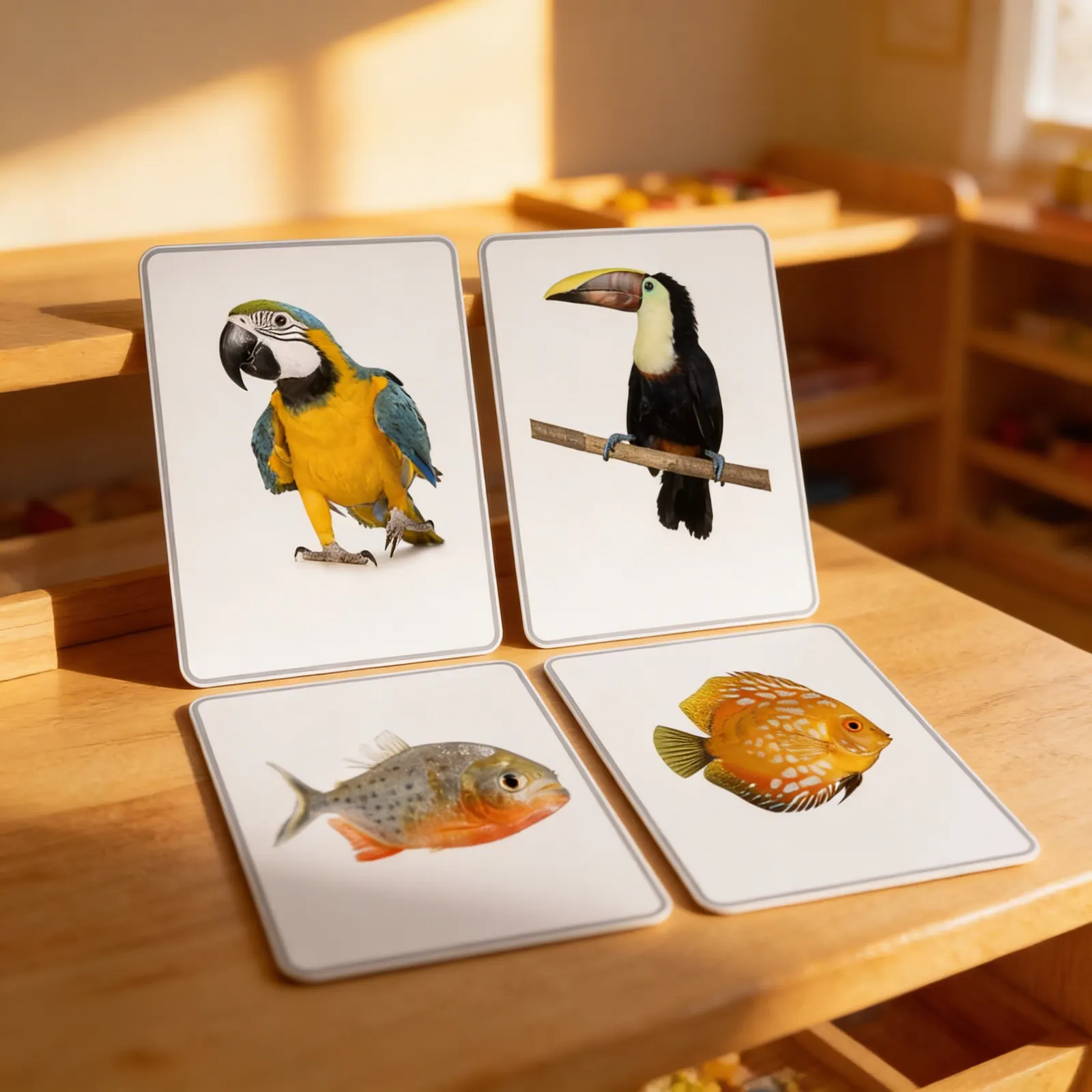
Animals Of The Seven Continents in a child's hands
Animals of the seven continents, with a real photograph of each animal to sort onto the continent it belongs to. Photographs matter here more than in most card sets: a drawing of a tiger tells a child what someone thinks a tiger looks like, a photograph tells them what one is. Sorting by continent then attaches every animal to a place on the map they have already handled. Durable plastic, pre cut with rounded corners. In English.
Geographic Understanding
Connects animals to their continental habitats, building awareness of global biodiversity and geographic distribution.
Bilingual Language Skills
Spanish vocabulary labels support second language acquisition while reinforcing animal classification concepts.
Visual Discrimination
Realistic photography helps children identify distinguishing features and characteristics of different animal species.
Cultural Awareness
Introduces wildlife diversity across continents, fostering respect for different ecosystems and habitats worldwide.
How to present it
Arrange cards by continent on a large mat. Place continent labels above each group. Have a globe or continent map available for reference.
- 1Begin with one continent's animals, naming each in Spanish while showing the photograph
- 2Invite the child to repeat the Spanish names while handling each card
- 3Mix cards from two continents and sort them back into groups
- 4Create matching games pairing identical animal cards or grouping by characteristics
- 5Introduce written Spanish labels for three-period lesson work
3 tips for parents
- Practice Spanish animal names during zoo visits or nature documentaries
- Create a world map at home marking where each learned animal lives
- Find library books about animals from the current continent being studied

If you are not sure it suits your child, we answer in person.
Norbert Kovalčín, founder of Faborino · write to him
There is no review here yet. We will ask you for one after you buy. Write the first review
What's in the Box
- Animal Flash Cards: Approx. 4 cards with Spanish labels
Size and material
| Packaging | 49 × 23 × 1 cm |
| Material | Durable plastic |
| Finish | Pre-cut with rounded corners |
| Recommended Age | 3-6 years |
Care
Wipe clean with damp cloth
Frequently Asked Questions
How many animal cards are included for each continent?
This set typically includes 5-8 representative animals from each of the seven continents, totaling approximately 35-56 cards depending on the specific edition. Each continent features animals that naturally inhabit that region, helping children understand geographical distribution of wildlife.
Are the Spanish labels removable or printed directly on the cards?
The Spanish animal names are printed directly on the laminated cards below each photograph. This integrated design ensures durability and prevents labels from being lost, while providing consistent exposure to Spanish vocabulary during geography and zoology lessons.
What size are these animal flash cards?
The cards are typically sized at 14cm x 14cm (approximately 5.5 inches square), which is ideal for young children to handle independently. The laminated finish adds durability while maintaining a comfortable thickness for sorting and matching activities.
Can these cards be used without Spanish language instruction?
Yes, these cards serve multiple purposes beyond Spanish language learning. They can be used for continent sorting activities, animal classification work, habitat discussions, and general zoology studies. Teachers can simply focus on the images while introducing Spanish vocabulary gradually or not at all.
What types of animals are featured for each continent?
Each continent includes a diverse selection of native animals - for example: Africa might feature lions, elephants, and giraffes; Australia could include kangaroos, koalas, and platypuses; Antarctica would show penguins and seals. The selection represents various habitats and helps children understand biodiversity across different geographical regions.
Product safety
Manufacturer: Nienhuis Montessori, Anders Celsiusstraat 15, 7442 PB Nijverdal, Netherlands
Animals Of The Seven Continents