
Double Sandpaper Letters: International Print
Made by Nienhuis Montessori · shipped by Heutink International (Netherlands) About the maker
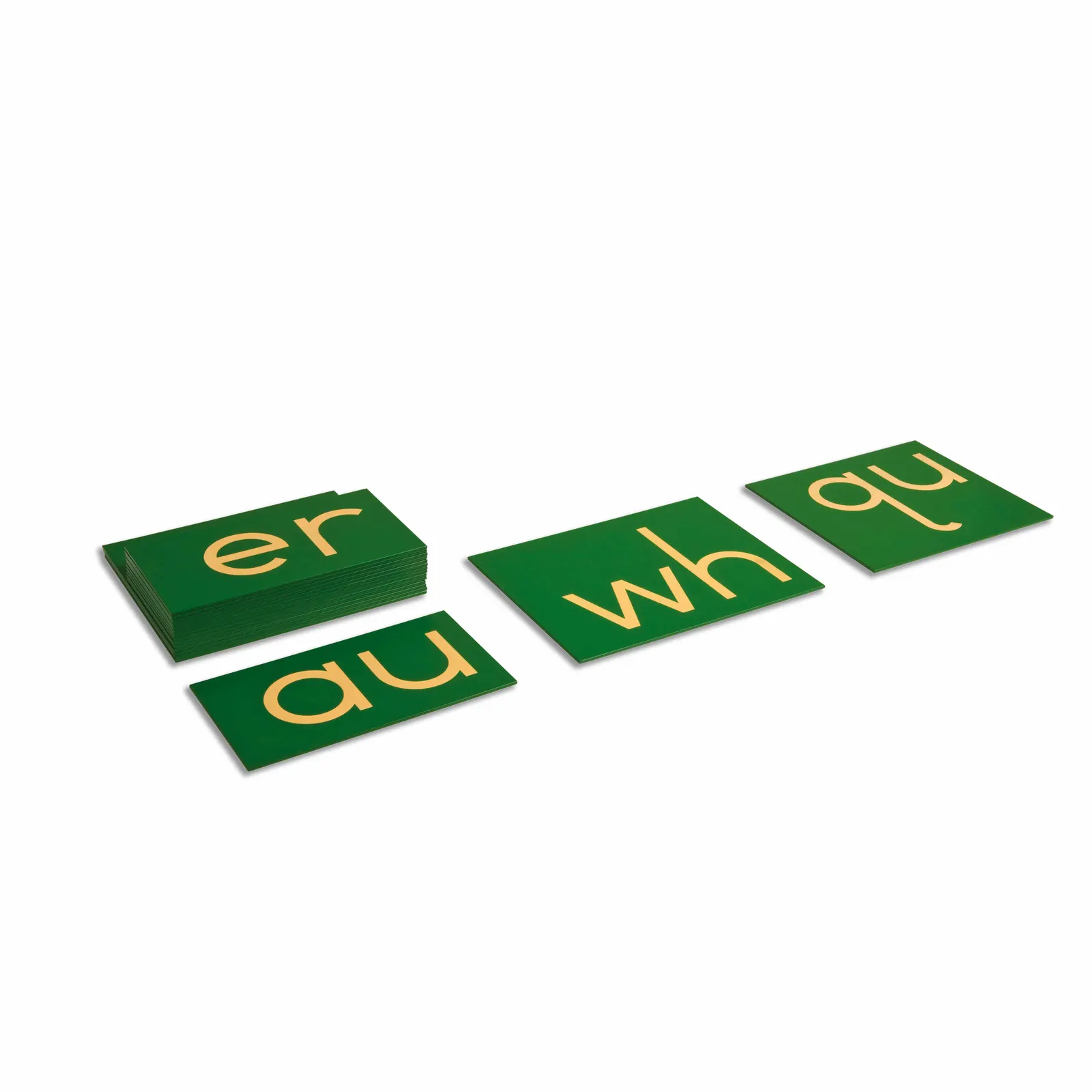
Double Sandpaper Letters, International Print give children a tactile, lower case letter set on pressed boards painted green and covered in sandpaper, guiding the hand through the exact shape and direction each print letter is written. Every board leaves space on either side so a child ages 3 to 6 can steady it with one hand while tracing the rough letter with the other, building the muscle memory needed before handwriting begins. The consistent green finish keeps a young child's attention on letter shape during tracing practice.
“Free the child's potential, and you will transform him into the world.”
The Double Sandpaper Letters address the complexity of international language systems where digraphs represent single sounds distinct from their component letters. Each sandpaper digraph card creates a tactile pathway that connects the visual symbol to its unique phonetic value, preventing confusion between individual letters and their combined form.
- Recognition of digraphs as single sound units rather than separate letters
- Muscle memory for writing common letter combinations
- Phonemic awareness of blended sounds in international languages
- Visual discrimination between single letters and digraph formations
Read More
The green background of these double-letter cards distinguishes them from single sandpaper letters, signaling to children that 'ch', 'th', or 'qu' function as unified sound units. Through tracing these sandpaper combinations, children internalize both the motor pattern and the phonetic principle that two letters can merge into one sound. This material bridges the gap between learning individual letters and reading fluently in languages where digraphs are essential. The sandpaper's rough texture against the smooth board creates sensory feedback that strengthens the neural pathways between seeing, feeling, and eventually writing these letter pairs.
How to present it
Follow the Montessori method of presentation for optimal child development.
Place 2-3 digraph cards on a mat. Sit to the child's dominant side. Have a small tray with paper slips showing words containing these digraphs nearby.
- 1
Introduce the first digraph by tracing it slowly with your index and middle fingers while pronouncing its sound clearly
Emphasize the single sound, not the individual letters: say 'sh' not 's-h' - 2
Invite the child to trace while you repeat the sound, watching their finger movement
If they separate the letters while tracing, gently guide their hand to maintain connection - 3
Present three digraphs using the three-period lesson format
Mix single letter cards with digraphs to reinforce the distinction - 4
Show word slips containing the learned digraphs, underlining the double letters
Choose culturally relevant words from the child's language background
Every Child Is a Little Creator

Heritage
Since 1929

In classrooms
Around the world

European brands
Nienhuis, GAM, Educo

AMI approved
To the association standard
Double Sandpaper Letters: International Print
