
External Characteristics of VertebratesSpanish Edition
The first photo is the maker's own. The other shots are illustrative.
Inv. no. NIE-ELCSP4066
- Maker
- Nienhuis Montessori, since 1929
- Card Material
- Premium laminated cardstock
- Finish
- Protective lamination
- EAN
- 8719924044428
Final price incl. VAT. Free delivery.
Advice, warranty and returns are handled by us.
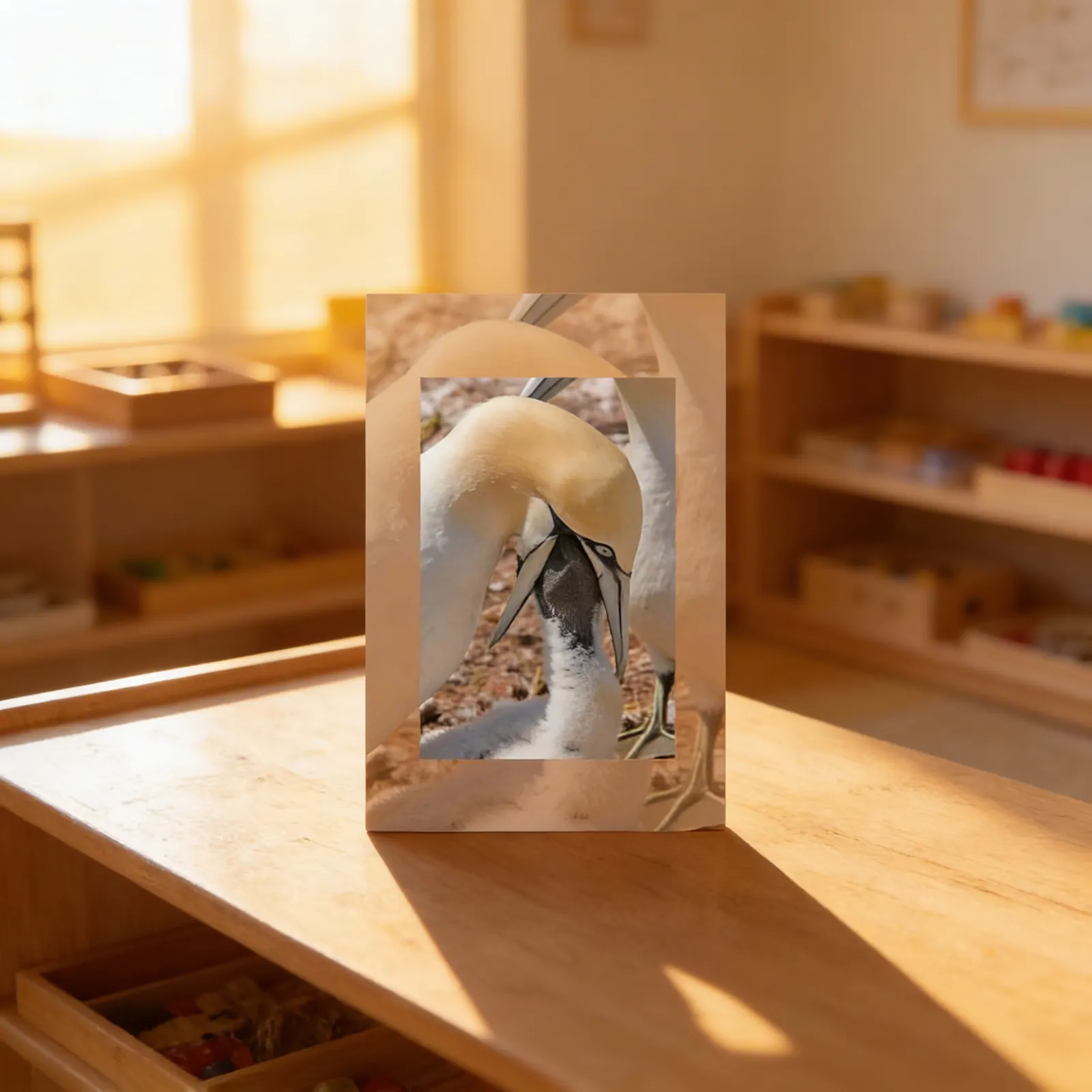
External Characteristics of Vertebrates in a child's hands
A rich educational resource, this vertebrate classification card set gives young learners a first look at the external characteristics of five vertebrate groups through detailed photographic images. Each card features high-quality photographs of animals alongside clear labels, supporting the Montessori approach to zoology studies. The material enables children to observe, compare, and categorize animals based on their observable features, building a first step toward scientific classification.
Scientific Classification
Children learn to identify and categorize animals based on observable external features, developing foundational taxonomy skills.
Visual Discrimination
Comparing physical characteristics across species enhances observation skills and attention to detail.
Language Development
Precise vocabulary for describing animal features expands scientific language and communication abilities.
Natural World Connection
Real photographs foster appreciation for biodiversity and understanding of animal adaptations.
How to present it
Place the card set on a mat or table. Begin with one vertebrate group (e.g., birds) showing 3-4 clear examples. Ensure good lighting for examining photographic details.
- 1Introduce one vertebrate group by examining shared features in the photographs
- 2Add a second group and compare observable differences between the two sets
- 3Invite the child to sort mixed cards from two groups based on external features
- 4Gradually introduce additional vertebrate groups as the child shows readiness
- 5Create a classification chart using the cards to show relationships
3 tips for parents
- Look for examples of each vertebrate group during walks or outings - 'That robin has feathers like all birds'
- Visit pet stores or aquariums to observe live examples of the animals shown in the photographs
- Create a family animal book with photos or drawings organized by vertebrate groups

If you are not sure it suits your child, we answer in person.
Norbert Kovalčín, founder of Faborino · write to him
There is no review here yet. We will ask you for one after you buy. Write the first review
What's in the Box
- Vertebrate Classification Cards: Approx. 20 photographic cards
- Animal Groups: Fish, amphibians, reptiles, birds, mammals
Size and material
| Packaging | 28 × 22 × 4 cm |
| Card Material | Premium laminated cardstock |
| Finish | Protective lamination |
| Recommended Age | 6-12 years |
Care
Wipe with slightly damp cloth, dry immediately
Frequently Asked Questions
What are the five vertebrate groups included in this material?
This set covers the five main vertebrate classifications: mammals, birds, fish, reptiles, and amphibians. Each group is represented with multiple high-quality photographic examples showing their distinctive external characteristics.
How does this material support the Montessori zoology curriculum?
The cards follow Montessori principles by providing concrete, visual representations that children can manipulate independently. They support sensorial learning through observation and hands-on classification activities, building scientific thinking skills naturally.
What age is most appropriate for introducing this material?
While designed for ages 3-6, children typically begin exploring these cards around age 4 when they show interest in animals and categorization. Younger children may enjoy picture identification, while older children engage in more complex classification work.
What activities can children do with these vertebrate cards?
Children can sort animals by group, match labels to pictures, create their own classification books, play memory games, compare characteristics across groups, and use them for vocabulary development in multiple languages.
Are the photographs realistic enough for accurate animal identification?
Yes, the cards feature high-resolution, realistic photographs that clearly show each animal's distinguishing features. The images are carefully selected to highlight the external characteristics specific to each vertebrate group.
Product safety
Manufacturer: Nienhuis Montessori, Anders Celsiusstraat 15, 7442 PB Nijverdal, Netherlands
External Characteristics of Vertebrates