
Glue & Paste Activity BoxPractical Life Fine Motor Skills
The first photos are the maker's own. The other shots are illustrative.
Inv. no. NIE-040100
- Maker
- Nienhuis Montessori, since 1929
- Approval
- AMI
- Box Construction
- Natural plywood
- Storage Container
- Glass jar with metal lid
- EAN
- 8719924012403
Final price incl. VAT. Delivery €5.90, €104.10 to go for free delivery.
Advice, warranty and returns are handled by us.
Why it costs €44.90
Behind the price of the original are things you can check yourself.
AMI approval
The material is approved by the Association Montessori Internationale (AMI). Nienhuis has made Montessori materials since 1929.
A verifiable original
The EAN 8719924012403 is on the box. It is the maker's number, not ours.
Glue & Paste Activity Box in a child's hands
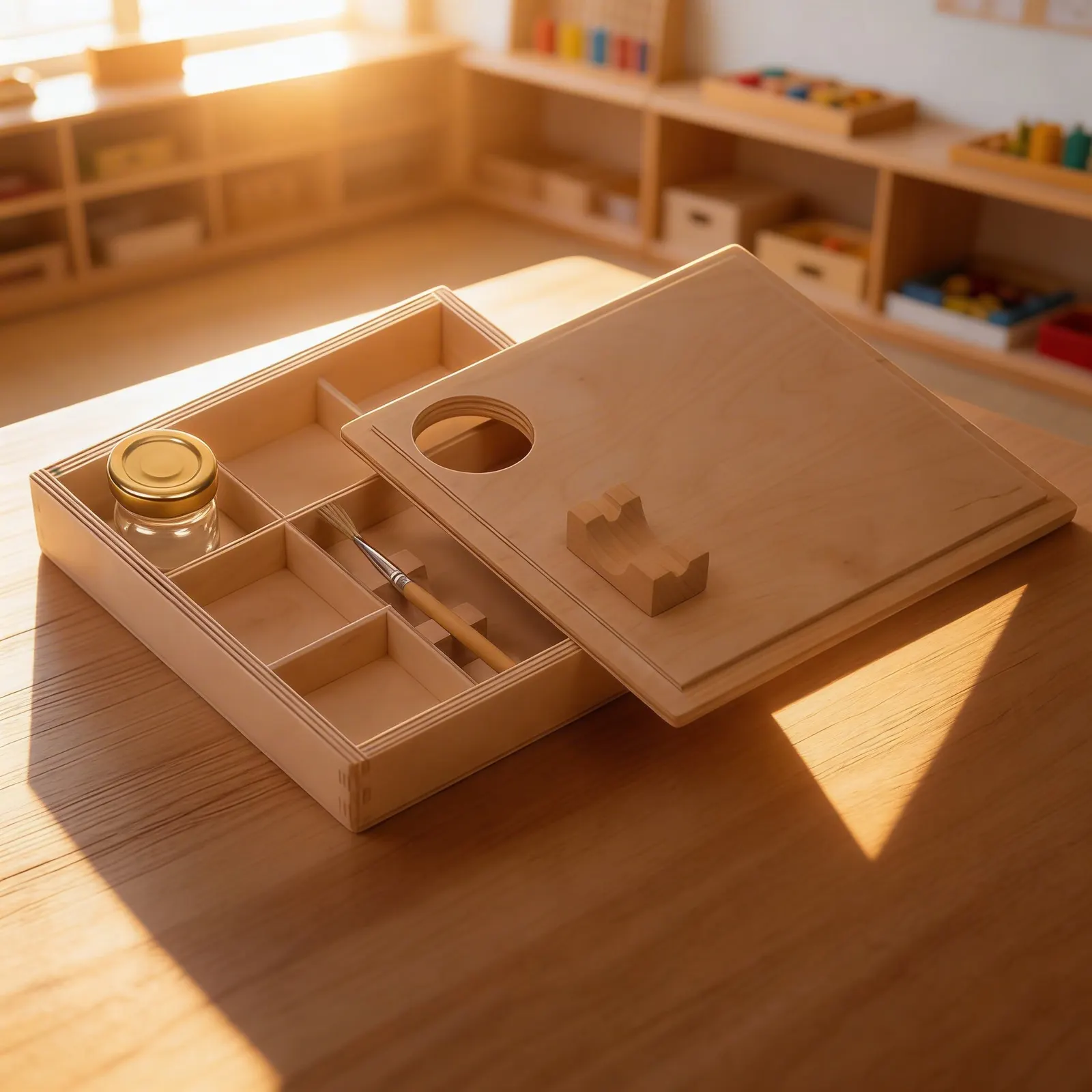
A wooden box with six compartments, a paste brush and a glass jar with a lid, complete for gluing work. The detail that shows this was designed by somebody who has watched it go wrong: the box lid has a cut out hole that holds the jar upright, so the jar cannot be knocked over while a child is concentrating on the brush. Glue on a table ends an activity; glue that stays in the jar does not. Plywood, glass and natural bristle, for ages 0 to 6.
Fine Motor Refinement
Precise movements required for opening compartments, handling tools, and applying paste strengthen pincer grasp and hand control.
Concentration Development
The multi-step process of accessing materials and completing gluing tasks builds sustained focus and attention to detail.
Order and Sequence
Organized compartments teach children to follow logical sequences and maintain an orderly work environment.
Independence
Self-contained design allows children to prepare, execute, and clean up gluing activities without adult assistance.
How to present it
Place the box on a low shelf at child's eye level. Inside compartments, arrange: small glue stick or paste pot, collection of pre-cut shapes, small papers, and a damp cloth for cleaning fingers. Ensure sliding lid moves smoothly.
- 1Show child how to slide the lid open using slow, deliberate movements
- 2Remove glue stick with dominant hand, demonstrating proper grip
- 3Select one shape and apply glue with controlled movements
- 4Place shape on paper, pressing gently with flat palm
- 5Return materials to compartments before sliding lid closed
3 tips for parents
- Create a similar setup at home using a small wooden box with dividers or repurposed containers
- Save interesting papers, magazines, and natural materials for future gluing projects
- Display child's completed work at their eye level to build confidence and pride

If you are not sure it suits your child, we answer in person.
Norbert Kovalčín, founder of Faborino · write to him
There is no review here yet. We will ask you for one after you buy. Write the first review
What's in the Box
- Wooden storage box: With sliding lid and handle
- Glass jar: With gold-colored metal lid
- Application brush: Natural bristles
- Wooden tool: For spreading activities
Size and material
| Packaging | 24 × 23 × 8 cm |
| Box Construction | Natural plywood |
| Storage Container | Glass jar with metal lid |
| Tools | Wood and natural bristles |
| Recommended Age | 2-3 years |
Care
Wipe wooden surfaces with damp cloth; wash glass jar separately
Frequently Asked Questions
What age is appropriate for introducing this glue and paste box?
While labeled for ages 0-3, this material is best introduced around 2.5-3 years when children have developed sufficient hand control and can understand the concept of applying glue purposefully. Always supervise younger children and ensure they don't put materials in their mouth.
What materials should I provide with this box?
Fill compartments with child-safe glue sticks or small containers of non-toxic white glue, various paper shapes for pasting, small brushes or spreaders, and a damp sponge for cleaning fingers. Rotate materials to maintain interest and match your child's developing skills.
How does the sliding lid with circular cutout benefit learning?
The circular cutout teaches controlled hand movements and precise finger positioning while accessing materials. This design element helps children slow down, focus on their movements, and develop the pincer grip needed for later writing skills.
Why is this classified as a sensorial material rather than practical life?
While gluing is a practical life skill, this material emphasizes sensorial experiences through texture exploration (smooth glue, rough paper), temperature awareness (cool glue), and visual discrimination when selecting and placing materials, making it primarily a sensorial learning tool.
How do I present this activity following Montessori principles?
Demonstrate slowly and silently: slide the lid to access materials, select items deliberately, apply glue with controlled movements, and place materials precisely. Emphasize the process over the product, allowing the child to explore and repeat as desired.
Product safety
Manufacturer: Nienhuis Montessori, Anders Celsiusstraat 15, 7442 PB Nijverdal, Netherlands
Glue & Paste Activity Box