Grammar Symbol - PaperCopula (100)
The first photo is the maker's own. The other shots are illustrative.
Inv. no. NIE-0111N0
- Maker
- Nienhuis Montessori, since 1929
- Approval
- AMI
- Primary Material
- Cardstock paper
- Color
- Gray
- EAN
- 8719924006495
Final price incl. VAT. Delivery €5.90, €145.60 to go for free delivery.
Advice, warranty and returns are handled by us.
Why it costs €3.40
Behind the price of the original are things you can check yourself.
AMI approval
The material is approved by the Association Montessori Internationale (AMI). Nienhuis has made Montessori materials since 1929.
A verifiable original
The EAN 8719924006495 is on the box. It is the maker's number, not ours.
Grammar Symbol - Paper in a child's hands
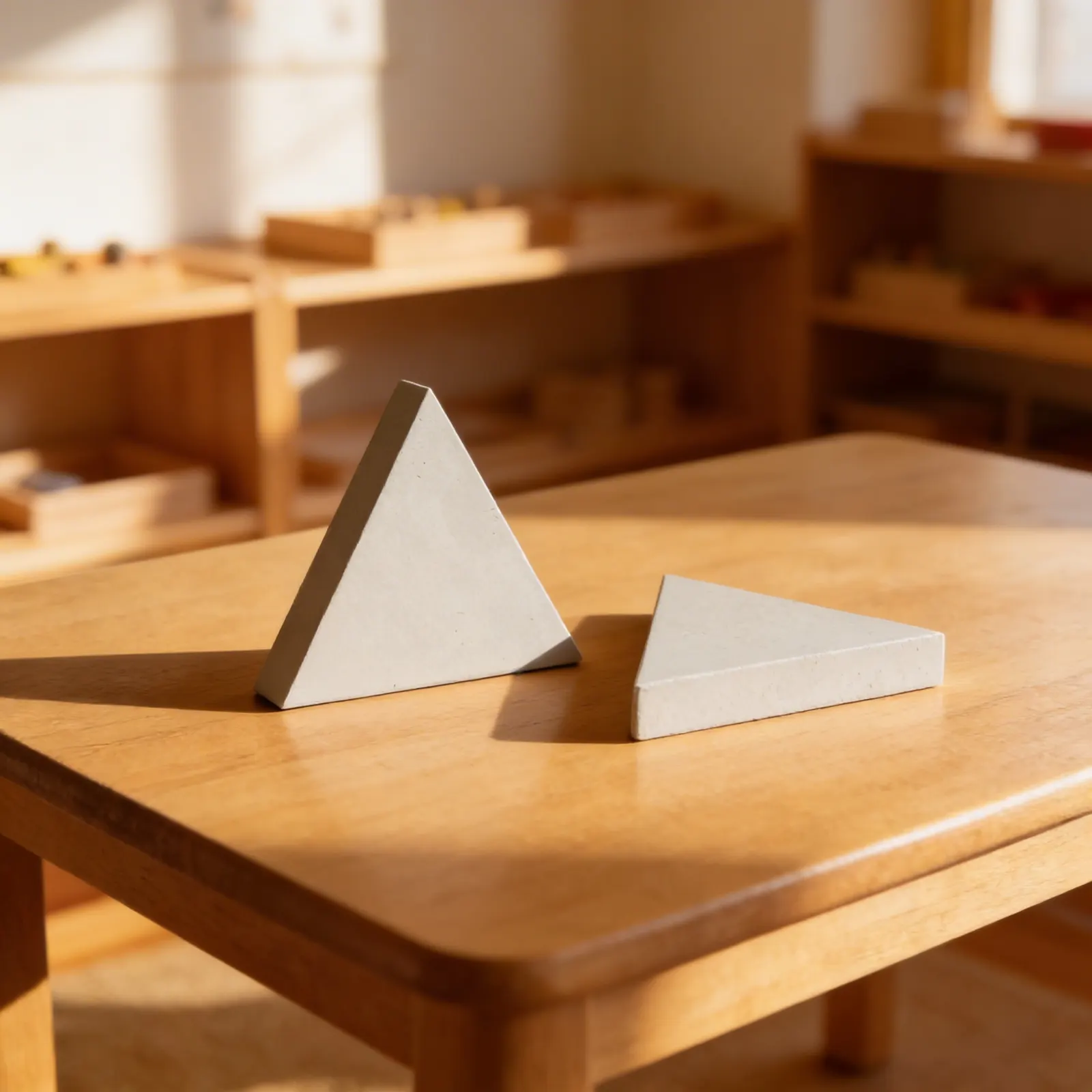
A bridge to confident reading and writing, this set of 100 gray equilateral triangle grammar symbols represents the copula verb in Montessori language analysis. The precisely cut paper symbols enable children to physically manipulate and identify linking verbs in sentence construction, supporting the concrete understanding of abstract grammatical concepts. Each triangle measures approximately 5cm per side, providing the perfect size for sentence layout work on the grammar mat.
Grammar Comprehension
Physical symbols help children understand the function of linking verbs, making abstract grammatical concepts tangible and memorable.
Sentence Analysis
Manipulating symbols develops understanding of sentence structure and the relationships between different parts of speech.
Classification Skills
Identifying and categorizing copula verbs strengthens analytical thinking and pattern recognition abilities.
Visual Learning
The distinct gray triangle shape creates a strong visual association with linking verbs, supporting long-term grammatical understanding.
How to present it
Place grammar symbols box on shelf with sentence strips and grammar mat. Prepare simple sentences containing copula verbs written on strips.
- 1Read a sentence strip aloud: 'The cat is fluffy'
- 2Ask child to identify the verb in the sentence
- 3Introduce the gray triangle as the symbol for copula verbs
- 4Place the triangle above 'is' on the sentence strip
- 5Continue with additional sentences containing am, are, was, were
3 tips for parents
- Look for linking verbs in everyday conversation and books at home
- Play 'Is it action or linking?' game during daily activities
- Support practice by writing simple sentences together

If you are not sure it suits your child, we answer in person.
Norbert Kovalčín, founder of Faborino · write to him
There is no review here yet. We will ask you for one after you buy. Write the first review
What's in the Box
- Gray Triangle Symbols: 100 pieces
Size and material
| Packaging | 12 × 8 × 1 cm |
| Primary Material | Cardstock paper |
| Color | Gray |
| Recommended Age | 3-6 years |
Care
| Cleaning | Wipe gently with dry cloth if needed |
| Storage | Keep in dry environment away from moisture |
Frequently Asked Questions
What is a copula verb and why does it have its own symbol?
A copula is a linking verb (like 'is,' 'am,' 'are,' 'was,' 'were') that connects the subject to a complement. In Montessori grammar, it has a unique gray triangle symbol to distinguish it from action verbs, helping children understand the different functions verbs can have in sentences.
How do children use these paper copula symbols?
Children place the gray triangles above copula verbs during sentence analysis work. They lay out sentences on a grammar mat, identify each word's function, and place the appropriate symbol above it. This hands-on approach makes abstract grammar concepts concrete and visual.
What's the difference between the copula triangle and the regular verb triangle?
The copula triangle is gray to distinguish it from the red action verb triangle. This color coding helps children recognize that while both are verbs, copulas function differently by linking rather than showing action. The shape remains triangular to show they're still part of the verb family.
At what stage should children begin using copula symbols?
Children typically begin using copula symbols after they've mastered basic verb identification with red triangles, usually around ages 4-5. They should already understand the concept of linking verbs through spoken language work before introducing the symbol.
Why are 100 symbols included in this set?
The quantity of 100 allows multiple children to work simultaneously or enables extensive sentence analysis without running out of symbols. Teachers can conduct group lessons, and children can analyze longer texts or multiple sentences containing several copula verbs.
Product safety
Manufacturer: Nienhuis Montessori, Anders Celsiusstraat 15, 7442 PB Nijverdal, Netherlands
Grammar Symbol - Paper