
Hula HoopRed (60 cm)
The first photo is the maker's own. The other shots are illustrative.
Inv. no. NIE-621000
- Maker
- Nienhuis Montessori, since 1929
- Product size
- 60 cm
- Construction
- Durable plastic
- Design
- Hollow tube, seamless join
- EAN
- 8719924060770
Final price incl. VAT. Delivery €5.90, €123.10 to go for free delivery.
Advice, warranty and returns are handled by us.
Hula Hoop in a child's hands
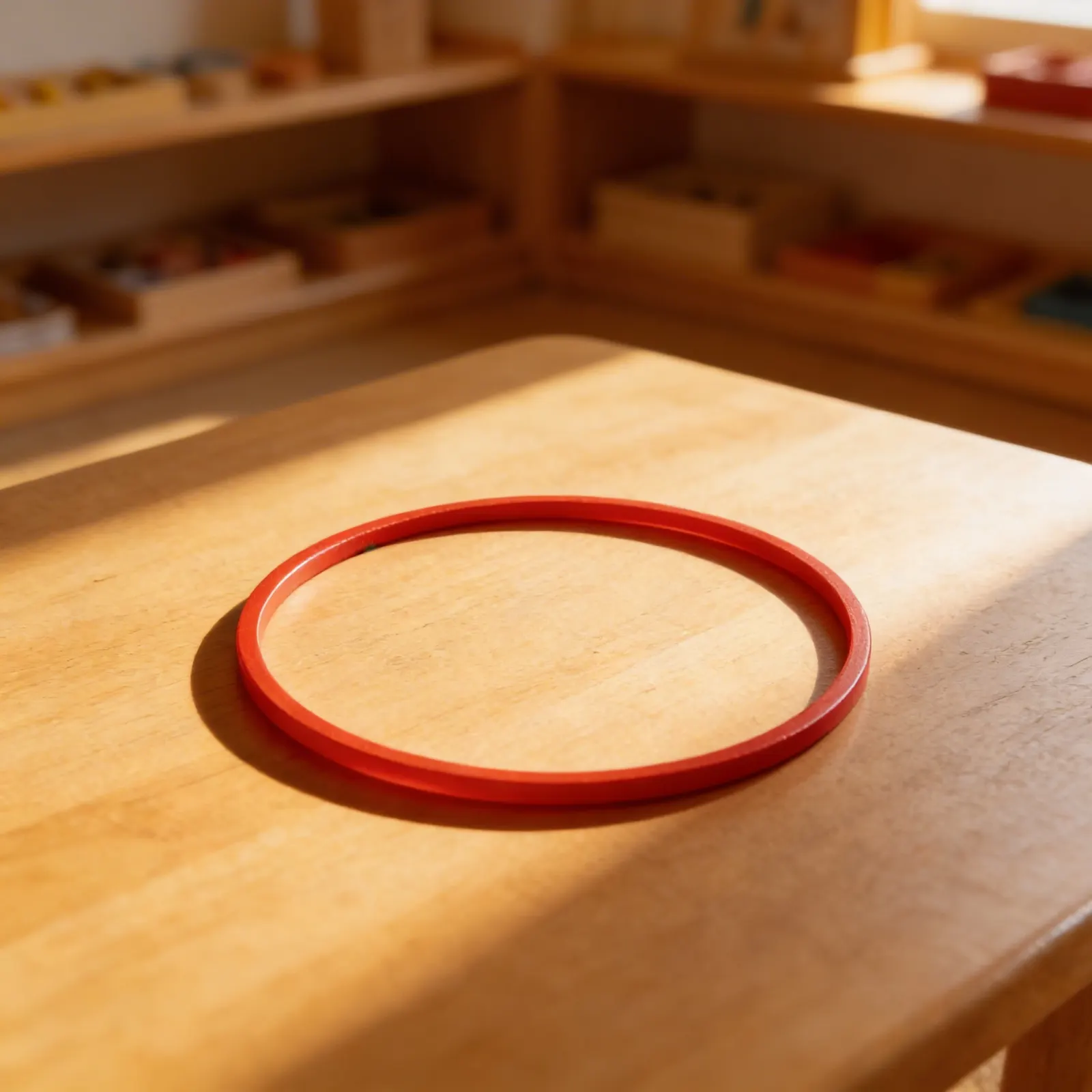
A bamboo hoop of 60 cm in red, for marking out where a movement belongs. Order is what makes sport work with young children: a hoop on the ground says stand here, jump into this, throw at that, and it says it without an adult repeating instructions over the noise. On its own it is for jumping into and balancing along; several of them make a course, a sequence of landings a child can see before they start. Bamboo, for ages 3 to 6.
Gross Motor Development
Strengthens core muscles and improves whole-body coordination through rhythmic movement.
Spatial Awareness
Develops understanding of body position and movement in space.
Concentration & Persistence
Builds focus and determination through repeated practice of challenging movements.
Rhythm & Timing
Enhances musical intelligence and temporal awareness through rhythmic motion.
How to present it
Clear a space at least 2 meters in diameter. Place the hula hoop on a low shelf where children can access it independently. Mark the practice area with tape if needed.
- 1Demonstrate stepping into the hoop and holding it at waist level with both hands
- 2Show how to give the hoop a strong spin while moving hips in a circular motion
- 3Practice the hip movement without the hoop first, then combine both movements
- 4When ready, release hands and continue hip movement to keep hoop spinning
3 tips for parents
- Practice together - adult participation motivates continued effort and shows it's challenging for everyone
- Celebrate small successes like keeping the hoop up for even two rotations
- Use the hoop for other activities too: rolling, jumping through, or as a target for bean bags

If you are not sure it suits your child, we answer in person.
Norbert Kovalčín, founder of Faborino · write to him
There is no review here yet. We will ask you for one after you buy. Write the first review
What's in the Box
- Red Hula Hoop: 60 cm diameter
Size and material
| Product size | 60 cm |
| Packaging | 62 × 62 × 3 cm |
| Construction | Durable plastic |
| Design | Hollow tube, seamless join |
| Recommended Age | 3-6 years |
Care
Wipe with damp cloth and mild soap
Frequently Asked Questions
What age is this 60cm hula hoop suitable for?
This hula hoop is designed for children ages 3-6 years. The 60cm diameter is specifically sized for young children's bodies and developing motor skills.
How does a hula hoop support Montessori learning?
In Montessori education, the hula hoop promotes gross motor development, body awareness, concentration, and self-directed movement. Children learn rhythm, coordination, and spatial awareness through purposeful physical activity.
What material is this red hula hoop made from?
This is a durable, child-safe hula hoop designed for classroom use. It's built to withstand regular use in educational environments while remaining lightweight enough for young children to handle independently.
Can multiple children use this hula hoop for group activities?
Yes, the hula hoop is excellent for both individual practice and group activities. Children can take turns, create movement games, or use multiple hoops for collaborative exercises that develop social skills alongside physical abilities.
What specific skills does hula hooping develop?
Hula hooping develops core strength, balance, bilateral coordination, rhythm, perseverance, and concentration. It also enhances proprioception (body position awareness) and supports the development of midline crossing abilities.
Product safety
Manufacturer: Nienhuis Montessori, Anders Celsiusstraat 15, 7442 PB Nijverdal, Netherlands
Hula Hoop