
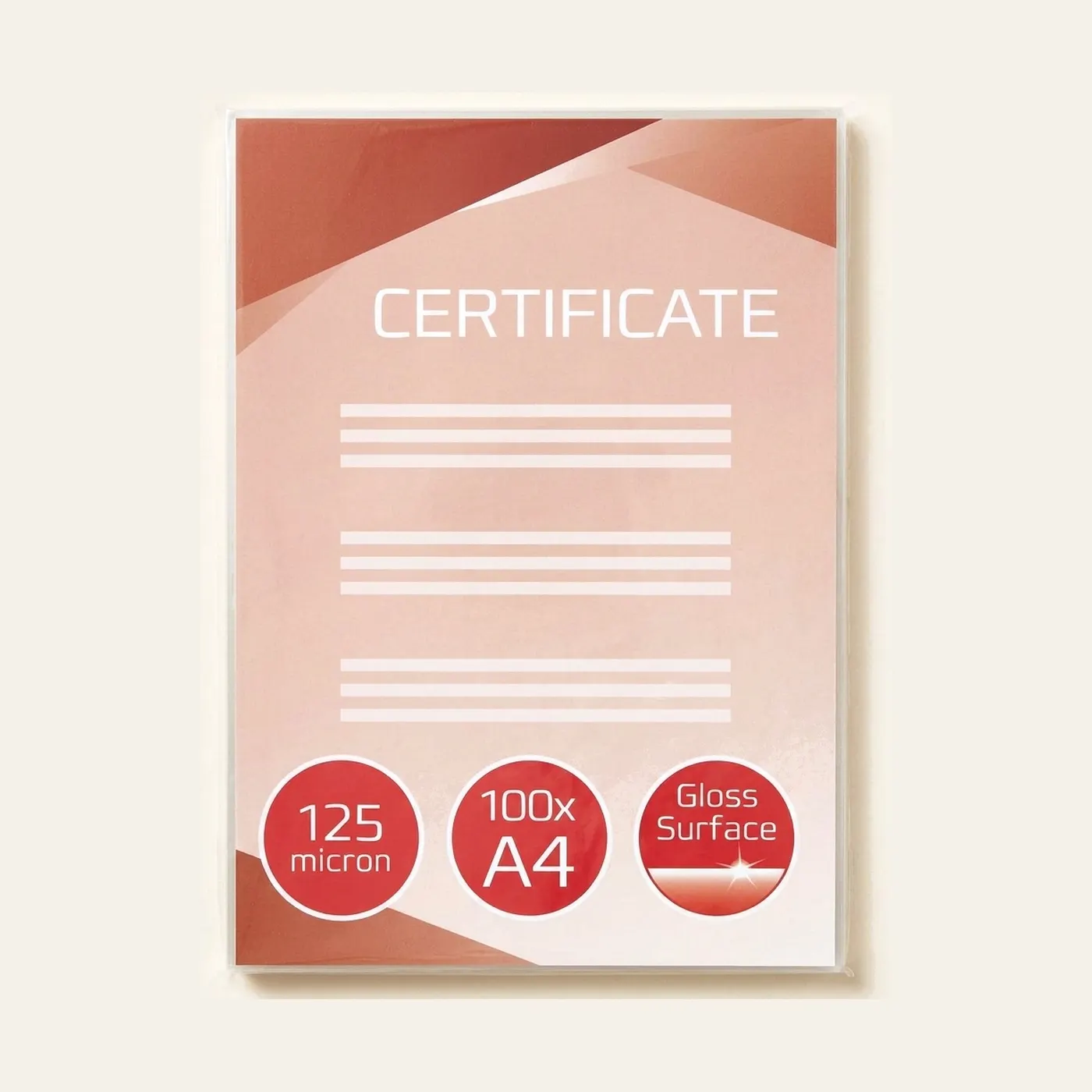
Laminating Sheets A4: 125 Micron Classroom Protection Pack
Made by Arts & Crafts · shipped by Heutink International (Netherlands)
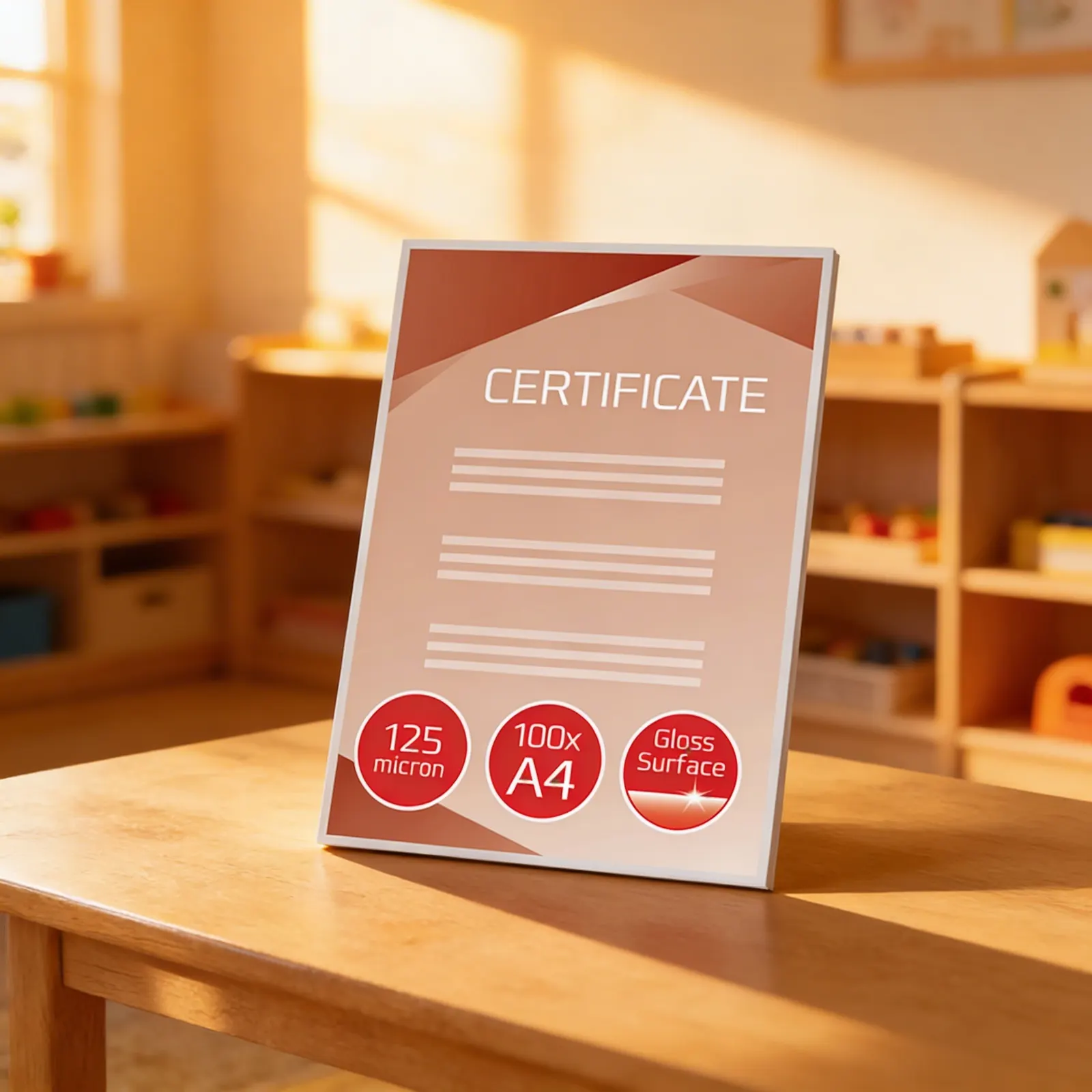
A box of one hundred A4 laminating pouches, 125 micron, 216 by 303 mm. This is workshop stock rather than a Montessori material, and it is on the shelf for one reason: three part cards, control charts, labels and nomenclature sheets get handled by children every day and paper does not survive that. At 125 micron a card comes out stiff enough to pick up by one corner. The size takes an A4 sheet with a margin, which is what makes the seal hold.
“Education is a natural process spontaneously carried out by the human individual, and is acquired not by listening to words but by experiences upon the environment.”
A prepared environment is the cornerstone of Montessori education.
- Enables creation of durable Montessori classroom materials
- Supports teacher preparation of custom educational resources
- Extends lifespan of paper-based learning materials
- Maintains clean, hygienic card surfaces for shared use
Read More
Every material on the shelf should be beautiful, complete, and in excellent condition, this communicates respect for the child and the work. Laminating sheets are the invisible foundation of this prepared environment. When a teacher creates nomenclature cards for botany, laminates classification materials for zoology, or protects timeline strips for history, they are investing in materials that will serve children for years. The 125-micron thickness is carefully chosen: rigid enough to feel substantial in a child's hands, flexible enough to stack and store easily. This humble supply makes the extraordinary Montessori material collection possible.
How to present it
Follow the Montessori method of presentation for optimal child development.
Ensure you have a pouch laminator heated to the correct temperature for 125µ sheets (typically 130-160°C). Place the printed material inside the laminating pouch with the sealed edge entering the laminator first.
- 1
Print or prepare the materials to be laminated on standard paper or cardstock.
For Montessori nomenclature cards, use a consistent card template with control chart, picture card, and label formats. - 2
Insert each sheet into a laminating pouch, leaving a small margin around all edges.
The sealed edge goes in first. A slight margin ensures complete sealing. - 3
Feed through the laminator at a steady pace, don't force or pull the sheet.
Run 2-3 blank sheets through first if the laminator hasn't been used recently. - 4
Allow sheets to cool flat for 30 seconds, then trim to final card size with a paper cutter.
Round the corners for child safety, a corner rounder punch works perfectly.
Every Child Is a Little Creator

Heritage
Since 1929

In classrooms
Around the world

European brands
Nienhuis, GAM, Educo
Laminating Sheets A4: 125 Micron Classroom Protection Pack
