
Looking For Patterns In Life Science
The first photo is the maker's own. The other shots are illustrative.
Inv. no. NIE-EC04812
- Maker
- Nienhuis Montessori, since 1929
- Material
- Durable plastic
- Finish
- Pre-cut with rounded corners
- EAN
- 8719924042943
Final price incl. VAT. Delivery €5.90, €55.10 to go for free delivery.
Advice, warranty and returns are handled by us.
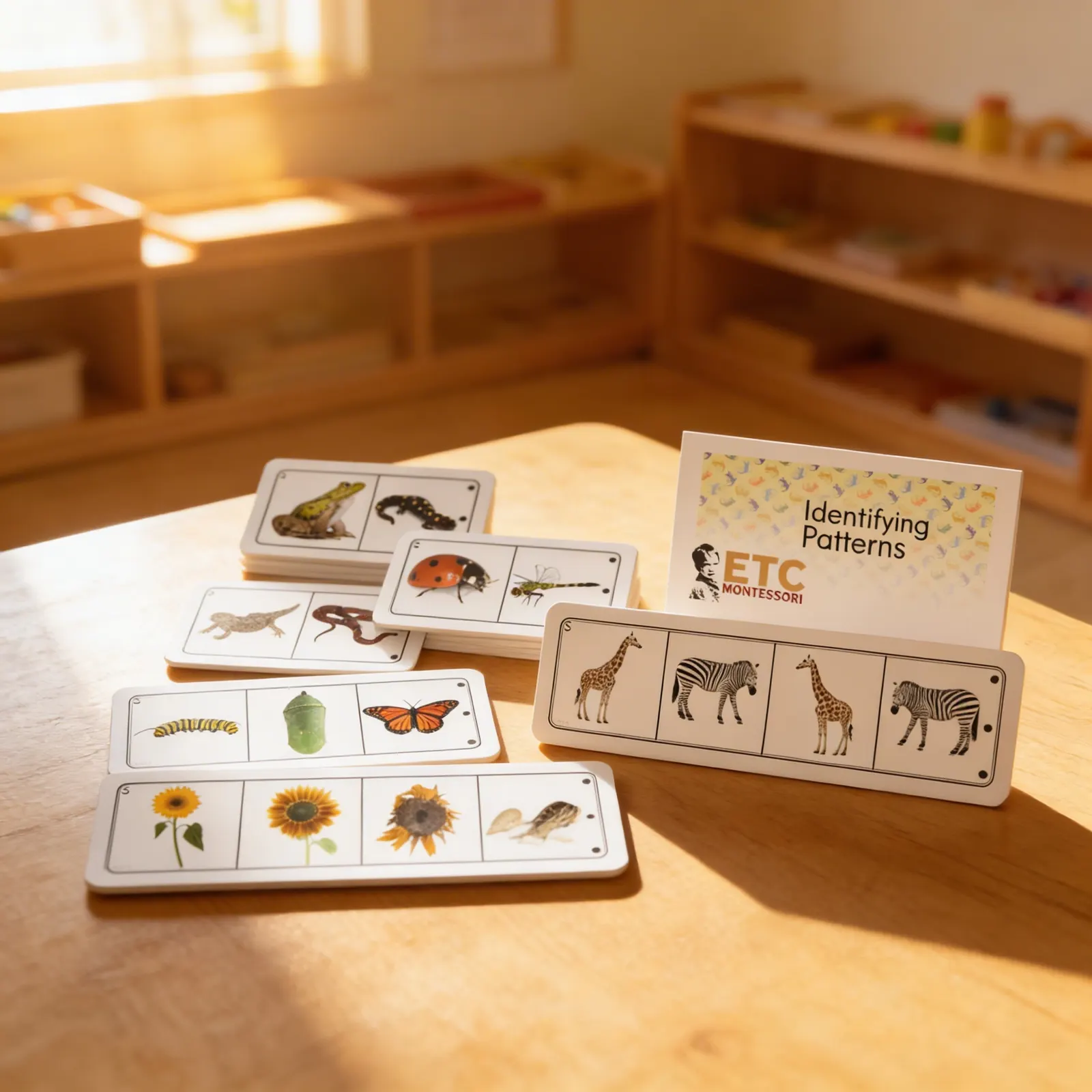
Looking For Patterns In Life Science in a child's hands
Shelf work for the cultural area that builds patterning through botany, geography and zoology. It starts with simply repeating a two, three or four part pattern, moves to working out a pattern from only a few pieces shown, and ends with matching patterns outright. Long before school a child knows the pattern of breakfast, lunch and dinner and the sequence of a favourite story without seeing either as a pattern, and this work is where that noticing gets named. Durable plastic, pre-cut with rounded corners, for ages 3 to 6.
Scientific Observation
Develops careful observation skills essential for scientific thinking through examining real-life patterns and sequences.
Pattern Recognition
Strengthens cognitive abilities by identifying recurring patterns in natural phenomena and life cycles.
Biological Understanding
Introduces fundamental concepts of growth, change, and cycles in living organisms through visual learning.
Sequential Thinking
Builds logical reasoning by arranging and understanding chronological sequences in nature.
How to present it
Place the pattern cards face-up on a mat, organizing by theme (plant growth, animal cycles, seasons). Ensure adequate workspace for laying out sequences. Have a small basket ready for completed sets.
- 1Begin with one simple sequence, such as butterfly metamorphosis. Lay out the four stages in mixed order
- 2Invite the child to examine each card carefully, noting details. Name each stage using precise vocabulary
- 3Demonstrate arranging cards in correct sequence, thinking aloud about your observations
- 4Mix the cards again and invite the child to create the sequence independently
3 tips for parents
- Point out natural patterns during daily life - moon phases, weather changes, plant growth in your garden
- Create simple observation projects at home, like sprouting beans or watching birds build nests
- Visit natural history museums to see preserved specimens representing different life stages

If you are not sure it suits your child, we answer in person.
Norbert Kovalčín, founder of Faborino · write to him
There is no review here yet. We will ask you for one after you buy. Write the first review
What's in the Box
- Pattern sequence cards: Approx. 6 sets of cards
- Pattern identification booklet: Reference guide
Size and material
| Packaging | 43 × 28 × 1 cm |
| Material | Durable plastic |
| Finish | Pre-cut with rounded corners |
| Recommended Age | 3-6 years |
Care
Wipe cards with damp cloth, dry immediately
Frequently Asked Questions
What patterns in nature does this material help children identify?
This material helps children recognize patterns in plant life cycles (seed to flower), animal metamorphosis (caterpillar to butterfly), seasonal changes in nature, day/night cycles, and growth sequences. The real photography cards show clear examples of recurring patterns found in the natural world.
How many cards are included and what makes them suitable for young children?
The set includes multiple sequences of laminated cards featuring high-quality, real photographs rather than illustrations. The cards are durably laminated to withstand frequent handling by young children, and the images are clear and realistic to support concrete learning at this developmental stage.
What specific skills does this material develop in 3-6 year olds?
This material develops scientific observation skills, sequential thinking, pattern recognition, vocabulary related to life cycles and nature, logical reasoning, and early biology concepts. Children also strengthen visual discrimination, memory, and fine motor skills through matching and arranging activities.
How do children work with these pattern cards independently?
Children can match identical images, sequence life cycle cards in order, sort by categories (plants/animals/seasons), create pattern extensions, and use the cards for vocabulary lessons. The self-correcting nature of the sequences allows independent work once the material is introduced.
Can this material be integrated with other Montessori areas?
Yes, these cards complement botany and zoology puzzles, nature tables, seasonal activities, and outdoor observations. They can be used alongside nomenclature cards, incorporated into language activities for storytelling, and support mathematical concepts of sequencing and cycles.
Product safety
Manufacturer: Nienhuis Montessori, Anders Celsiusstraat 15, 7442 PB Nijverdal, Netherlands
Looking For Patterns In Life Science