My First BookFruit
The first photos are the maker's own. The other shots are illustrative.
Inv. no. NIE-041500
- Maker
- Nienhuis Montessori, since 1929
- Approval
- AMI
- Product size
- 12 × 12 cm
- Pages
- Natural wood boards
- Binding
- Rubber
- EAN
- 8719924058371
Final price incl. VAT. Delivery €5.90, €125.10 to go for free delivery.
Advice, warranty and returns are handled by us.
Why it costs €23.90
Behind the price of the original are things you can check yourself.
AMI approval
The material is approved by the Association Montessori Internationale (AMI). Nienhuis has made Montessori materials since 1929.
A verifiable original
The EAN 8719924058371 is on the box. It is the maker's number, not ours.
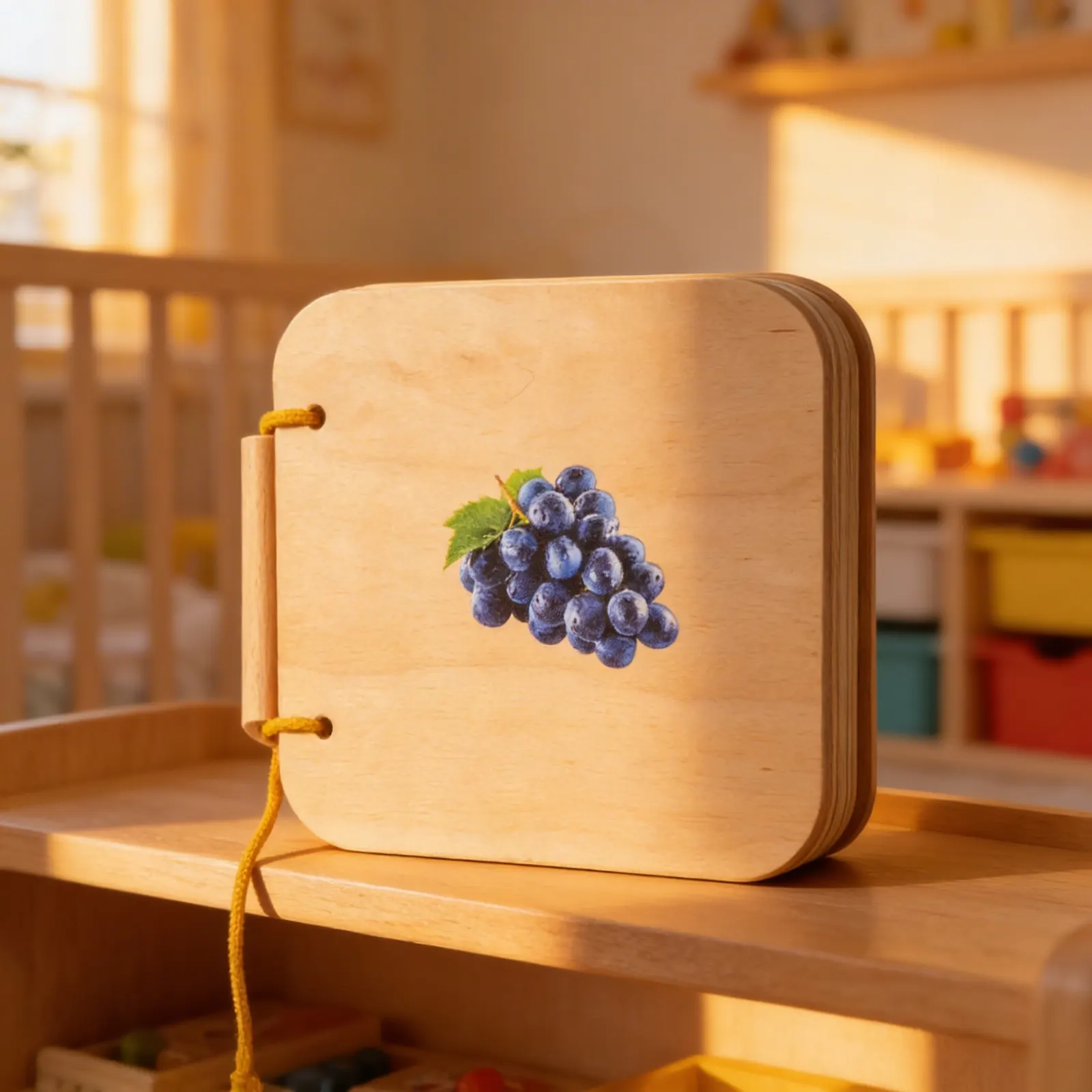
My First Book in a child's hands
My First Book: Fruit is a wooden book about fruit from the Nienhuis Montessori range, made for reading together with a baby. It measures 12 × 12 cm and is made of birch plywood, beech and rubber. The adult opens it and turns the pages while the baby looks at what is shown on them; the adult can name the fruit page by page. The book is meant for indoor use and weighs 238 g. Wipe it with a damp cloth and let it dry completely. It suits children aged 0 to 3.
Language Development
Fruit illustrations support vocabulary building and naming activities during the sensitive period for language acquisition.
Visual Discrimination
Painted details help infants distinguish shapes, colors, and forms while developing focus and concentration.
Fine Motor Skills
Thick wooden pages encourage proper pincer grasp development as children practice turning pages independently.
Sensorial Exploration
The smooth wood texture and sturdy weight provide important tactile feedback for developing sensory awareness.
How to present it
Place the book on a low shelf at the child's eye level. Ensure the area has soft natural lighting. Have real fruit nearby if possible for concrete connections.
- 1Sit with the child and slowly open to the first page, allowing time for visual focus
- 2Point to one fruit and clearly name it: 'Apple.' Pause for processing time
- 3Guide the child's finger to trace the fruit's outline if interested
- 4Turn pages slowly, naming each fruit with the same clear pronunciation
- 5Close the book gently and return it to its place together
3 tips for parents
- Keep the book accessible on a low shelf rather than reading it only at scheduled times
- When grocery shopping, reference the book's fruits to build real-world connections
- Allow the child to 'read' independently even if they only turn pages or look briefly

If you are not sure it suits your child, we answer in person.
Norbert Kovalčín, founder of Faborino · write to him
There is no review here yet. We will ask you for one after you buy. Write the first review
What's in the Box
- Wooden book for reading with a baby: 12 × 12 cm
Size and material
| Product size | 12 × 12 cm |
| Packaging | 13 × 14 × 3 cm |
| Pages | Natural wood boards |
| Binding | Rubber |
| Finish | Paint |
| Recommended Age | 0-3 years |
Care
Wipe with damp cloth, air dry completely
Frequently Asked Questions
What makes this wooden book safe for babies and toddlers?
The book features rounded corners to prevent injuries, thick wooden pages that are difficult to damage or tear, and uses non-toxic paints for the fruit illustrations.
How does this fruit book support early language development?
Each page displays clear, vibrant fruit illustrations that parents can name and describe, building vocabulary. The simple images help children connect words to objects, supporting speech development and fruit recognition skills essential for language learning.
What age range is this wooden fruit book most suitable for?
While designed for ages 0-3, it's particularly beneficial from 6 months when babies begin exploring textures and shapes. Younger infants enjoy the visual stimulation, while toddlers use it for fruit identification and pretend play activities.
How durable is this wooden book compared to traditional board books?
The solid wooden pages are extremely durable and can withstand dropping, chewing, and rough handling typical of young children. Unlike cardboard books, these wooden pages won't tear, bend, or get soggy, making it a long-lasting educational investment.
What fruits are featured in this book and how many pages does it contain?
While specific fruits vary, typical selections include common fruits like apples, bananas, oranges, and grapes. The book usually contains 5-8 thick wooden pages, each featuring one or two beautifully painted fruit illustrations with high contrast for visual development.
Product safety
Manufacturer: Nienhuis Montessori, Anders Celsiusstraat 15, 7442 PB Nijverdal, Netherlands
My First Book