
My First BookPets
The first photos are the maker's own. The other shots are illustrative.
Inv. no. NIE-041400
- Maker
- Nienhuis Montessori, since 1929
- Approval
- AMI
- Product size
- 12 × 12 cm
- Pages
- Plywood with printed illustrations
- Binding
- Red fabric cord through drilled holes
- EAN
- 8719924058364
Final price incl. VAT. Delivery €5.90, €125.10 to go for free delivery.
Advice, warranty and returns are handled by us.
Why it costs €23.90
Behind the price of the original are things you can check yourself.
AMI approval
The material is approved by the Association Montessori Internationale (AMI). Nienhuis has made Montessori materials since 1929.
A verifiable original
The EAN 8719924058364 is on the box. It is the maker's number, not ours.
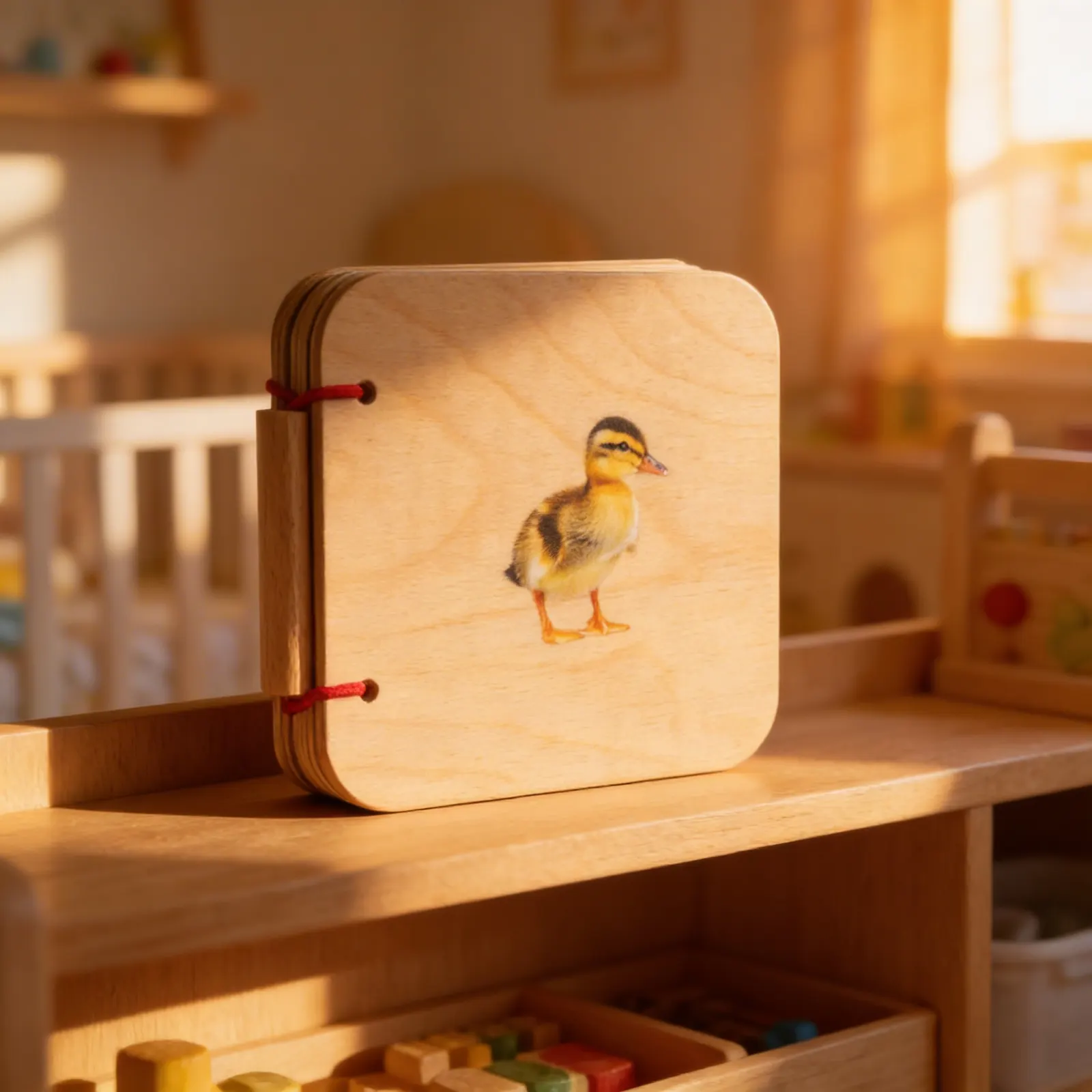
My First Book in a child's hands
A first book of pets, and it is a wooden one: plywood pages with the photograph printed straight onto the wood, a turned beech spine and an elastic cord holding it together. Twelve by twelve centimetres, so it fits two small hands, and pages a baby can turn by grabbing rather than pinching. Pets are the right subject for a first book because the dog is already in the room, and the page is a second encounter rather than an introduction.
Fine Motor Skills
Threading fingers through the cord binding and turning thick pages strengthens hand muscles and pincer grasp.
Language Development
Pet illustrations provide opportunities for naming animals, making sounds, and building vocabulary through repeated reading.
Book Handling
Introduces proper book orientation, page turning sequence, and gentle handling habits from earliest age.
Visual Discrimination
Clear pet images help develop visual recognition skills and the ability to match animals with their names.
How to present it
Place the wooden book on a low shelf at child's eye level. Ensure the book opens easily and pages turn smoothly. Create a quiet corner with a small cushion where the child can explore the book comfortably.
- 1Sit beside the child and slowly open the wooden cover, demonstrating how to grasp the thick plywood edge
- 2Point to the first pet illustration and clearly name it: 'Dog.' Pause for the child to absorb
- 3Demonstrate turning the page by pinching the corner between thumb and forefinger, moving deliberately
- 4Continue naming each pet simply, allowing the child to set the pace of exploration
3 tips for parents
- Read the wooden book during calm moments, not just before sleep, to maximize engagement with pet vocabulary
- Connect book pets to real experiences: 'Look, a dog like in your wooden book!'
- Let your child 'read' to stuffed animals, building confidence with the sturdy pages

If you are not sure it suits your child, we answer in person.
Norbert Kovalčín, founder of Faborino · write to him
There is no review here yet. We will ask you for one after you buy. Write the first review
What's in the Box
- Wooden Board Book: Approx. 6 plywood pages with pet illustrations
- Cord Binding: Red fabric cord pre-threaded through pages
Size and material
| Product size | 12 × 12 cm |
| Packaging | 13 × 14 × 3 cm |
| Pages | Plywood with printed illustrations |
| Binding | Red fabric cord through drilled holes |
| Recommended Age | 0-3 years |
Care
Wipe with damp cloth, avoid soaking
Frequently Asked Questions
What makes this wooden book safe for babies and toddlers?
The book features smooth, rounded corners on thick plywood pages with non-toxic printed illustrations. The sturdy cord binding is securely attached, preventing loose parts. The 15×15cm size is perfect for small hands to grasp safely.
How does the cord binding help with fine motor development?
The innovative cord binding allows toddlers to practice pincer grasp and hand-eye coordination as they turn each page. This design encourages independent exploration while building the finger strength and dexterity needed for future writing skills.
Which pets are featured in this book?
The book includes vibrant illustrations of common household pets that young children can easily recognize and relate to, such as dogs, cats, fish, birds, and rabbits, helping build vocabulary and animal recognition skills.
Why choose a wooden book over traditional board books?
Wooden books are virtually indestructible, withstanding teething, dropping, and repeated handling. They won't tear, bend, or get soggy like cardboard books, making them ideal for the exploratory phase when babies put everything in their mouths.
At what age should I introduce this book to my child?
This book is suitable from birth as a visual stimulation tool. Around 6-9 months, babies can begin grasping and exploring the pages. By 12-18 months, toddlers actively turn pages and point to animals, continuing to enjoy it through age 3.
Product safety
Manufacturer: Nienhuis Montessori, Anders Celsiusstraat 15, 7442 PB Nijverdal, Netherlands
My First Book