
My First BookVegetables
The first photos are the maker's own. The other shots are illustrative.
Inv. no. NIE-041600
- Maker
- Nienhuis Montessori, since 1929
- Approval
- AMI
- Product size
- 12 × 12 cm
- Pages
- Smooth finished wood
- Binding
- Rubber
- EAN
- 8719924058388
Final price incl. VAT. Delivery €5.90, €125.10 to go for free delivery.
Advice, warranty and returns are handled by us.
Why it costs €23.90
Behind the price of the original are things you can check yourself.
AMI approval
The material is approved by the Association Montessori Internationale (AMI). Nienhuis has made Montessori materials since 1929.
A verifiable original
The EAN 8719924058388 is on the box. It is the maker's number, not ours.
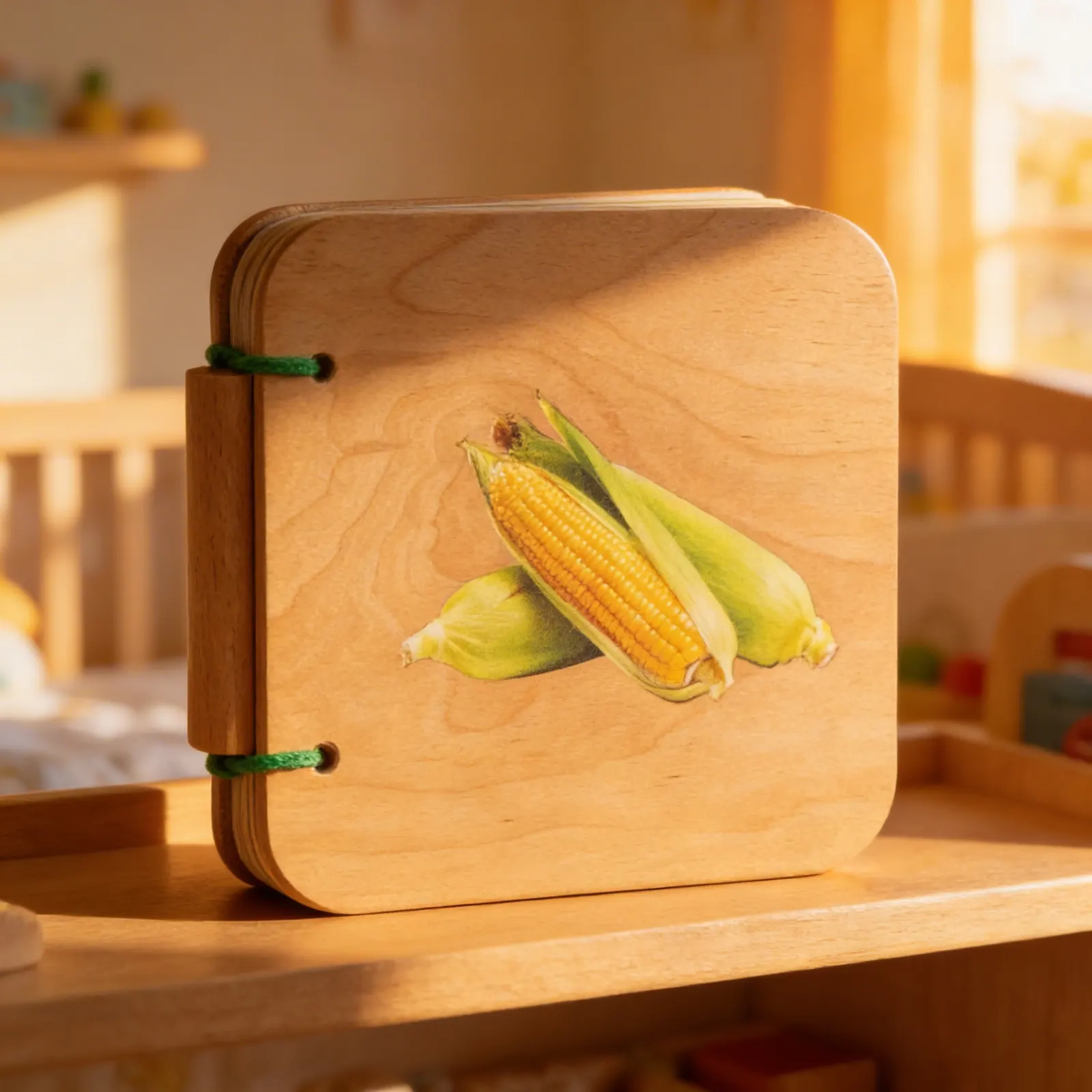
My First Book in a child's hands
A first book about vegetables from the Nienhuis Montessori range is made for reading with a baby. It is made of birch plywood, beech and rubber and measures 12 × 12 cm. It is a book to share: the adult turns the pages and says what is shown, and the baby looks at the vegetables for as long as it likes. It is a small square book for indoor use and weighs 243 g. Wipe it with a damp cloth and dry it immediately so that the wood does not stay wet. It is intended for ages 0 to 3.
Language Development
Introduces vegetable vocabulary and supports early word recognition through clear, colorful illustrations.
Sensory Exploration
Smooth wooden pages provide tactile feedback while developing fine motor skills through page turning.
Food Recognition
Familiarizes children with common vegetables, supporting healthy eating habits and mealtime conversations.
Hand Strength
Thick wooden pages encourage proper grip development and strengthen small hand muscles.
How to present it
Place the wooden book on a low shelf at the child's eye level. Ensure the area has good natural lighting to highlight the vegetable illustrations.
- 1Sit beside the child and slowly open the book, demonstrating gentle page turning
- 2Point to one vegetable and name it clearly: 'carrot'
- 3Pause and observe if the child reaches for the page or shows interest
- 4If the child explores the book by touch, allow exploration without redirection
3 tips for parents
- Keep the book accessible on a low shelf rather than storing it away
- Name vegetables during meal preparation when the child shows interest
- Resist the urge to quiz or test vegetable recognition

If you are not sure it suits your child, we answer in person.
Norbert Kovalčín, founder of Faborino · write to him
There is no review here yet. We will ask you for one after you buy. Write the first review
What's in the Box
- Wooden book for reading with a baby: 12 × 12 cm
Size and material
| Product size | 12 × 12 cm |
| Packaging | 13 × 14 × 3 cm |
| Pages | Smooth finished wood |
| Binding | Rubber |
| Recommended Age | 0-3 years |
Care
Wipe with damp cloth and dry immediately
Frequently Asked Questions
What makes this wooden book safe for babies and toddlers?
The smooth wooden pages have no sharp edges or small parts that could pose choking hazards. The durable construction and non-toxic finishes make it safe for young children who explore with their mouths and hands.
What vegetables are featured in this book?
While specific vegetables vary, the book typically includes colorful illustrations of common vegetables like carrots, tomatoes, broccoli, and peppers, helping children recognize foods they may encounter at mealtimes.
How do I clean the wooden pages?
Simply wipe the smooth wooden surfaces with a slightly damp cloth and mild soap if needed. The sealed wood finish resists moisture and stains, making it easy to keep hygienic for baby use.
Why is this book listed under 'Furniture' category?
This appears to be a categorization error - this wooden book is an educational toy/learning material suitable for ages 0-3, not furniture. It should be found in the books, toys, or educational materials section.
Product safety
Manufacturer: Nienhuis Montessori, Anders Celsiusstraat 15, 7442 PB Nijverdal, Netherlands
My First Book