
Mystery BagsEmpty (Nienhuis)
The first photo is the maker's own. The other shots are illustrative.
Inv. no. NIE-001730
- Maker
- Nienhuis Montessori, since 1929
- Approval
- AMI
- Primary Material
- Natural cotton fabric
- Closure
- Cotton drawstring cord
- EAN
- 8719924000295
Final price incl. VAT. Delivery €5.90, €119.10 to go for free delivery.
Advice, warranty and returns are handled by us.
Why it costs €29.90
Behind the price of the original are things you can check yourself.
AMI approval
The material is approved by the Association Montessori Internationale (AMI). Nienhuis has made Montessori materials since 1929.
A verifiable original
The EAN 8719924000295 is on the box. It is the maker's number, not ours.
Mystery Bags in a child's hands
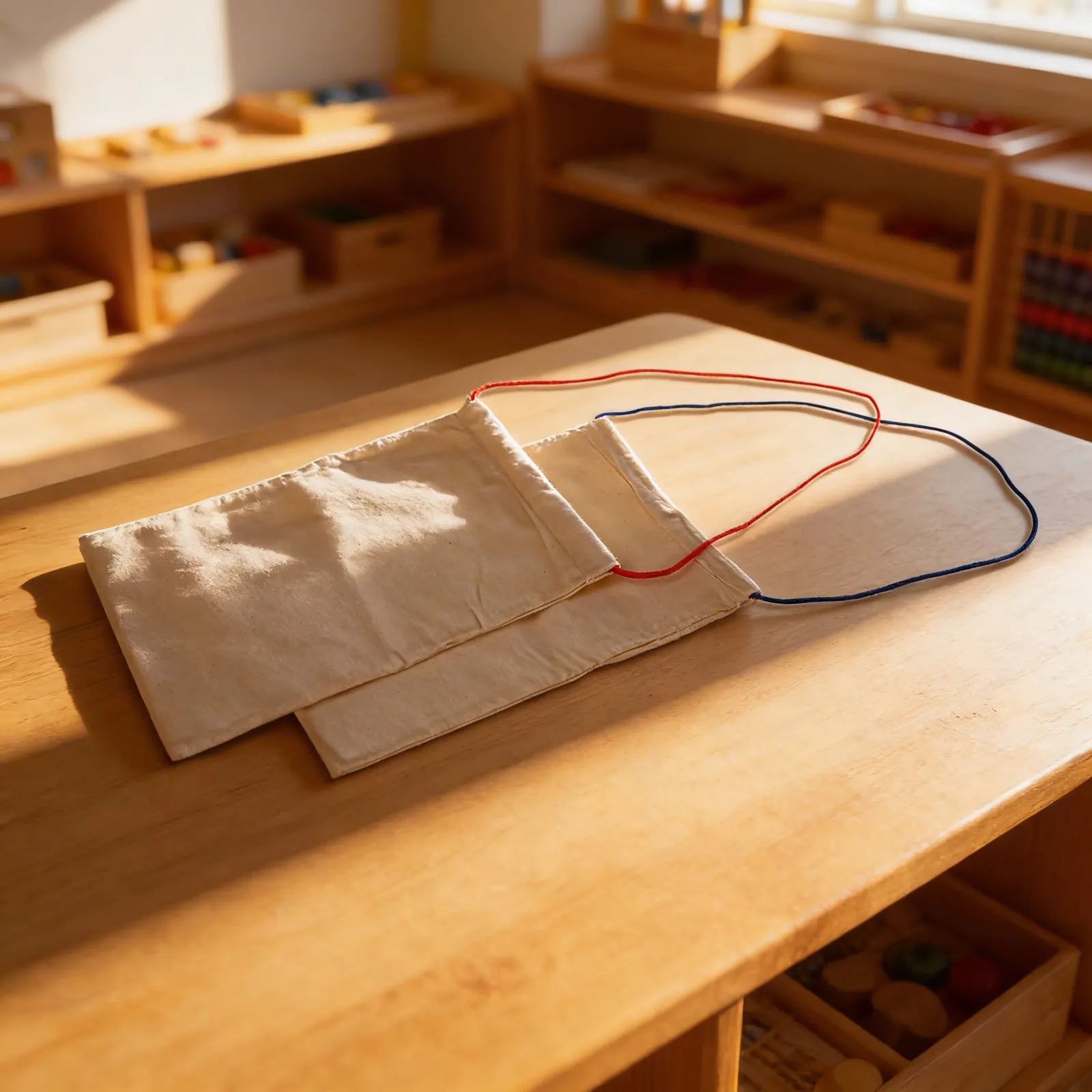
A set of two empty cloth bags, for whatever the room supplies. The filled versions come with familiar objects or with geometric solids, and both are fixed; these are the ones a teacher stocks from a nature table, a pocket or the week's topic. Two bags rather than one means the pairing work is possible from the start, and an empty bag can be refilled the day a child has learned everything in it. Cotton with a cotton cord, for ages 3 to 6.
Stereognostic Sense Development
Isolating the tactile sense by concealing objects helps children build mental representations of three-dimensional forms through touch alone.
Vocabulary Enhancement
Mystery bag activities naturally encourage descriptive language as children articulate the properties of hidden objects.
Concentration & Focus
The challenge of identifying objects without sight requires sustained attention and mindful exploration.
Memory & Cognitive Processing
Matching felt objects to visual memories strengthens cognitive connections between sensory input and mental imagery.
How to present it
Place 3-5 familiar objects of distinct shapes and textures in one Mystery Bag. Choose items the child knows well: a shell, key, cotton ball, small brush, and coin work well. Have an empty tray ready for removed objects.
- 1Invite the child to sit beside you and show them the Mystery Bag, demonstrating how the drawstring opens and closes
- 2Place your hand inside the bag and feel one object without looking, describing what you feel: 'I feel something smooth and cool, with ridges...'
- 3Remove the object and place it on the tray, confirming your guess visually
- 4Invite the child to reach into the Mystery Bag and select one object to explore with their fingers
- 5Ask them to describe what they feel before naming or removing the object
- 6Continue until all objects have been explored and identified
3 tips for parents
- Create simple Mystery Bags at home using cloth napkins tied with ribbon - the activity matters more than having official materials
- Play 'Mystery Snack' games where children identify cut fruits or vegetables by touch, connecting sensorial work to daily life
- Encourage descriptive language during bath time or while sorting laundry - these are natural extensions of stereognostic development

If you are not sure it suits your child, we answer in person.
Norbert Kovalčín, founder of Faborino · write to him
There is no review here yet. We will ask you for one after you buy. Write the first review
What's in the Box
- Cotton Mystery Bags: Approx. 2 bags with drawstring closures
- Activity Guide: Suggested stereognostic exercises
Size and material
| Packaging | 31 × 22 × 1 cm |
| Primary Material | Natural cotton fabric |
| Closure | Cotton drawstring cord |
| Recommended Age | 3-6 years |
Care
Machine washable at 30°C, air dry recommended
Frequently Asked Questions
What activities can children do with these mystery bags?
Children use these bags for stereognostic exercises where they identify objects by touch alone, developing tactile discrimination. Teachers place familiar objects inside, and children reach in to explore textures, shapes, and sizes without looking, strengthening their sensory perception and cognitive skills.
How many bags come in this set and what size are they?
This set includes multiple empty cotton bags, each measuring approximately 15-20cm, ideal for holding various small objects. The bags feature colorful drawstring closures that help children practice fine motor skills while keeping contents secure during activities.
What types of objects should I put inside the mystery bags?
Start with familiar classroom objects like geometric solids, natural materials (shells, stones, pinecones), fabric squares of different textures, or everyday items. Progress to paired objects for matching games, ensuring items are safe, clean, and appropriately sized for small hands.
How do these bags support Montessori sensorial development?
Mystery bags isolate the sense of touch, allowing children to focus solely on tactile information without visual input. This isolation of senses is fundamental to Montessori methodology, helping children refine their stereognostic sense and build mental representations of objects through touch.
Are these bags suitable for home use or just classrooms?
These versatile bags work excellently in both environments. At home, parents can create engaging sensory games, sorting activities, or treasure hunts. The durable cotton construction withstands frequent washing, making them practical for regular use in any setting.
Product safety
Manufacturer: Nienhuis Montessori, Anders Celsiusstraat 15, 7442 PB Nijverdal, Netherlands
Mystery Bags